Dr. Mark Benecke, guest on the Plantbased Podcast Aljosha Muttardi, guest on the Plantbased Podcast Sarah Connor, guest on the Plantbased Podcast Yannick Haldenwanger, guest on the Plantbased Podcast Captain Paul Watson, guest on the Plantbased Podcast +22

99 episodes so far with guests like Dr. Mark Benecke, Aljosha Muttardi or Sarah Connor

Listen to the Podcast →
Vegan clothing - Why is wool not vegan?
Switch Language

When the days get colder again, gt's the same theme every year: last year's winter jacket was perhaps not so warm after all, or is no longer trendy this year. The lambskin boots have also survived only one fall and winter and with the last pom-pom hat, was not really sure anyway, whether it was now rabbit fur, faux fur or yet cat.

Disclosure: This article contains affiliate links. If you buy through one of them, we earn a small commission. It costs you nothing extra. That's how we fund the newsroom and stay independent. Thanks for your support. As an Amazon Associate we earn from qualifying purchases.

More and more major fashion labels and luxury brands are planning or already doing away with fur and other animal fibers. The reasons for this are the customers who insist on more transparency and ethics because they can, in other words, simply afford it.

More and more celebrities are drawing attention to the problem of animal fibers and are doing without them.

However, consumers control demand, and large chains in particular that cater to mass consumption flood the market not only with poor quality (so-called “throwaway”) products, but also with animal fibers that they source cheaply from countries with little to no manufacturing guidelines.

Many large chains and cheap fashion labels take advantage of this ignorance to deceive the customer with inferior goods. There have been proven cases of large corporations declaring cheap pom-pom hats to be faux fur, when in fact they were animal fibers. Also, these corporations keep claiming that there is no cheap alternative to animal fibers and therefore they would not be able to maintain the cheap price if they switched.

What's it like for you guys? Do you look into the material before you buy something?

Can you tell the difference between real and faux fur? Or between animal and plant wool?

To help you see the differences, here are a few tips and background information on the various materials.

ANIMAL WOOL

What is wool?

Wool, according to the Textile Labeling Act, is the soft hairs of the fur. Unlike the top coat, which protects against the various weather conditions, the undercoat serves to maintain and store body heat. Who has dogs or cats, knows the problem at the change of coat to summer, when the soft fluffy undercoat falls out and then spreads throughout the apartment to the underpants.

Wool is obtained not only from sheep, but also from goats, various species of camels or rabbits. These wool types are then named more specifically, such as cashmere wool of the cashmere goat, angora wool of the angora rabbit, or simply camel hair.

Verschiedene Wollknäuel in Grau, Weiß und Schwarz auf Holz.

From which countries does wool come?

Worldwide, nearly 100 countries produce about 2.2 million tons of wool annually, most of it in Australia, followed by China, New Zealand, Argentina, India, Great Britain, and Northern Ireland, with more than 50,000 tons per year (FAO 2009). In Germany, sheep wool production is about 8000 tons. German wool, however, can not compete with the cheap Chinese or Australian wholesalers, so you can be sure that all wool textiles from large chains, come from these same traders (a look at the label is usually enough).

Most angora wool, is produced in China. But Angora rabbits are also bred in France and Switzerland. This type of wool has a much smaller market than sheep wool. Many large corporations such as H&M, Zara, C&A, Topshop, Tommy Hilfiger and Calvin Klein have already removed Angora from their product range.

How is wool obtained?

Shearing is done 1 to 2 times a year. In warmer countries also more often. The animals are bred to have a particularly fast and dense coat growth, regardless of the season.

Electric shearing equipment is used for shearing, but in some countries shearing shears are still used. Both devices have a high risk of injury.

Angora rabbits are plucked every 3- 4 months. That is, they are torn out the fur without anesthesia, because every millimeter is more valuable and during shearing, not everything can be cut off. Those who think that this procedure is only used in the Asian region will be surprised, as it is also the order of the day in Switzerland and France.

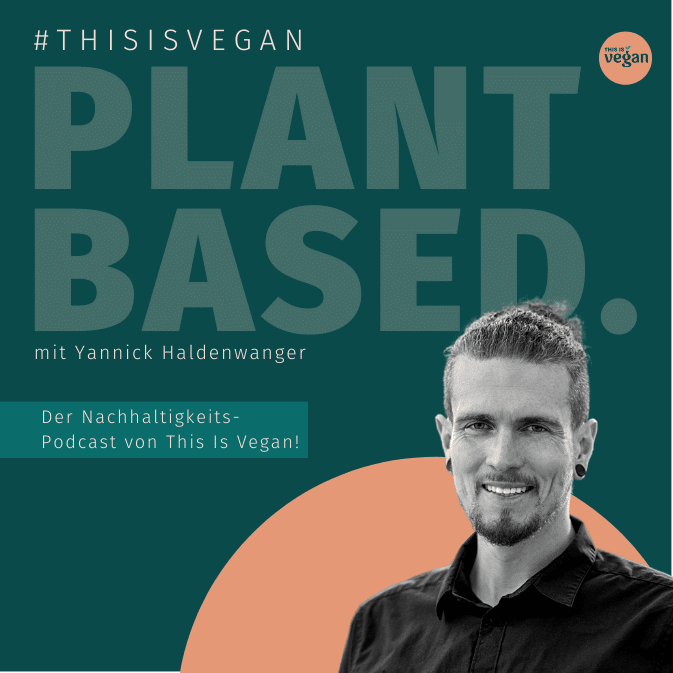
Yannick Haldenwanger spricht über pflanzenbasierte Ernährung und Nachhaltigkeit.
PLANTBASED. - The This Is Vegan Podcast - Subscribe Now!

Do these animals need to be shorn?

Without human intervention, these animals would only produce as much wool as they need to protect themselves from extreme temperatures. They have been bred over thousands of years so that the top coat has completely disappeared to the last, leaving only the valuable undercoat.

Under what conditions are these animals bred for mass consumption?

Mass consumption always means that the “goods” come from mass farming, because a lot has to be produced in a short time so that the costs are profitable and do not increase.

In Australia and New Zealand, for example, “mulesing” is still a common practice, although the state wanted to provide an alternative for it until 2010.

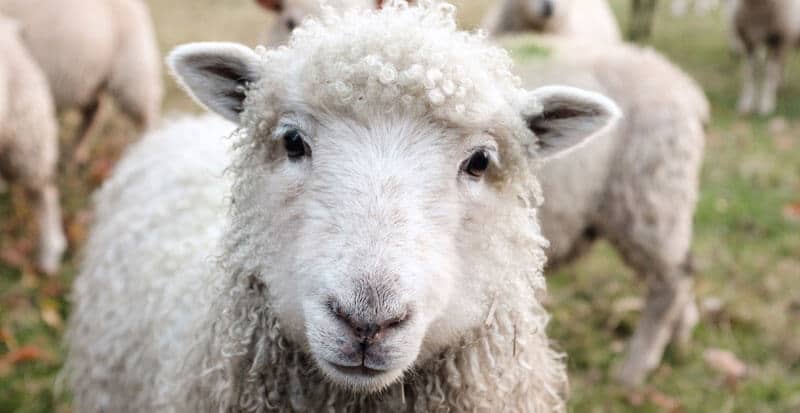
There, the sheep were bred to have a particularly wrinkled skin, as this makes the wool yield per animal even greater. Due to the heat, many sheep collapse and die. Or they get infections, because the skin folds, especially at the body openings are inflamed by parasites, feces and urine. As “mulesing” is the term used to describe the removal of the skin around the tail of sheep without analgesia to reduce parasite infestation. Also during shearing it happens that due to the many folds of skin, the animals are simply cut out whole pieces of skin and flesh and they bleed to death, because the medical care is more expensive than the commodity value of the sheep itself.

Nahaufnahme von weichem, veganem Wollstoff mit lockiger Textur.

Alternatives:

All vegetable fibers such as Cotton, bamboo (viscose, also an alternative to silk and cashmere), flax, linen, hemp, algae, soy. But recycled plastic bottles are now also being converted into polyester. All of these fibers are more environmentally friendly and also require only a fraction of the acreage or resources as animal products, since food cultivation, pastures or barns, and manure disposal are eliminated.

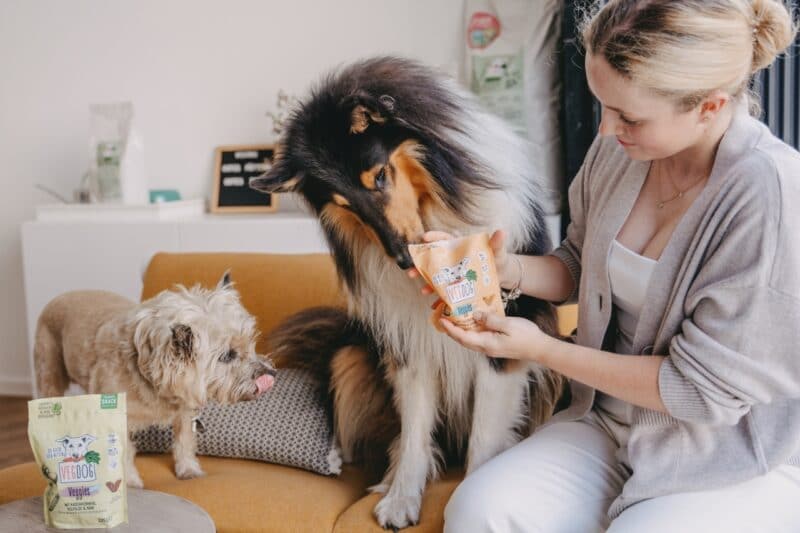
Frau gibt veganen Hundesnack an Collie, mit weiteren Tieren im Wohnzimmer.
Yannick Haldenwanger

Vegetables in the bowl – is vegan dog food at all species-appropriate? Is there dog food vegan? What is a veterinarian's opinion on vegan dog food? These are the questions…
View Post
Read more "
Frau sitzt auf Felsen mit Blick auf Tafelberg und Meer in Kapstadt.
Yannick Haldenwanger

Founded in 2016, the startup GOT BAG produces sustainable backpacks from recycled marine plastic. Each backpack consists of just under 3.5 kilograms of plastic waste – waste that would otherwise…
View Post
Read more "
Over 75,000 people follow This Is Vegan on YouTube, Instagram and the deal radar Vegan Alarm.

Already heard the Plantbased podcast?

Veganism, animal welfare, climate, sustainability and wildlife, everything on our minds, lives on Plantbased, our podcast. We talk to people who have something to say and who show, through how they live, what's possible. Also a video podcast on YouTube.

Past guests include Sarah Connor, Hannes Jaenicke, Paul Watson, Patrik Baboumian, Bibi Heinicke, Atze Schröder, Kerstin Ott, Dr. Zoe Mayer, Maya Leinenbach und Femke Den Haas and many more.

Since 2019 · This Is Vegan · independent, vegan, sometimes uncomfortable


Get involved, not just informed

We fund ourselves through affiliate recommendations and our community. Check out our Community Deals for exclusive discount codes at carefully chosen plant-based partners. You pay nothing extra, we get to keep writing. Fair deal.

Or just follow us here:

A word from us

This animal-rights journalism is free and light on ads because readers carry it. Even 3 € helps, for the animals, for the cause.

Donate now

Our partners who carry the mission: Vriends 🌱

Please install and activate Powerkit plugin from Appearance → Install Plugins. And activate Opt-in Forms module.

Leave a Reply

Your email address will not be published. Required fields are marked *

Newsletter Mehr Stories