




“Big Chicken: A Fast Food Conspiracy” has been streaming worldwide on Netflix since 5 August 2026. British comedian Mo Gilligan eats fried chicken three times a day for 28 days, 84 meals in four weeks, and travels across the UK and the US to work out how one dish became the most eaten meat on the planet. Liana Stewart directed it. Mindhouse produced it, the company behind “Louis Theroux: Inside the Manosphere”. It runs 1 hour 39 minutes and is rated 16+.
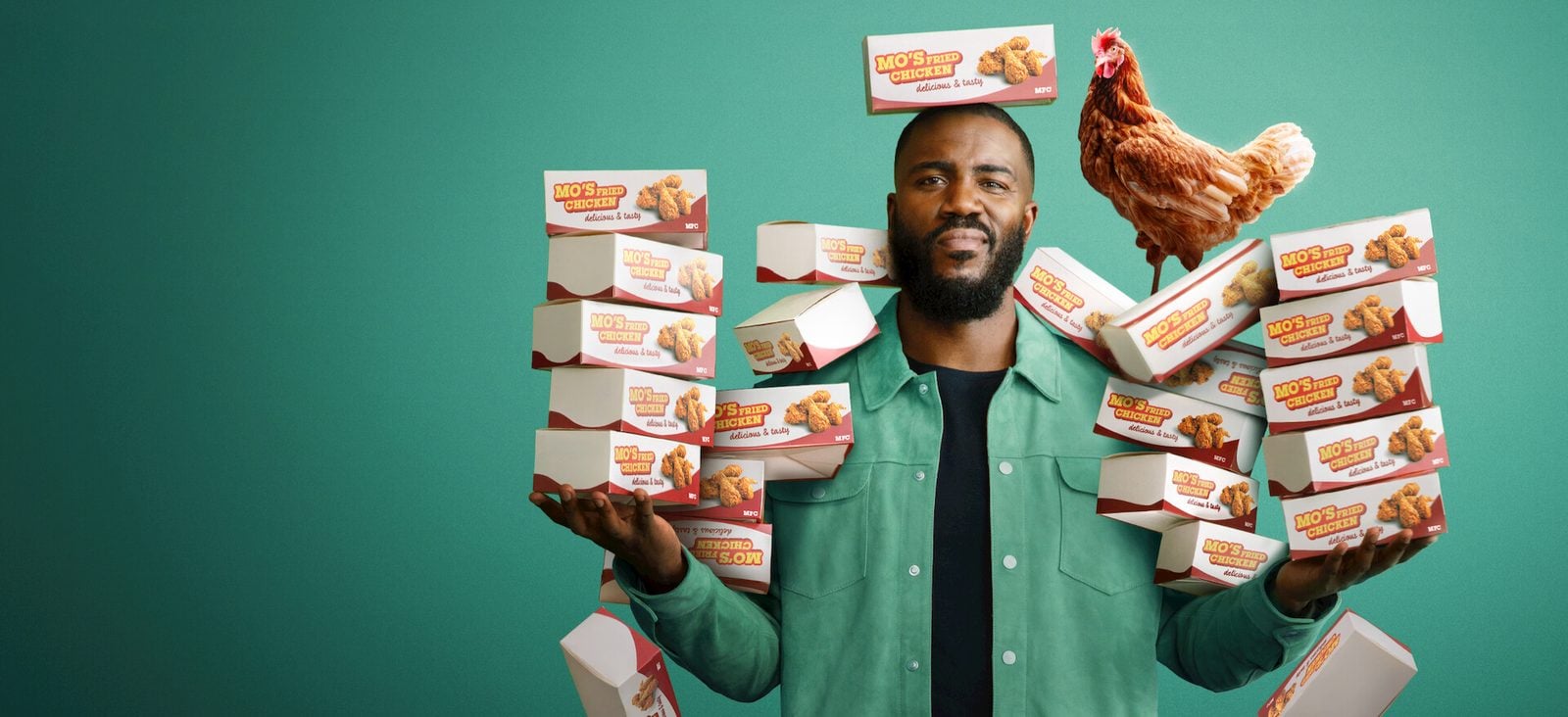
The “Super Size Me” comparisons started before release and they are fair. One person turns their body into a lab so an audience that would normally look away keeps watching. The format is twenty years old and it still works. That is why we are writing about it.
Contents8 chapters
What happens over 28 days
Gilligan goes in cheerful. Speaking to Netflix Tudum, he describes his first reaction as the “dream job”. Fried chicken for breakfast, lunch and dinner, how bad can it be. The answer arrives fast.
“Very quickly on, it started to get very miserable,” he says. The weight came on almost immediately. What genuinely surprised him was the effect on his head. His words: “Does food do this?”
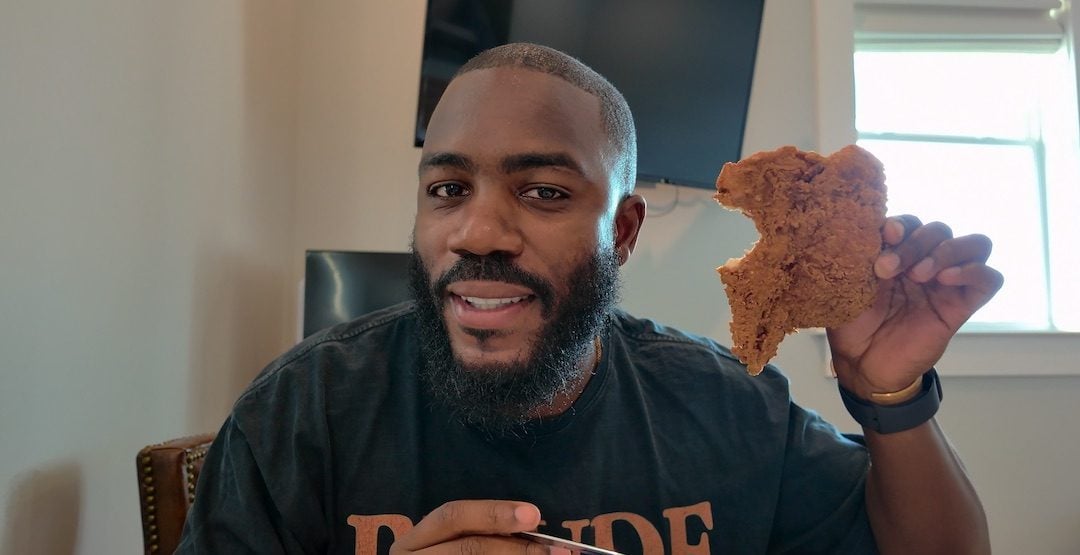
The recovery figure is the one that sticks. After filming wrapped it took him two to three months to find the motivation to train again. Roughly six months passed before he ate fried chicken voluntarily, and even then it happened by accident at an event, a single wing, barely registered.
Four weeks of eating, half a year of aftermath. For a project that starts as a laugh, that is a blunt result.
Where the film gets uncomfortable
Between meals there is reporting, and this part has more bite than expected. Gilligan drives out to a broiler shed at night with activists. In Chicago he sits with people living in food deserts, neighbourhoods with no reachable supermarket, where twenty pieces of chicken cost less than a basket of fresh vegetables.
And he tries to get the industry on the phone. KFC Global hangs up on him. No official statement was provided for the film. Gilligan’s line about it is the best sentence in the whole press pack: “Sometimes silence is loud.” The only industry figure who agreed to talk was a lobbyist from the British Poultry Council.
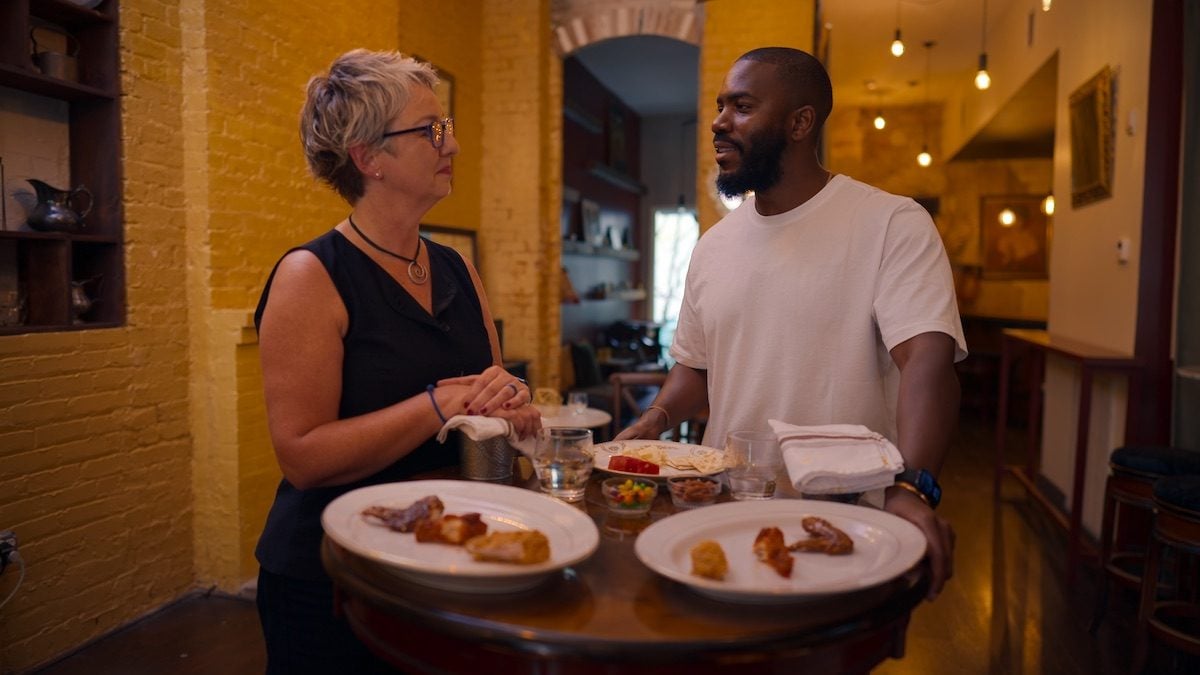
That silence has an awkward footnote. KFC is one of more than 600 companies signed up to the European Chicken Commitment, the pledge to move to slower-growing breeds, cap stocking density at 30 kg per square metre and stop using the fastest-growing genetics across the European supply chain. The deadline written into it is 2026, which is now. A company that publicly signs welfare targets and then puts the phone down when asked about them has a problem no advert fixes.
The part only Gilligan could tell
Before he said yes, friends warned him. Did he really want to do this, as a Black man, eating chicken on camera. The film takes that question seriously instead of laughing it off.
Gilligan meets soul food scholar Adrian Miller and learns how deeply the dish is rooted in slavery, how the recipes were later absorbed and marketed by fast food chains, and how a Sunday family meal turned into a racist trope. Miller flips the framing: you can take the recipe back.
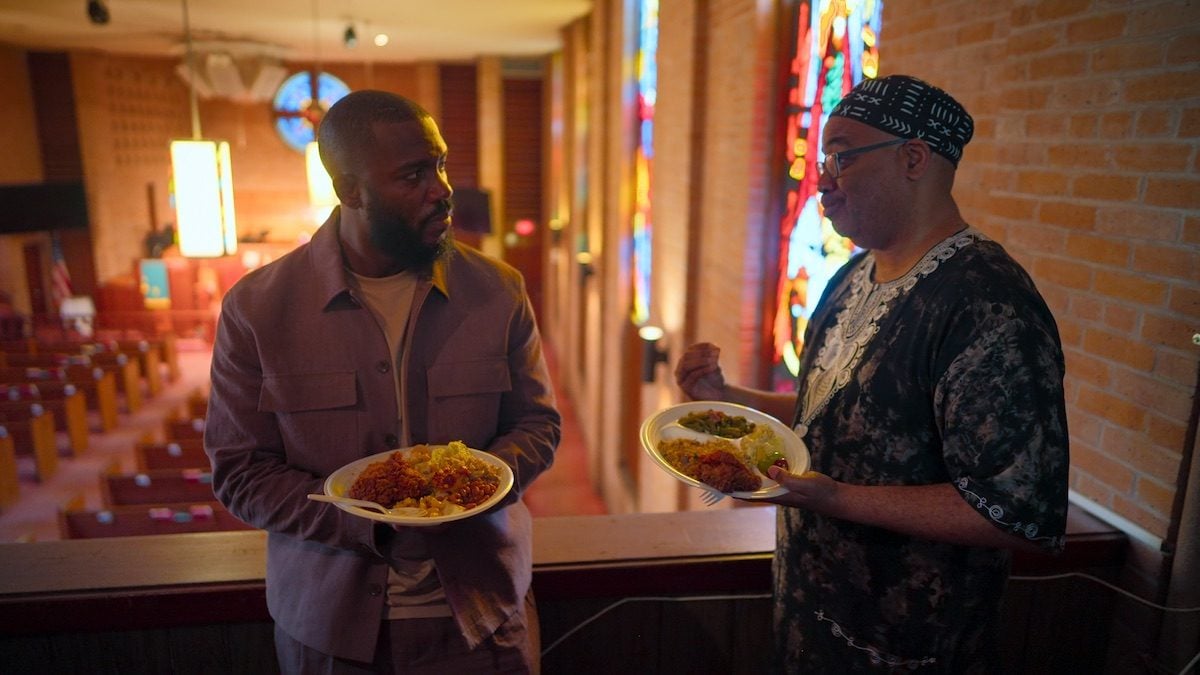
This is the strongest thread in the film and it belongs to Gilligan alone. No documentary maker in a lab coat would have had that access.
Then the film hits the brakes
By the end you are waiting for the obvious question. So what now?
Gilligan’s answer is explicitly not a change of diet. He says in the interview that he still eats meat and has no interest in telling anyone to go vegan. His reasoning is that vegetables cost more than chicken, so the realistic advice is to fry the chicken yourself instead of ordering it, because then there is less junk in it.
This is where we get off.
Nobody expects a manifesto from a mainstream comedian, that would be silly. What lingers is the shape of the thing. The film spends an hour and a half gathering evidence that points at the animals, and lands on a cooking tip. The night visit to the shed is in there. The breeding lines are in there. And the closing note is a deep fryer in your own kitchen.
The structural point he makes is still correct. Fresh produce genuinely is more expensive and harder to reach in many neighbourhoods than a bucket of chicken, and those price ratios are set upstream, where farm policy decides who gets subsidised. We took that apart in why meat is kept cheap and vegetables feel expensive. Once you see that mechanism, you also see that the fix is not in your own frying pan.
What the film leaves out: the European numbers
“Big Chicken” is a British and American story. From where we sit, in Germany, some context is missing.
In 2025 German abattoirs killed 640.3 million broiler chickens, plus 20.7 million spent laying hens, 27.6 million turkeys and 8.3 million ducks. That is 697.3 million birds, against 44.9 million pigs and 2.8 million cattle. Nearly nine in ten land animals killed in this country are chickens.
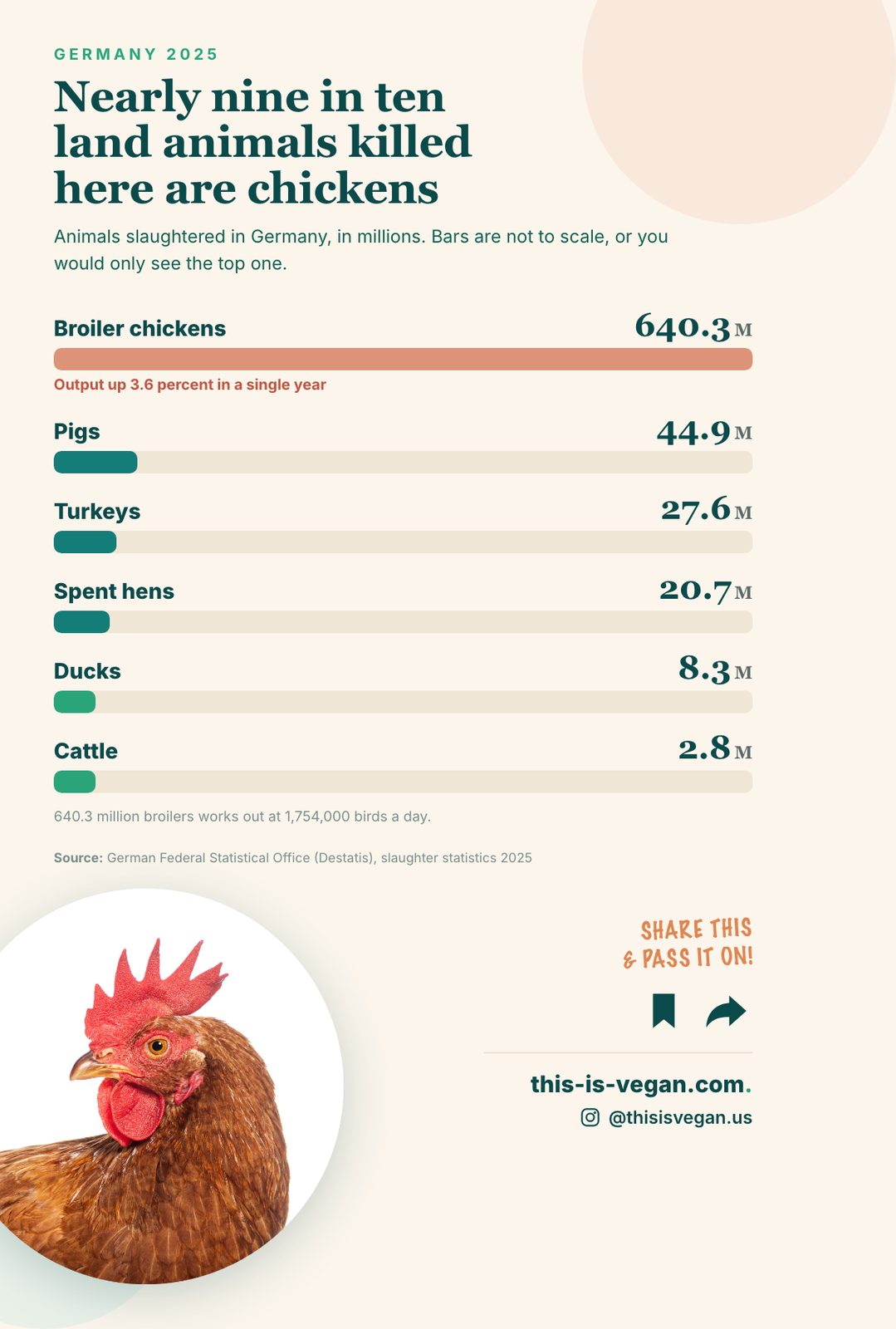
And the line is still climbing. Broiler meat output rose 3.6 percent in 2025 while turkey and beef fell. Swapping a steak for a chicken breast lowers your meat intake in kilograms and sharply raises the number of animals killed, because a broiler weighs around two kilos after a few weeks and a cow does not. Germany did fix one chapter of this industry: since 2022 no chick may be killed here for being male. What has changed for the hens themselves is another matter.
Robbie Lockie at foodfacts.org has also written up the film, focusing on the British industry and the gap between advertising and shed reality. If you want more UK market data after this piece, that is where to go.
The trailer
Is it worth watching?
Yes, for one specific person: the one at your kitchen table who walks out of “Dominion” after two minutes.
“Big Chicken” is built to be easy to start. There is no slaughterhouse footage that keeps you awake. There is a likeable guy visibly getting worse, and an industry that will not answer the phone. We rate the graphic content at 2 out of 5 on the blood score we use across our documentary guide, and the evidence at mixed, because it is made to entertain and reviewers are right that it stays shallow in places.
As a door opener it does the job. You can put it in front of people who shut down the moment a conversation turns moral. And when they ask afterwards why any of this is so cheap, you have a conversation that was not available before.
The film just does not answer that question. We have to.
If the craving stays
Practically, because this is what people actually ask: the appeal of fried chicken is crust, salt, fat and umami. None of that requires an animal. Our guide to plant-based swaps covers the everyday version.
And if you are wondering why the craving is so stubborn in the first place, taste is the smallest part of it. We went through the research here: it was never about the taste. Encouragingly, most people are more open to the switch than the industry assumes, which is what this US survey on beans instead of meat found.
Want our reporting to show up first in Google's Top Stories? Add This Is Vegan as a preferred source on Google.