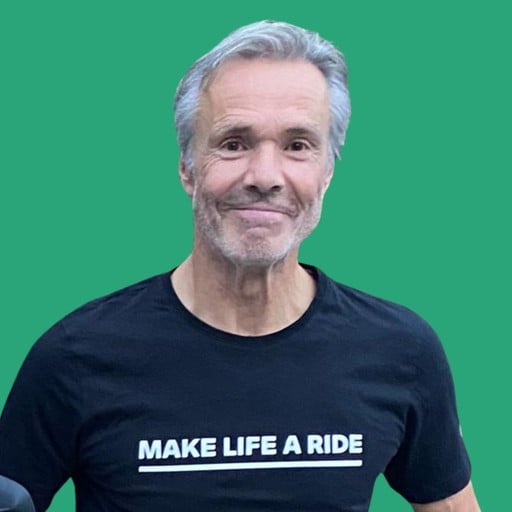

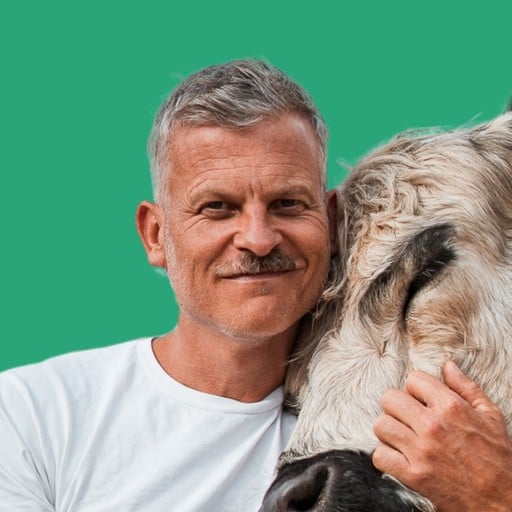
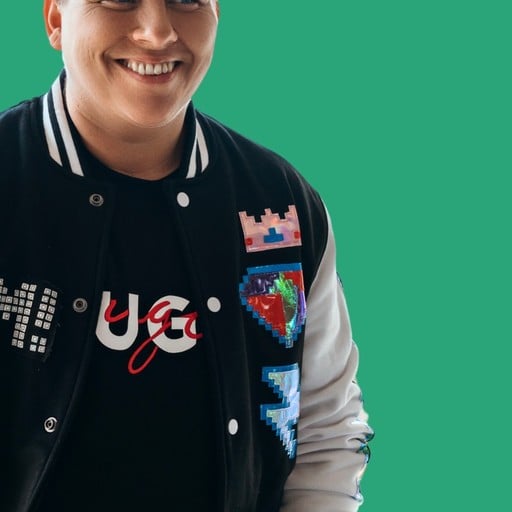




Aljosha Muttardi has launched his own fashion label, DOBE. The name stands for “Do Better”, and the first pieces carry lines you cannot see often enough this autumn: “Protect All Animals”, “FCK Fascism”, “The world is more beautiful because queer people are in it”. There are also socks with a German gender star and a bookmark shaped like his dog Henry.
Many people know Aljosha from “Queer Eye Germany” on Netflix or from the YouTube channel “Vegan ist ungesund” (“Vegan is unhealthy”). He is a doctor, an activist and, since May 2026, a published author. Now he is making clothes. We took a close look at the collection, the designs and the fine print on production. Diesen Artikel gibt es auch auf Deutsch.

What is DOBE.?
DOBE. is Aljosha Muttardi’s fashion label. The shop sells vegan statement shirts made from organic cotton (47.90 to 49.90 euros), a cap, socks printed with “*innen” and a dog-shaped bookmark. According to the shop, the shirts are made to order in Izmir, Turkey, with a delivery time of around 30 days at launch. It ships to Germany, the EU and Switzerland.

Contents6 chapters
“Do Better” instead of perfect
Aljosha announced the shop on Instagram in September, under the label “Werbung in eigener Sache”, an ad for his own business. On the website, the brand explains what the name means: “We don’t believe in perfection. We believe in doing better.”
The line that sticks is at the very end of the brand text: “And yes: if you want to deny other people their fundamental rights, you’re in the wrong place.” A fashion brand that picks its customers by their values is unusual. That is exactly what makes DOBE. interesting.

The neck label of every shirt carries a motto too: “We don’t have to be perfect, we just have to start.” Anyone who has followed Aljosha for a while will recognise his way of talking about veganism in it. Invite people in rather than lecture them.
“We don’t believe a hoodie changes the world. But it can start conversations, build community and show what we stand for.” ●
The designs: what the shirts say and what it means
At launch there are four designs, each in two colours, plus three accessories. All shirts have an oversized cut and are made from heavy organic cotton at 240 g/m².
Protect All Animals
Three words set in a calm serif typeface across the chest. The design needs no animal picture and no exclamation mark, and that is its strength. The sentence is deliberately broad: all animals, including the ones we eat, milk or turn into jumpers. The shirt comes in off-white with black lettering and in pink with white lettering, 47.90 euros each.


Team Oat Milk
The most playful piece in the collection. Big, round bubble letters in lavender sit on the back, while the front stays plain. Oat milk has long since become a kind of badge for a generation that orders “with oat, please” without thinking twice. The design takes the culture war over breakfast with humour. Available in off-white and black for 47.90 euros.

Queer & Beautiful
“The world is more beautiful because queer people are in it”: the lines curve around a shimmering rainbow-coloured globe. In the product photos, Aljosha wears this shirt himself. In an interview with queer.de he described how long it took him to accept the word “gay” for himself, because he had carried so much internalised queerphobia around. The design says the opposite of shame, and it says it loudly. Black, 47.90 euros.


FCK Fascism
The most political design is the quietest in style. On the back, in handwriting that looks like a quickly jotted list: “fck fascism, fck the patriarchy, fck racism, love dogs”, with a small heart underneath. The lettering is embroidered, which is why the off-white and pink versions cost a little more at 49.90 euros. Putting a love of dogs right next to fascism and racism is very Aljosha: serious about the issue, warm in tone.
The words “fck fascism” also appear, small and embroidered, on a pink organic cotton cap for 42.90 euros.


Socks *Innen
Our favourite piece. White tennis socks with two black stripes, and where a logo would normally sit, they say “*innen”. In German, the gender star is added to nouns so that they include women and non-binary people, for example “Veganer*innen” instead of just the male form. It has become a flashpoint in Germany: Bavaria, Hesse, Saxony, Saxony-Anhalt and Schleswig-Holstein have banned it in schools, and some also in public administration. Turning exactly that into a pair of socks is a small, very wearable statement. If you want to be included, you can now wear it on your ankle. The socks are 85 percent organic cotton, with polyamide and elastane so they stay up. They cost 15.90 euros and ship right away.


Bookmark Henry
And then there is Henry. The die-cut paper bookmark shows a long, stretched-out dog whose head peeks out over the top of the book. Henry is Aljosha’s dog, and he means a lot to him. When Aljosha visited a pig breeding farm with activist Samara Eckardt, he held a sick piglet in his arms. “In that piglet I was holding, I saw my dog Henry,” he told us in our 2024 interview. At 5.90 euros, the bookmark is the cheapest item in the shop, and it goes nicely with Aljosha’s book “Gut wird’s hier nicht mehr, aber besser” (“It won’t be good here anymore, but better”).

Why statements like these matter right now
You can smile at statement shirts. We think that in a society that is visibly drifting further apart, they have become more important. Many people are afraid: because they are queer, because they have a migration background, or because they stand up for animals and the climate and get attacked for it. We need to stand up for these people, and sometimes that starts with showing openly which side you are on.
The numbers back up that feeling. According to the figures on politically motivated crime presented by Germany’s Federal Ministry of the Interior and Federal Criminal Police Office (BKA) in June 2026, police recorded 2,377 queerphobic crimes across Germany in 2025, around 13 percent more than the year before. In the category “sexual orientation” the number rose by 17 percent. The BKA also assumes a large number of unreported cases: according to an EU survey cited in its situation report on the safety of LGBTIQ* people, 87 percent of physical or sexual attacks on queer people are never reported, and for hate speech it is 96 percent.
In May, Aljosha told queer.de something that could serve as the motto for the whole collection:
“I firmly believe that things can get better, but not on their own. Democracy and progress were hard-won and can be lost quickly.” ●
A shirt is no substitute for getting involved. But it can signal to someone on the underground: the person sitting here is someone you are safe with. And it makes clear that animal rights, anti-racism and queer rights belong together. Aljosha has been drawing that connection for years, and DOBE. makes it wearable.

How vegan and fair is DOBE.? An honest look
According to the shop, all products are 100 percent vegan, with no animal materials and no animal-derived substances in finishing. The shirts are made from organic cotton that is said to be GOTS certified. The fabric comes from Greece, and the sewing is done by Hoodie Hoo in Izmir. According to the shop, the factory is led by a woman, managing director Hale Özyaka. By its own account, more than 90 people work there on over 4,000 square metres, and production is audited externally every year.
That also means being clear about what we could not check. The shop does not give a GOTS licence number or name the certification body, and the production facility’s own website lists no certificates. We have therefore reported these points as claims made by the shop. The shop is run by Hoodie Hoo Agency GmbH in Essen on behalf of Aljosha’s management, according to its legal notice. That is a common model for creator brands.
What speaks for the concept is that the shirts are only produced after they are ordered. That avoids overproduction, which is a huge problem in the fashion industry. The shop also explicitly asks customers not to order several sizes just to send most of them back. Anyone who has seen how many returns end up as waste knows this request matters.
Protect All Animals: why vegan clothing is about more than cotton
A cotton shirt is almost automatically vegan. Clothing as a whole is a different story. Sheep are bred and shorn for wool, and for merino wool from Australia the painful practice of mulesing is still not banned. Down jackets are filled with the feathers of geese and ducks, and leather is the skin of killed animals. Which materials come from animals and how to spot them is covered in our guide Why wool is not vegan.
That is why a sentence like “Protect All Animals” on a shirt is more than a slogan. It is a reminder that fashion is an industry in which very many animals die for material every year. Small labels like DOBE. show that it is possible to do without from day one.
Aljosha Muttardi on the Plantbased Podcast
In May 2026, Aljosha joined us on the Plantbased Podcast for the second time. He talks about how “Vegan ist ungesund” really came to an end, about his ADHD diagnosis, about the feeling of never being good enough, and about his book. The episode is in German; you can watch it in full here:
Our first conversation from 2024 is also available as a written interview, in German: „Wir leben in einem kaputten System“ (“We live in a broken system”). It covers his path to veganism, activist burnout and the visit to the pig breeding farm. More episodes are on our Plantbased Podcast page.
How this article was made ●
All details on products, prices, materials and production come from the shop dobe-shop.com and its legal notice, as of 11 September 2026. Quotes from the German shop and from German interviews were translated by us. The product photos are by DOBE. and were shot by DAKIEKSTE; the screenshots show Aljosha’s public Instagram stories. The figures on queerphobic crime come from Germany’s 2025 statistics on politically motivated crime (Federal Ministry of the Interior/BKA) and the BKA situation report. Aljosha Muttardi was a guest on our Plantbased Podcast in 2024 and 2026. This article contains no affiliate links, and we earn nothing from purchases in the DOBE. shop.
Want our reporting to show up first in Google's Top Stories? Add This Is Vegan as a preferred source on Google.