







Usually, yes. Traditional soy sauce is made from soybeans, wheat, salt and water, fermented for months with the help of a mould. No animals involved. Kikkoman even carries the V-Label from the European Vegetarian Union on its naturally brewed soy sauce, and calls it 100% vegan on its European product page.
The trouble starts with the stuff built on top of soy sauce. Sweet glazes, teriyaki, oyster sauce and Japanese soup bases can contain honey, oyster extract or fish. Here’s how to spot them. If you’re checking your whole cupboard, our Is it vegan? guide goes product by product.
Contents9 chapters
Four ingredients and a mould
Brewed soy sauce happens in two stages. Steamed soybeans and roasted wheat are inoculated with Aspergillus oryzae to make koji. The mould produces enzymes that break down protein and starch. The koji then goes into brine, a mash called moromi, where lactic acid bacteria and yeasts keep working for weeks to months depending on the brewery. Press, filter, pasteurise, bottle.
Kikkoman says its soy sauce matures for around six months. The mould is a microorganism, so it’s no more a vegan issue than the yeast in your bread.
Where animal products sneak in
- Honey. Kikkoman’s Teriyaki BBQ Sauce with Honey, sold in Germany, lists 5% honey. Plenty of supermarket teriyaki and “sticky” glazes do the same.
- Oyster extract. Traditional oyster sauce is mostly cooked-down oysters. Lee Kum Kee’s Premium Oyster Sauce is 40% oyster extract.
- Bonito and fish. Japanese noodle soup bases and dipping sauces (tsuyu) are often made with dashi from bonito. Kikkoman USA’s Memmi Noodle Soup Base lists bonito extract right after soy sauce, sugar, water and salt.
- E627 and E631. Disodium guanylate and disodium inosinate turn up in some cheaper soy sauces. They can be made from fish, meat or by fermentation, and the label won’t tell you which.
- Restaurant blends. The bottle on the table is almost always fine. House dips, glazes and marinades can include fish sauce, dashi or honey. Just ask.
Reading the label in 20 seconds
A vegan trademark (V-Label, Vegan Society, “suitable for vegans”) settles it. No logo? Scan the ingredients for honey, oyster, fish, anchovy, bonito, katsuobushi, shrimp, crustaceans and molluscs. Under UK and EU allergen rules, fish, crustaceans and molluscs have to be emphasised in the ingredients list, which makes seafood hard to hide.
The grey zone is flavour enhancers and “natural flavourings”. On a certified vegan soy sauce, ignore them. On an unbranded seasoning sauce without a logo, email the manufacturer.
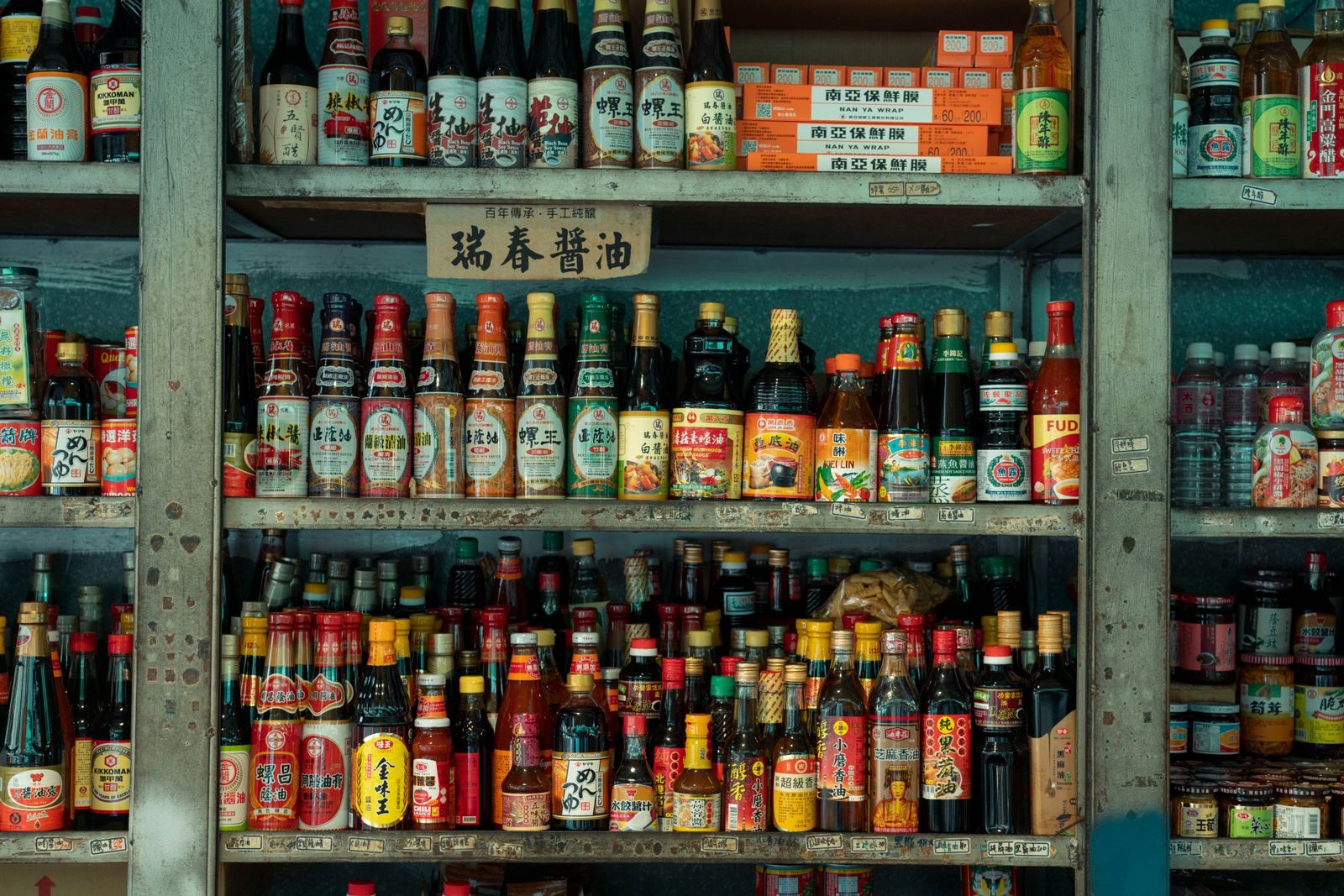
Brand check: as of 27 September 2026
We only list products whose status we could confirm on a primary source, usually the manufacturer’s own site. Recipes change, so the label in your hand wins.
| Product | Vegan? | Source | Checked |
|---|---|---|---|
| Kikkoman Naturally Brewed Soy Sauce | Yes, V-Label | Kikkoman EU | 27.09.2026 |
| Kikkoman Tamari Gluten Free | Yes, V-Label | Kikkoman (DE) | 27.09.2026 |
| Kikkoman Teriyaki BBQ Sauce with Honey (Germany) | No, 5% honey | Kikkoman (DE) | 27.09.2026 |
| Clearspring Organic Japanese Shoyu | Yes, plant-based | Clearspring | 27.09.2026 |
| Clearspring Organic Yaemon Tamari (Double Strength) | Yes, vegan | Clearspring | 27.09.2026 |
| Blue Dragon Light Soy Sauce | Yes, suitable for vegans | Blue Dragon | 27.09.2026 |
| Lee Kum Kee Premium Light Soy Sauce | Yes, suitable for vegans | Lee Kum Kee UK | 27.09.2026 |
| Lee Kum Kee Premium Oyster Sauce | No, 40% oyster extract | Lee Kum Kee UK | 27.09.2026 |
| Lee Kum Kee Vegan Oyster Flavour Sauce | Yes, listed as vegan | Lee Kum Kee UK | 27.09.2026 |
| Lea & Perrins Worcestershire Sauce | No, anchovies | Kraft Heinz (US) | 27.09.2026 |
Shoyu, tamari, kecap manis
Shoyu is the Japanese standard, brewed from soy and wheat. That’s the bottle in most kitchens.
Tamari uses little or no wheat, so it tastes rounder and deeper. If you avoid gluten, go for a tamari with a gluten-free mark, such as Kikkoman Tamari or Clearspring’s Yaemon Tamari. Regular soy sauce contains wheat. Kikkoman says most of the gluten breaks down during fermentation, but it still doesn’t sell the standard sauce as gluten-free.
Kecap manis is Indonesia’s syrupy sweet soy sauce, loaded with palm or cane sugar. It’s usually vegan, and Kikkoman’s sweet soy sauce carries the V-Label. One naming trap: in Indonesian, “kecap” covers fermented seasoning sauces in general, and “kecap ikan” is fish sauce.
Teriyaki, oyster sauce, fish sauce, Worcestershire
- Teriyaki: soy sauce, sugar and rice wine or wine. Often vegan, but honey versions are common.
- Oyster sauce: never vegan in its classic form. The vegan version is usually sold as “vegetarian oyster sauce” or mushroom stir-fry sauce.
- Fish sauce: small fish, mostly anchovies, fermented with salt for 12 to 18 months. Vegan versions use mushrooms, seaweed or soy. Same story as surimi, which we unpacked in Is imitation crab vegan?
- Worcestershire sauce: the Lea & Perrins original contains anchovies. Vegan versions exist, so check for a logo.
Anchovies, oysters and bycatch: who pays for the umami
Soy sauce itself raises few ethical questions. Its neighbours on the shelf do. A bottle of fish sauce is a concentrate of thousands of small fish. A peer-reviewed estimate published in Animal Welfare in 2024 puts the number of wild fish caught each year between 2000 and 2019 at 1.1 to 2.2 trillion. Counted as individuals, the picture shifts.
Then there’s what nobody meant to catch. The UN’s Food and Agriculture Organization estimated global discards, animals thrown back dead or dying, at around 9.1 million tonnes a year for 2010 to 2014, roughly a tenth of the catch.
The idea that fish feel things is no longer fringe. The 2024 New York Declaration on Animal Consciousness, signed by hundreds of researchers, says there is at least a realistic possibility of conscious experience in all vertebrates, fish included. Oysters are harder to call, their nervous system is simple. Our view: when a mushroom sauce does the same job in the wok, there’s no good reason to take the chance.
And this doesn’t hinge on taste. Even if fish sauce beat every alternative, the cost to the animals would be the same.
FAQ
Is Kikkoman soy sauce vegan?
Yes. Kikkoman’s naturally brewed soy sauce is V-Label certified, and according to Kikkoman’s German FAQ so are its tamari, less-salt, organic and sweet soy sauces. The honey teriyaki is not.
Is soy sauce gluten-free?
Regular soy sauce isn’t, because it’s brewed with wheat. Look for tamari with a gluten-free mark.
Is soy sauce at sushi restaurants vegan?
The bottle on the table almost always is. House dips, glazes and noodle broths are often made with bonito dashi, so ask.
Is dark soy sauce vegan?
Usually. Lee Kum Kee’s Premium Dark Soy Sauce, for example, is on the brand’s UK vegan list. Check the label like with any other bottle.
On 27 September 2026 we checked ingredient lists and vegan statements directly on the websites of Kikkoman, Clearspring, Blue Dragon, Lee Kum Kee and Kraft Heinz. Only products with a documented status made the table. Kikkoman’s honey teriyaki and tamari were checked on the German site, Lea & Perrins on the US site, so recipes in your country may differ. We did not taste or test these sauces; this is an overview. This article contains no affiliate links.
Sources
- Kikkoman Europe: Naturally Brewed Soy Sauce, FAQ (German site)
- Kikkoman Germany: Tamari Gluten Free, Teriyaki BBQ Sauce with Honey
- Kikkoman USA: Memmi Noodle Soup Base
- Clearspring: Organic Japanese Shoyu, Organic Yaemon Tamari
- Blue Dragon: Light Soy Sauce
- Lee Kum Kee UK: Premium Light Soy Sauce, Premium Oyster Sauce, Vegan range
- Kraft Heinz: Lea & Perrins The Original Worcestershire Sauce
- Zhou et al. (2019), Journal of Food Science and Technology: Desired soy sauce characteristics and autolysis of Aspergillus oryzae
- Sakpetch et al., Journal of Food Science and Technology: Physicochemical characteristics and flavor profiles of fermented fish sauce (budu)
- Mood et al. (2024), Animal Welfare: Estimated numbers of wild fish caught each year (DOI 10.1017/awf.2024.7)
- FAO (2019): A third assessment of global marine fisheries discards
- The New York Declaration on Animal Consciousness (2024)