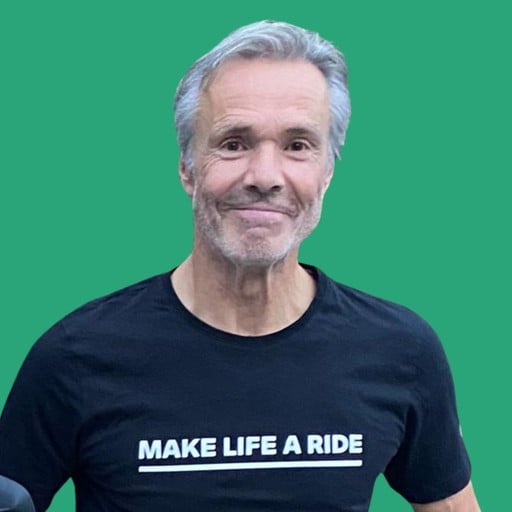
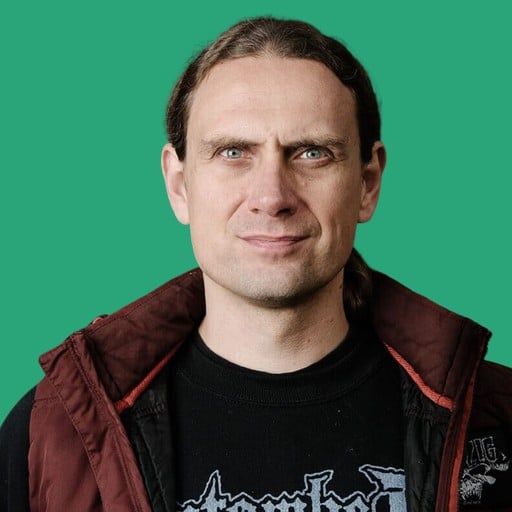



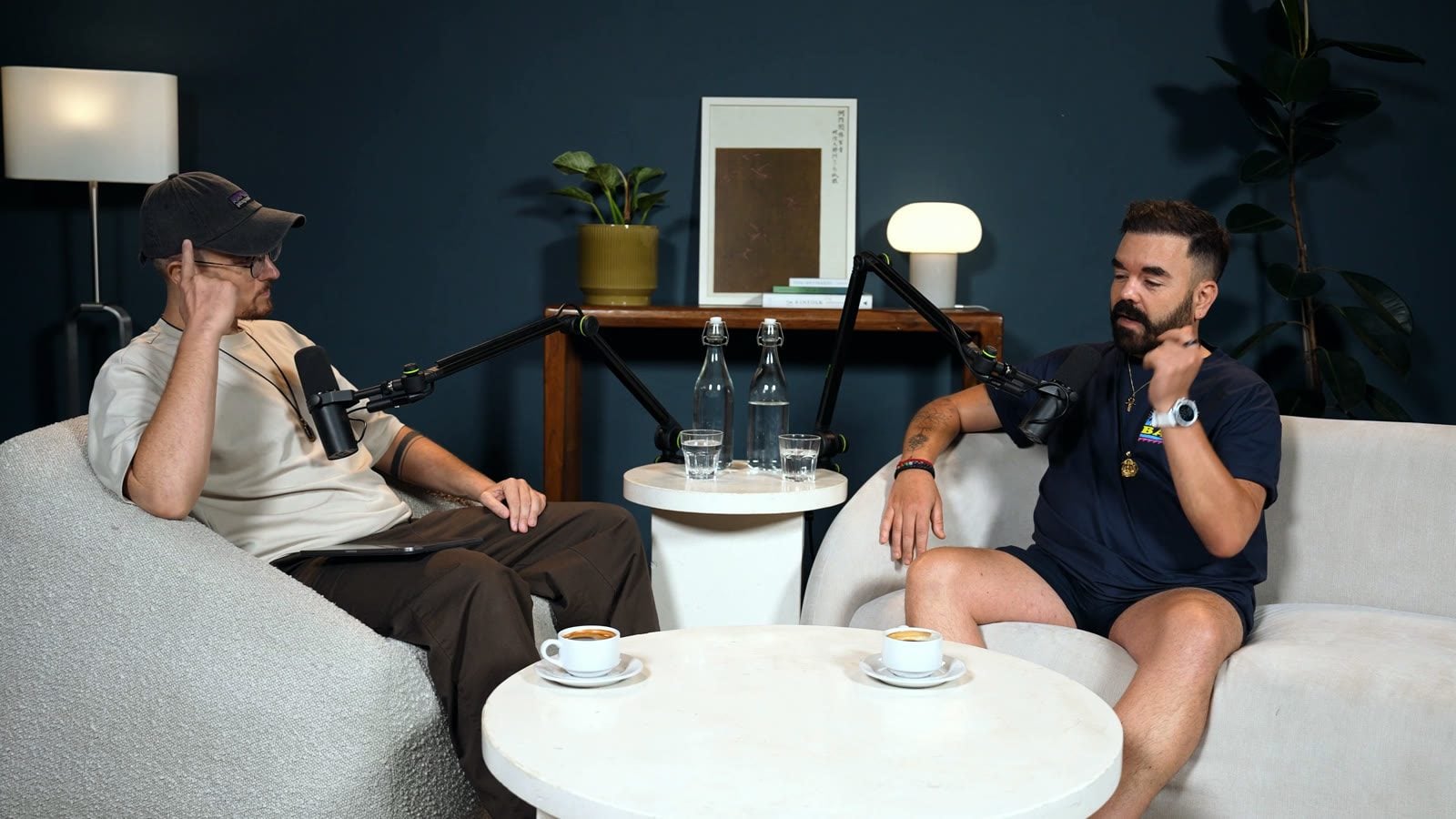
If a vegan story has crossed your feed at any point in the last decade, chances are Robbie Lockie had something to do with it. As co-founder of Plant Based News he built one of the biggest vegan media outlets in the world, reaching 85 to 100 million impressions a month at its peak. And then, after almost ten years, he walked away.
Why, that is what he explains in episode 100 of our podcast. We talk about his childhood in Zimbabwe, a 105-year-old grandmother with a serious science fiction habit, the question of why we get lied to so often when it comes to food, and the hardest discipline in activism: staying hopeful anyway.
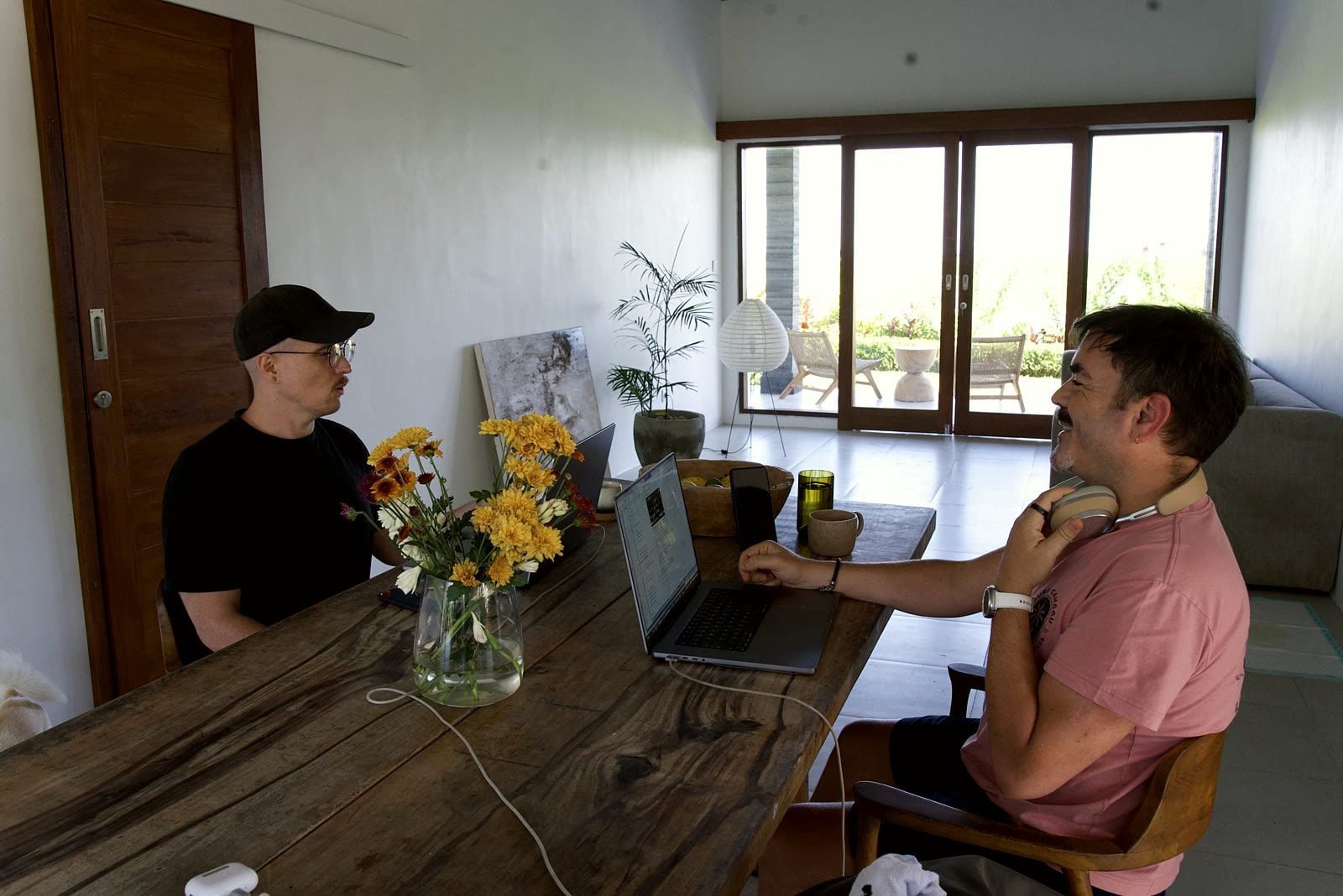
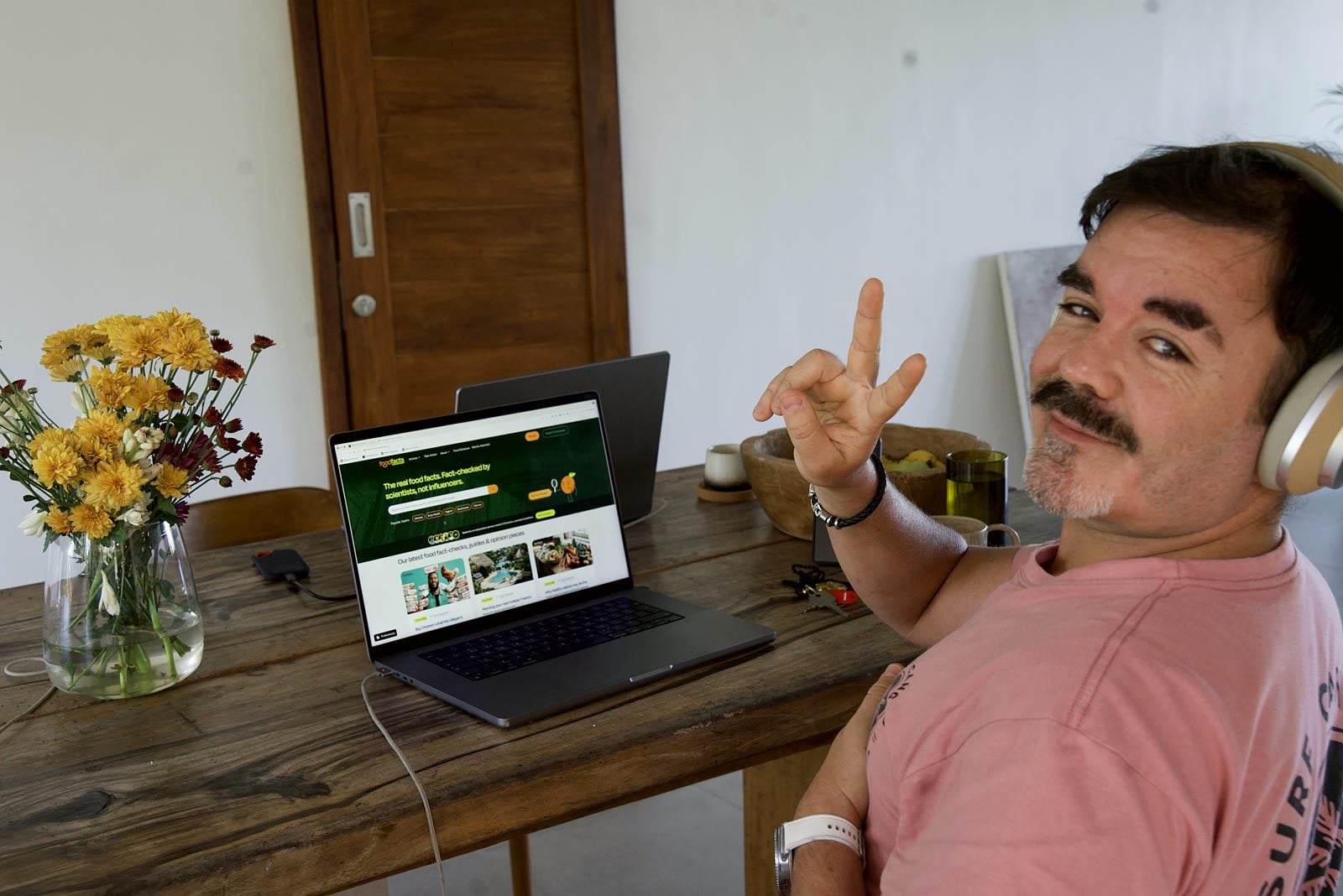
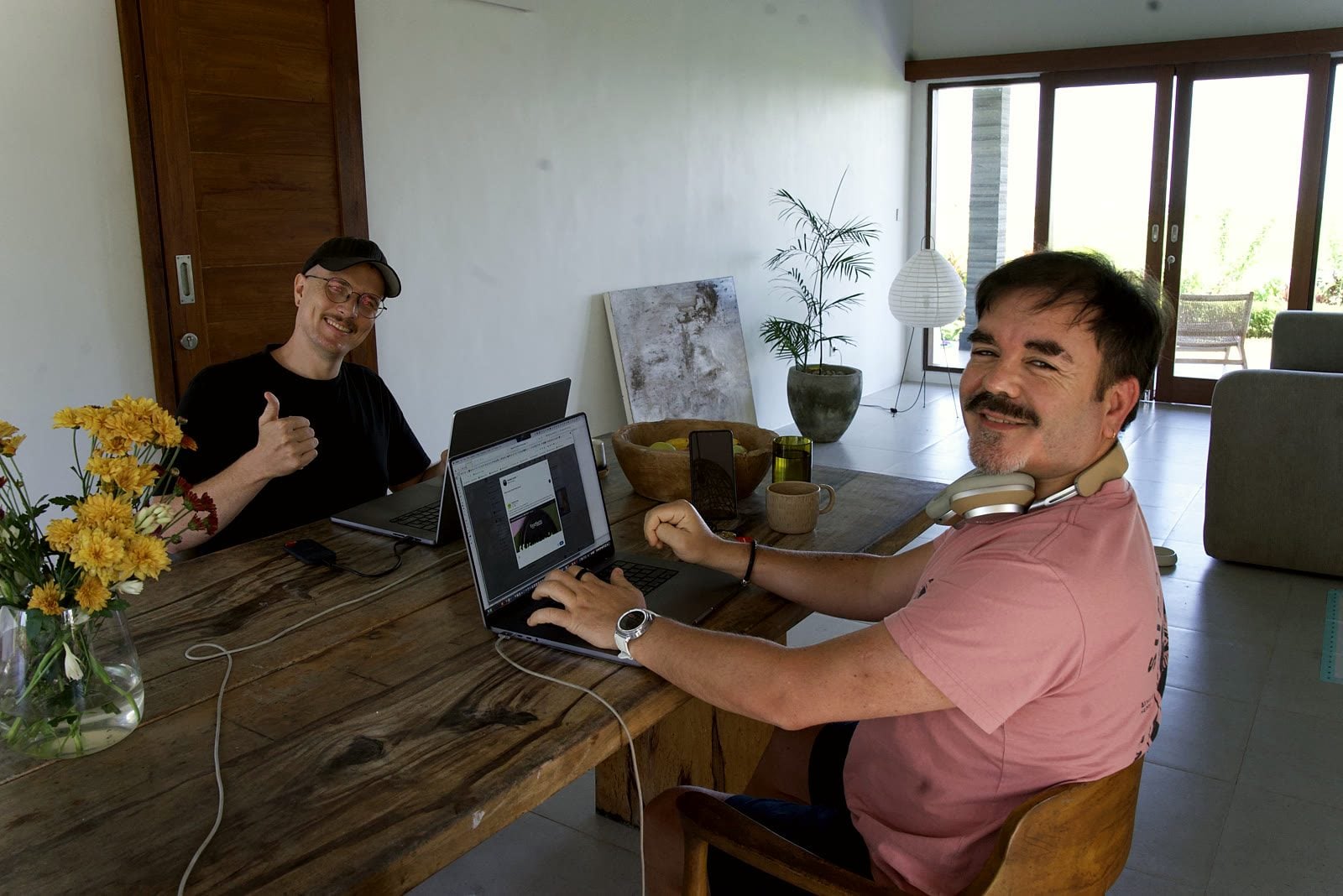
Robbie and I did not record this conversation remotely. We sat across from each other in Bali, where we had spent the previous weeks co-working at the same wooden table almost every day, he on foodfacts, me on This Is Vegan. Recording episode 100 with him was, more than anything, personal.
Here is the conversation as a written interview.
Who is Robbie Lockie? ●
- Grew up in Zimbabwe, now lives between London and Bali
- Co-founder of Plant Based News, for almost 10 years one of the highest-reach vegan media outlets in the world
- Founder of foodfacts.org: non-profit fact-checking for the food system, guided by an independent advisory board of doctors, scientists and dietitians
- Designer, activist, and convinced that AI can make the animal rights movement faster
- Vegan since the day he could no longer look away from the animal industry, as he puts it
Contents10 chapters
- 01Watch the full episode with Robbie Lockie
- 02Growing up in Zimbabwe: geese, art, and a grandmother with a science fiction collection
- 03Plant Based News: up to 100 million impressions a month
- 04Walking away: “Every week people wrote to me: this is wrong, this is a lie”
- 05The million question: buy ads or change the system?
- 06“Humans are a parasite”? On anger, misanthropy and hope
- 07Speciesism: 70 billion individuals nobody sees
- 08AI as a superpower: vibe coding between rice fields
- 09One last question: after 20 years of activism, what still gives you hope?
- 10Bonus: sunrise at 1,717 metres
Watch the full episode with Robbie Lockie
The complete conversation is on YouTube. Click the preview image to start the player; nothing loads from YouTube before that.
Prefer audio only? The episode is also on Spotify:
The conversation below has been condensed and lightly edited for readability. Nothing has been changed in meaning.
Growing up in Zimbabwe: geese, art, and a grandmother with a science fiction collection
Robbie, before we get to Plant Based News and foodfacts: where does your story begin?
Robbie: I grew up in Zimbabwe, in the countryside, in a very small town which sat in the bowl of what looked like a giant crater. I had a simple life. We would swim in lakes and rivers, I spent my days climbing trees and falling out of them, always outdoors, always surrounded by animals. Sheep, chickens, cows, a cat I was obsessed with, a couple of pet rats, dogs. And a horde of geese that would chase me every time I came home from school. I was terrified of them.
My parents were very young, my mum is an artist, and I spent half my childhood covered in paint on her studio floor. And then there is my grandmother, who is now 105. She was obsessed with science fiction and would read me those big novels as a child. Creativity was never a hobby in our family. It was simply everywhere.
And from the crater town to the internet?
Robbie: In 1999 I worked on a digital publishing platform, essentially an online newspaper in Zimbabwe, one of the first in the country. I built layouts and microsites, and I never stopped building things on the internet after that. It has been amazing to watch it transform from quite an ugly form of communicating into a technology where, with AI, anything is possible.
Plant Based News: up to 100 million impressions a month
Plant Based News became one of the biggest vegan media outlets in the world. How big did it actually get?
Robbie: At our peak we reached 85 to 100 million impressions a month, with a very small team. That showed me what is possible when you take topics seriously that nobody else takes seriously. When we started, mainstream media either laughed at vegan stories or ignored them. We filled a gap that turned out to be enormous.
Walking away: “Every week people wrote to me: this is wrong, this is a lie”
After almost ten years you left Plant Based News. Why?
Robbie: At the end of 2023 I became very frustrated with the amount of misinformation I was seeing about nutrition and health, on social media and in mainstream news alike. Every week I was getting messages from friends, family and colleagues: this is wrong, this is false, debunk this, debunk that. At some point I thought, there has got to be a systematic way to deal with this. So I stepped back from running Plant Based News after almost ten years and focused all my energy on foodfacts.org.
What exactly is foodfacts?
Robbie: A non-profit, run mostly by volunteers. Our mission is to raise the levels of nutrition and media literacy. We want people to understand what good nutritional science looks like and who they can trust. Because social media is completely packed with self-proclaimed health influencers with no qualifications whatsoever. People who have seen an opportunity to sell pills, potions and courses that nobody needs. And to get there, they scaremonger about glucose spikes, about vegetables, about seed oils.
And your answer is fact-checking?
Robbie: Every week we publish fact checks, guides and explainers, reviewed by an independent advisory board of doctors, scientists and dietitians. But foodfacts is deliberately about more than nutrition. It is about the entire food system. The UK has 68 million people, and five and a half million children there live in food poverty, some of them missing up to two meals a day. The shrimp industry relies on slavery and child labour across the planet. When we talk about a prawn on a plate, we are talking about health, the environment and human rights at the same time.
How professionally food misinformation is produced these days is also the subject of the Netflix documentary Big Chicken, which foodfacts helped fact-check. We covered the film in detail here.
The million question: buy ads or change the system?
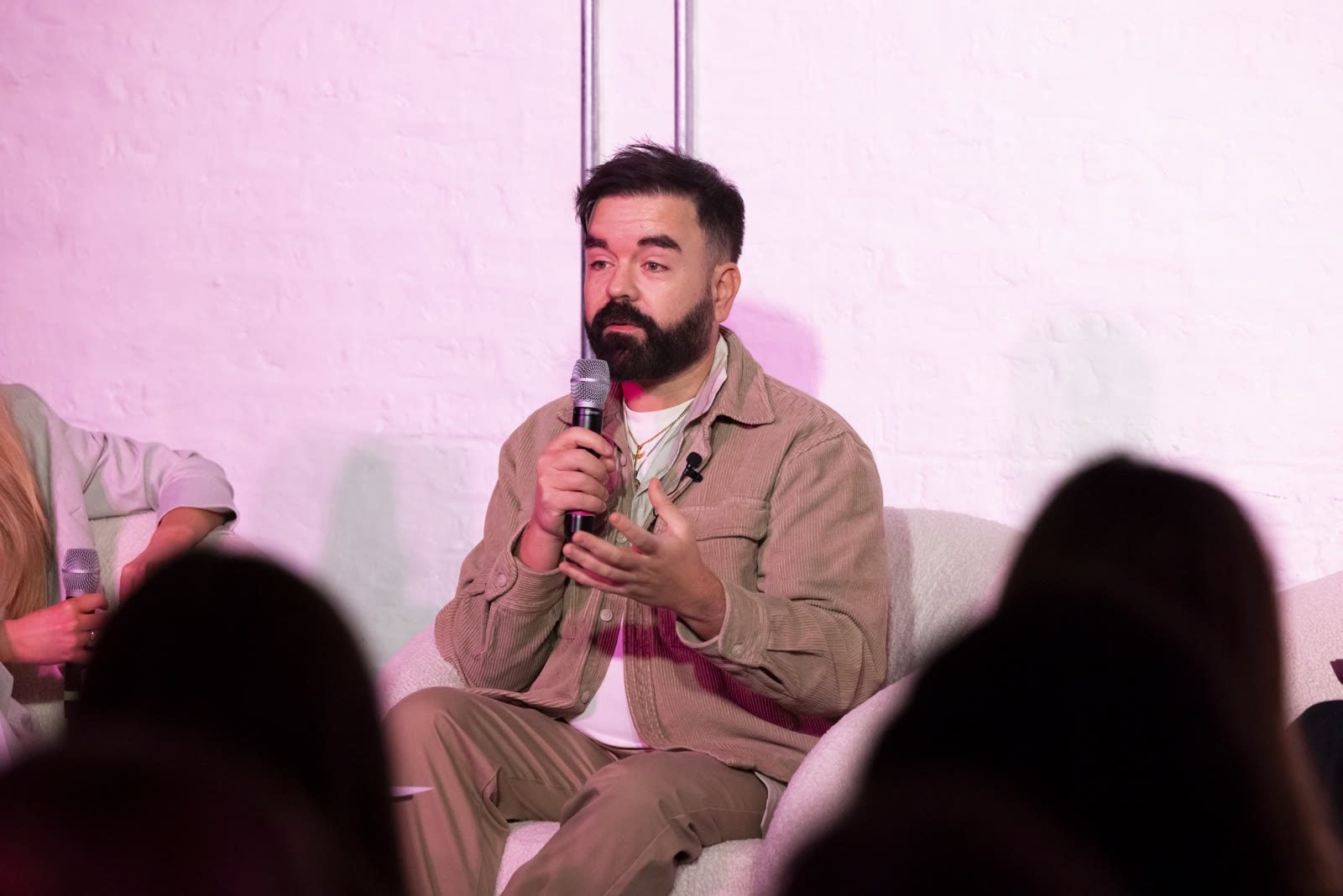
Say someone hands you a million euros for the movement. Billboards all over Europe?
Robbie: Advertising can be powerful, and you could very easily spend a million on billboards that millions of people will see. But the big question is: then what? Does anyone change their life because they saw a billboard?
Rather than burning it all in a month, I would bank that money and set up a non-profit that pays a large group of people to work inside the system itself: in universities, schools, hospitals, even prisons. People who facilitate plant-based meals on the ground. Meaningful change needs people working full-time in the places where food decisions are made. A billboard alone will never do that.
And the second answer: documentaries. A successful documentary can be seen by millions of people, translated into many languages, and it keeps working for years. That type of educational content has a lifespan advertising can only dream of.
“Humans are a parasite”? On anger, misanthropy and hope
If you spend every day looking at animal suffering, it is easy to despair of people. How do you deal with that?
Robbie: It is very easy to become misanthropic and think that humans are just a parasite on this planet, killing everything. Which is partially true. For me it starts with acceptance: there has always been suffering on planet Earth, war, death and violence, going back to the dawn of humankind. But if you look at the arc of all of that, we are changing as a species. Even with wars raging right now, seen from a bird’s eye view we are becoming a more peaceful species every day. As more people are lifted out of poverty, there is less violence.
And then it is a question of perspective. If you immerse yourself in suffering all day, every day, it will overwhelm you, and there is no magic solution for that. What keeps me positive is remembering that every day there are good people cleaning the beaches of Bali, picking litter in London, feeding the homeless. The world is brimming with kind, compassionate, motivated people who see an opportunity for a better world. Evil exists. But it is hopelessly outnumbered.
Speciesism: 70 billion individuals nobody sees
You say the root problem is speciesism. Explain that for anyone hearing the word for the first time.
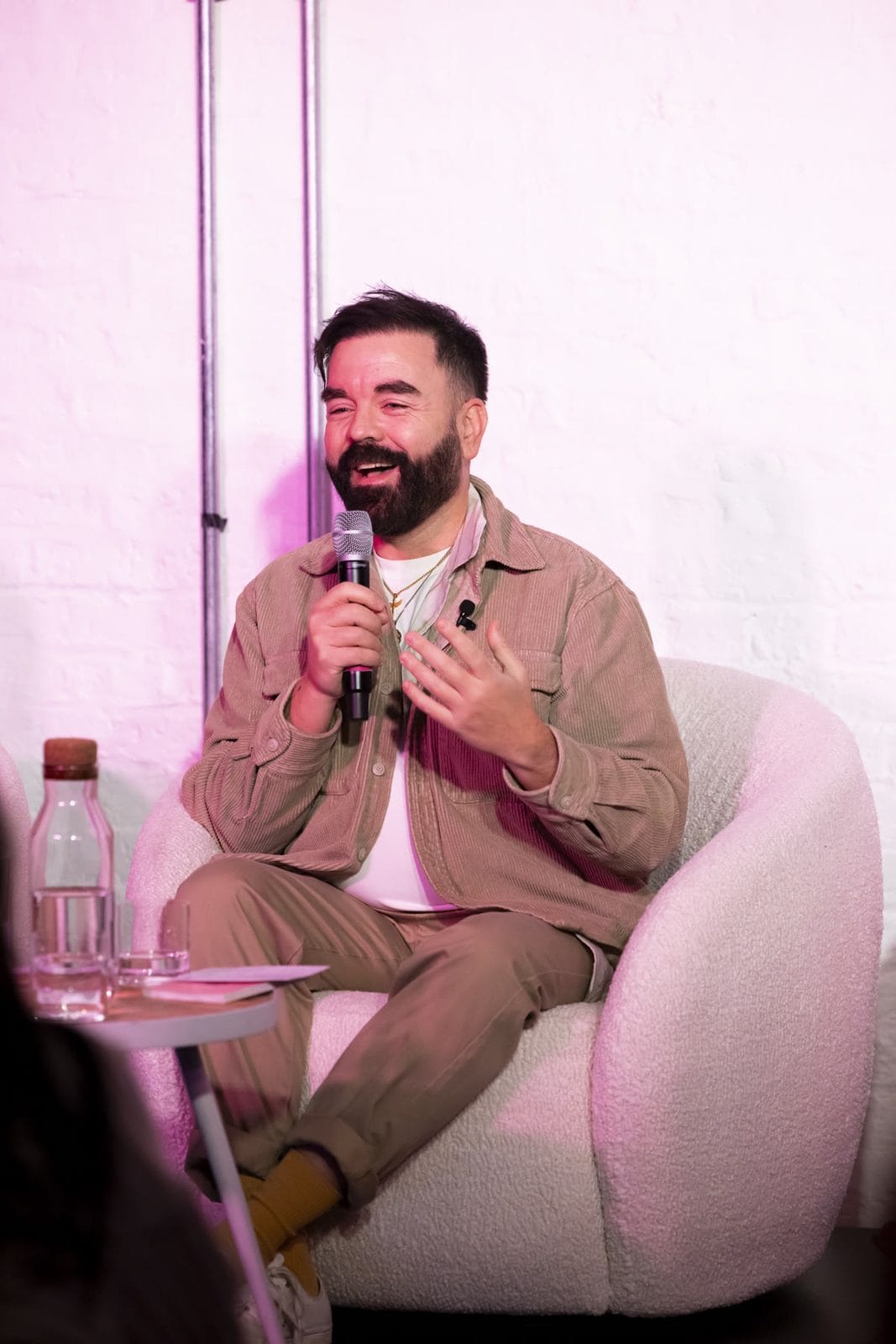
Robbie: Even our language is speciesist. We refer to a dog or a chicken as “it”, as if they were inanimate objects. But an animal is an individual. Animals dream, they feel fear, they have memories, families, emotions. They are different to us, but they are alike in all the ways that really matter.
Once you truly see animals that way, you realise what a tragedy it is that we kill more than 70 billion land animals every single year. And that does not even count fish. Fish are in the trillions. Each one unique, each one an individual.
For the average person, a pig is just bacon. They see the pack of meat in the supermarket, they never see the animal. So I keep working, in different ways, to help people see animals as individuals again. Even giving an animal a name changes something. It is a bit like my ADHD: a painful realisation that I participated in all of this for most of my life without ever seeing it.
AI as a superpower: vibe coding between rice fields
We spent the past weeks working side by side at this wooden table, and your AI enthusiasm is contagious. What does AI mean for your work?
Robbie: Vibe coding is a skill I have acquired over the last few years, and it feels like a superpower. Anything I can imagine, I can build. For a small non-profit like foodfacts that is a gamechanger: with a handful of volunteers we can now build things that used to require an agency.
My most important tip for anyone starting out: do not just ask the AI for an answer. Tell it what you want to achieve and have it write a detailed prompt for that. And let it ask you five questions first to make the prompt better. The result is on a completely different level.
And it worked on me. After our first session, my entire workflow suddenly ran on Claude too.
Robbie: That is the beautiful part. These tools were made for activists, most of us just do not know it yet. Small teams with big missions benefit the most.
One last question: after 20 years of activism, what still gives you hope?
Robbie: Seeing people decide to look, every single day. The movement is bigger, smarter and more professional than it has ever been. And with every person who recognises animals as individuals, it grows a little more.
Bonus: sunrise at 1,717 metres
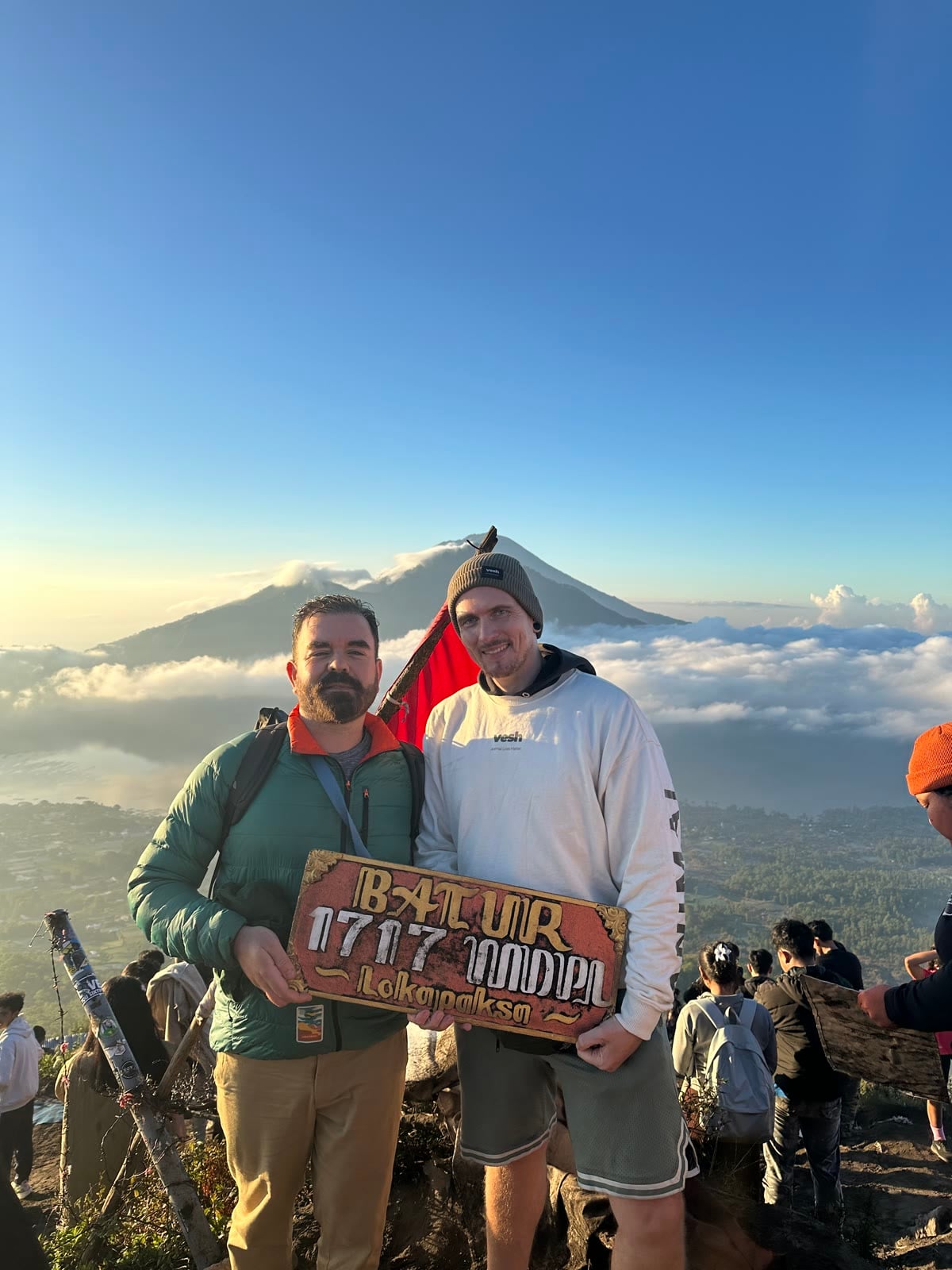
A few days after the recording we got up at three in the morning and hiked Mount Batur together, an active volcano in the northeast of Bali. At the top, at 1,717 metres, we got a sunrise above a sea of clouds, a view of Mount Agung and properly cold fingers. If you look closely: the hoodie and beanie in the photo are from VESH, a vegan statement label you can get at a discount through our community deals.
How this interview came about ●
Yannick spoke with Robbie Lockie in Bali in May 2026 for episode 100 of the Plantbased Podcast, in person in the studio, for almost two hours. For this written version we condensed and lightly edited the conversation without changing what was said. You can find the full episode in the player above, on YouTube and on Spotify. The photos are from our co-working weeks in Bali, the podcast studio, Robbie’s stage appearances and our Mount Batur hike.
FAQ - What readers ask
The million question: buy ads or change the system?
One last question: after 20 years of activism, what still gives you hope?
Want our reporting to show up first in Google's Top Stories? Add This Is Vegan as a preferred source on Google.