







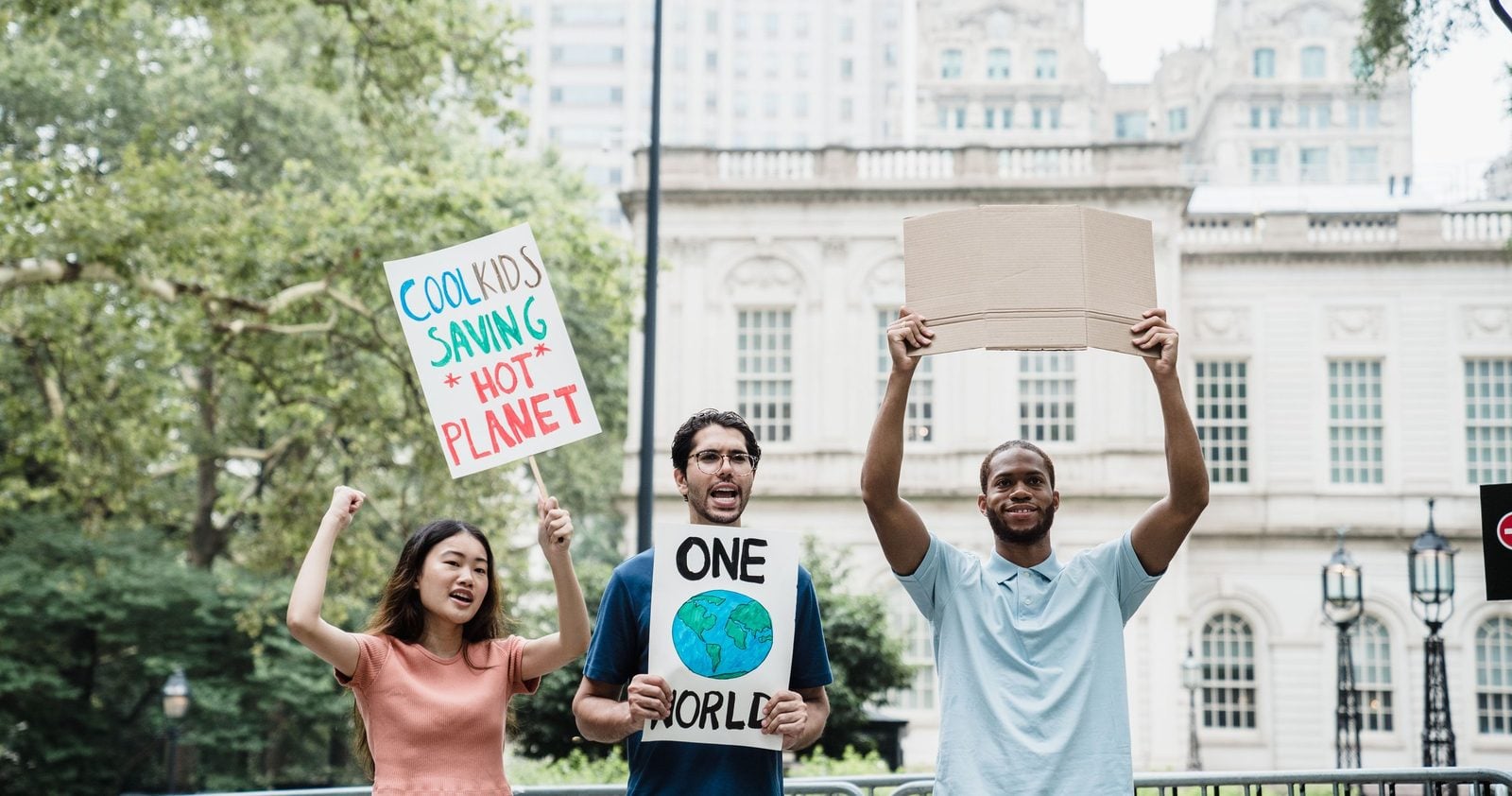
Earth Day 2027 falls on Thursday, 22 April. For the 58th time, people around the world will call for better protection of the planet. And this year the theme is about the very thing we write about every day: “Food for Our Planet” puts the food system at the centre. Here is everything you need to know about Earth Day 2027, from its history to the numbers that show why what we eat matters so much for the Earth.
In short
- When: Thursday, 22 April 2027, with events throughout April
- Theme: “Food for Our Planet”, a multi-year campaign to transform food systems
- Who: organised by EARTHDAY.ORG, which says it mobilises around one billion people in 193 countries
- Why food: the food system causes about a third of all human-made greenhouse gases, more than half of food production emissions come from animal products
- What you can do: eat more plant-based food, waste less, take part and bring others along
Contents9 chapters
When is Earth Day 2027?.
Earth Day falls on 22 April every year. In 2027 that is a Thursday. The day is coordinated by the US organisation EARTHDAY.ORG, which has run it since 1970. Its campaign spans the whole of April as “Earth Month” and culminates on 22 April. The United Nations has also marked 22 April as International Mother Earth Day since 2009.
The 2027 theme: Food for Our Planet.
EARTHDAY.ORG presented the new theme in October 2026. “Food for Our Planet” is a campaign over several years calling for a transformation of food systems, which the organisation says contribute to some of the world’s most pressing problems. It has three pillars:
- Healthy People: food transparency, nutrition and plant-based diets, plus the impact of chemicals, plastics and ultra-processed foods
- Healthy Soils: regenerative agriculture, biodiversity and resilient food production
- Healthy Futures: food waste, circular food systems, sustainable consumption and the next generation
Earlier themes focused elsewhere: “Planet vs. Plastics” in 2024, and “Our Power, Our Planet” in 2025 and 2026, with a focus on renewable energy and political engagement.
How it all began.
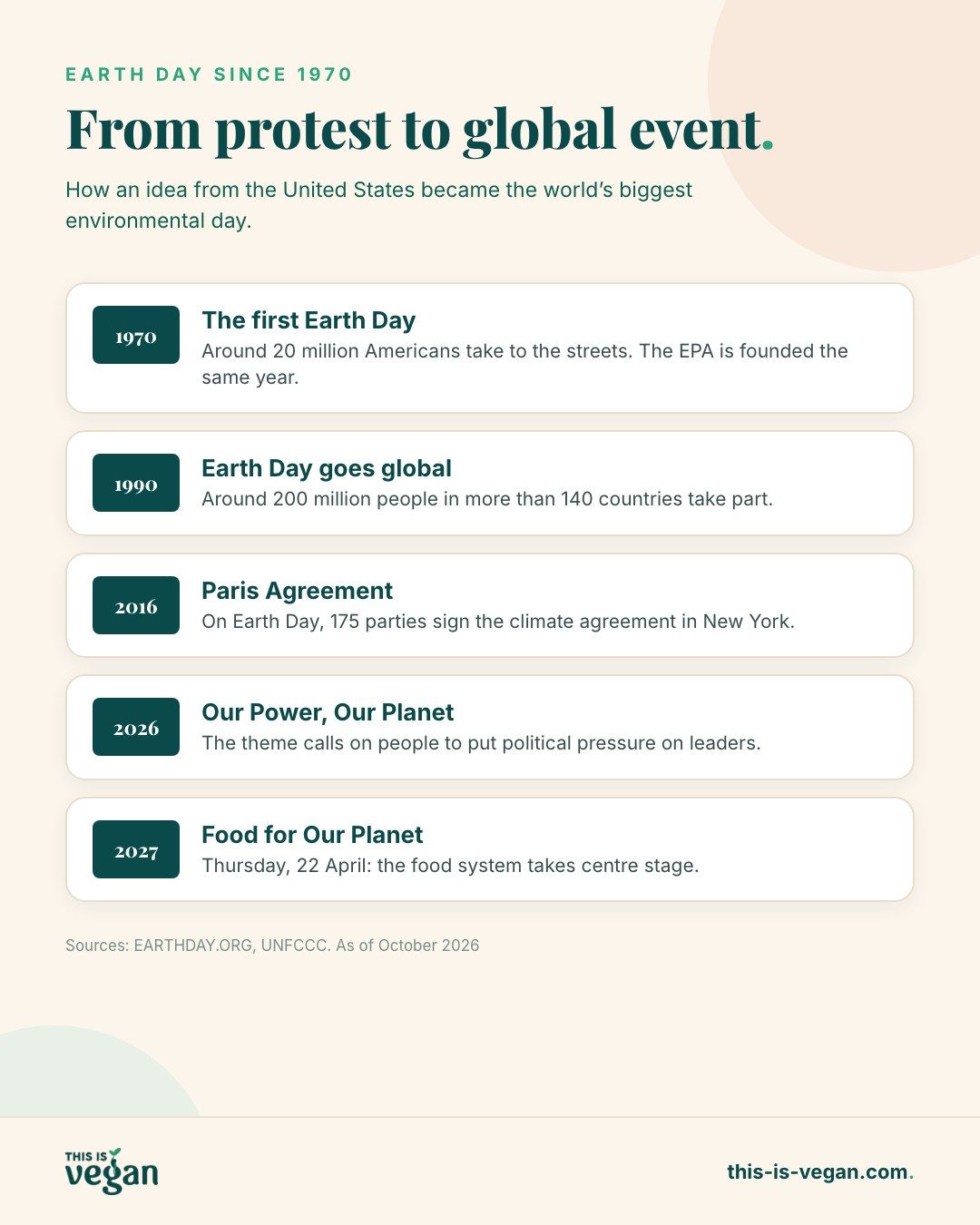
The first Earth Day took place in the United States on 22 April 1970. Senator Gaylord Nelson came up with the idea, and the young activist Denis Hayes organised it. EARTHDAY.ORG estimates that around 20 million people took to the streets, about one in ten Americans at the time. The pressure worked: the Environmental Protection Agency was created the same year and the Clean Air Act was strengthened. The Clean Water Act followed in 1972 and the Endangered Species Act in 1973.
In 1990 Earth Day went global, with around 200 million people in more than 140 countries. On Earth Day 2016, 175 parties signed the Paris Agreement in New York.
Earth Day, Earth Hour, Overshoot Day.
- Earth Day on 22 April is a day of action for the environment as a whole, with a new theme every year.
- Earth Hour is a WWF campaign in March in which people, cities and companies switch off their lights for an hour.
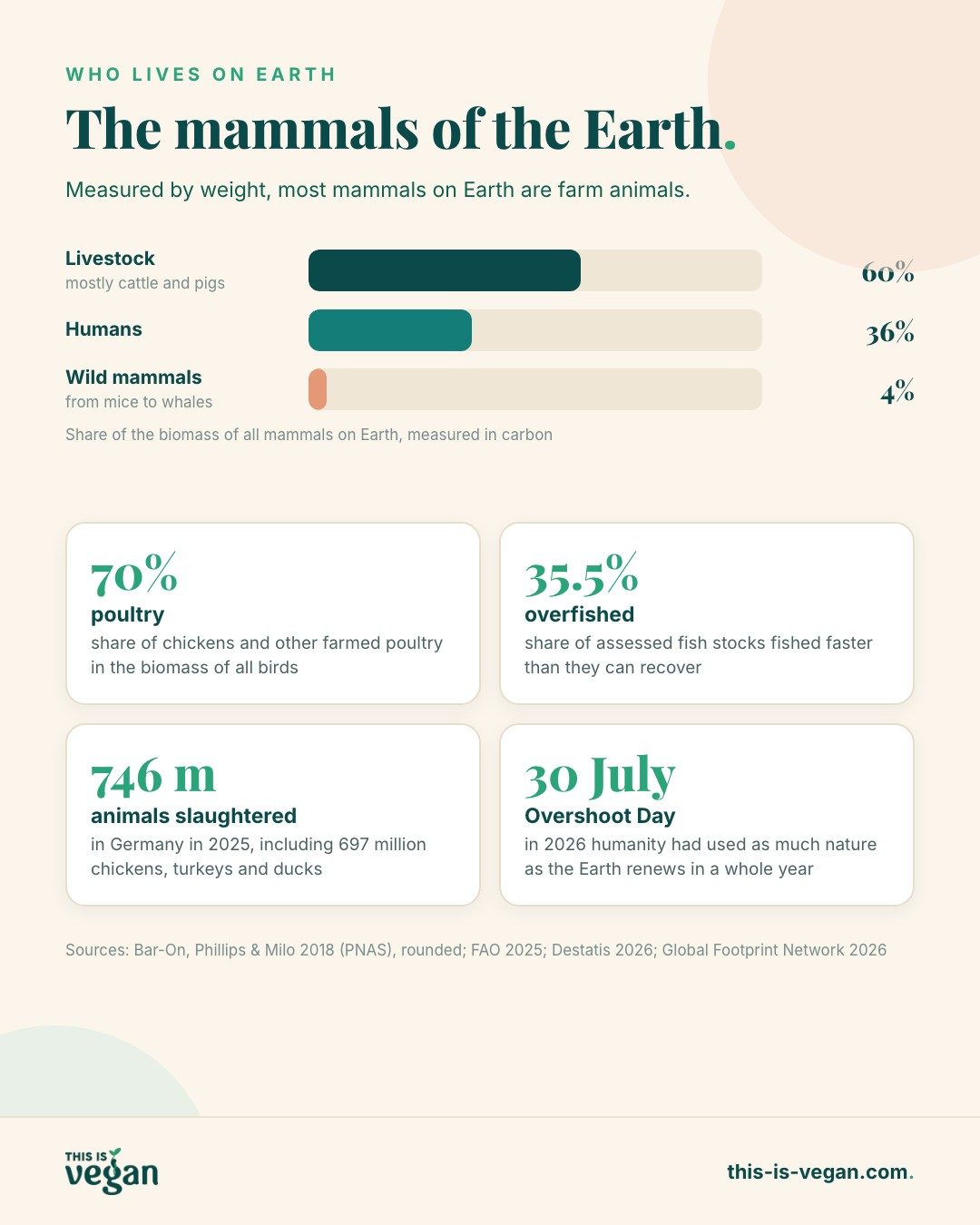
- Earth Overshoot Day marks the date when humanity has used as much nature as the Earth can renew in a year. Calculated by the Global Footprint Network, it fell on 30 July in 2026, which means humanity uses the equivalent of 1.73 Earths.
Why food matters so much.
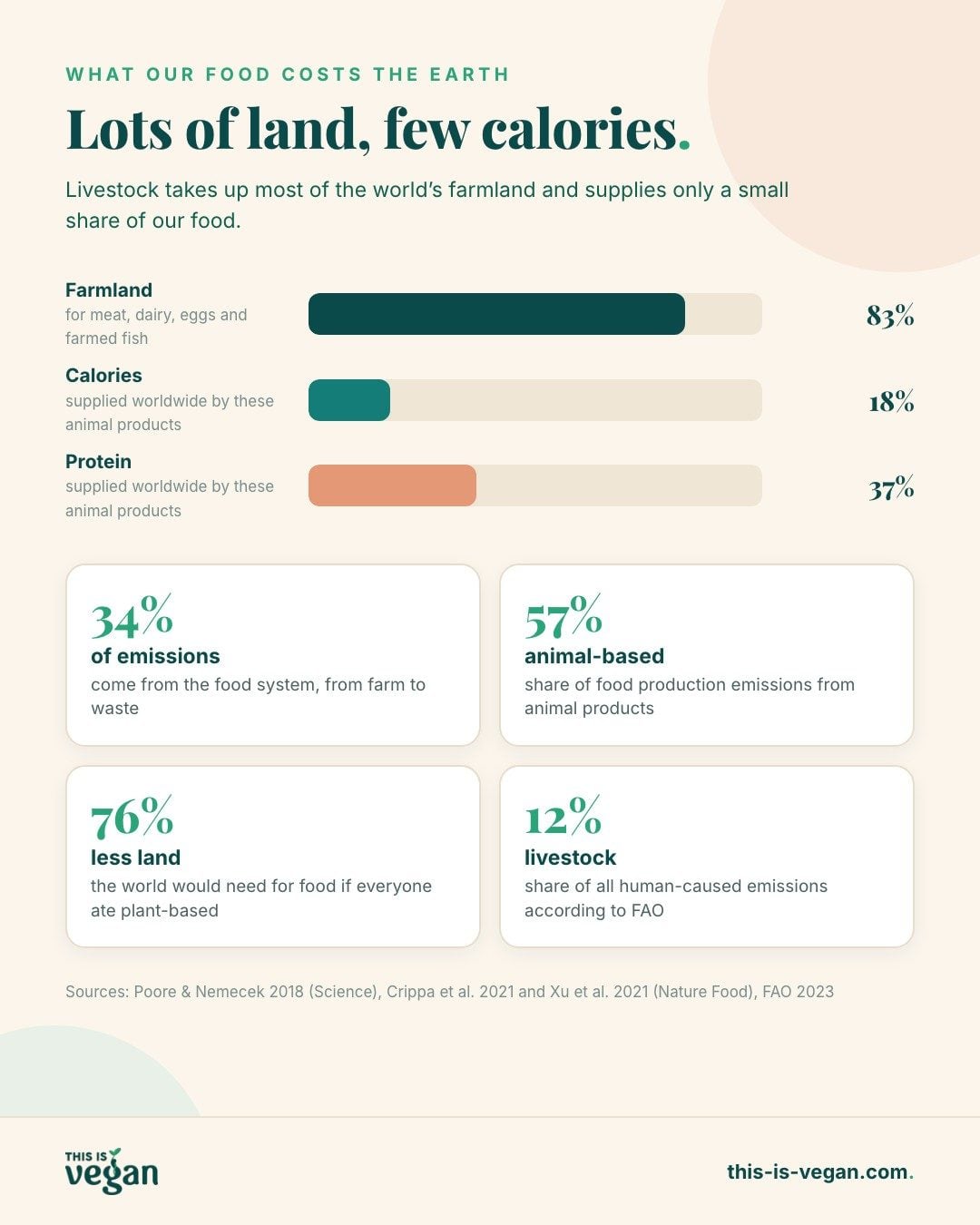
- A third of emissions: A 2021 study in Nature Food found that 34 percent of all human-made greenhouse gases came from the food system, from farming through transport and packaging to waste.
- Animal products are the biggest item: A second study in the same journal attributes 57 percent of food production emissions to animal-based foods including feed, and 29 percent to plant-based foods. Beef alone accounts for a quarter.
- Livestock overall: The UN Food and Agriculture Organization puts livestock emissions at 6.2 billion tonnes of CO₂ equivalent, about 12 percent of all human-made greenhouse gases. Earlier FAO figures put the share at 14.5 percent, but the methods are not directly comparable.
- Methane: According to the UN Global Methane Assessment, about 32 percent of human-made methane comes from livestock. Over 20 years, methane from such sources warms around 80 times as much as CO₂.
The imbalance is clearest when it comes to land. The landmark analysis by Joseph Poore and Thomas Nemecek, published in Science in 2018, found that meat, dairy, eggs and farmed fish use about 83 percent of the world’s farmland but supply only 18 percent of calories and 37 percent of protein. If everyone ate plant-based, the world would need 76 percent less land for food, and food production emissions would fall by 49 percent.
What it means for biodiversity.
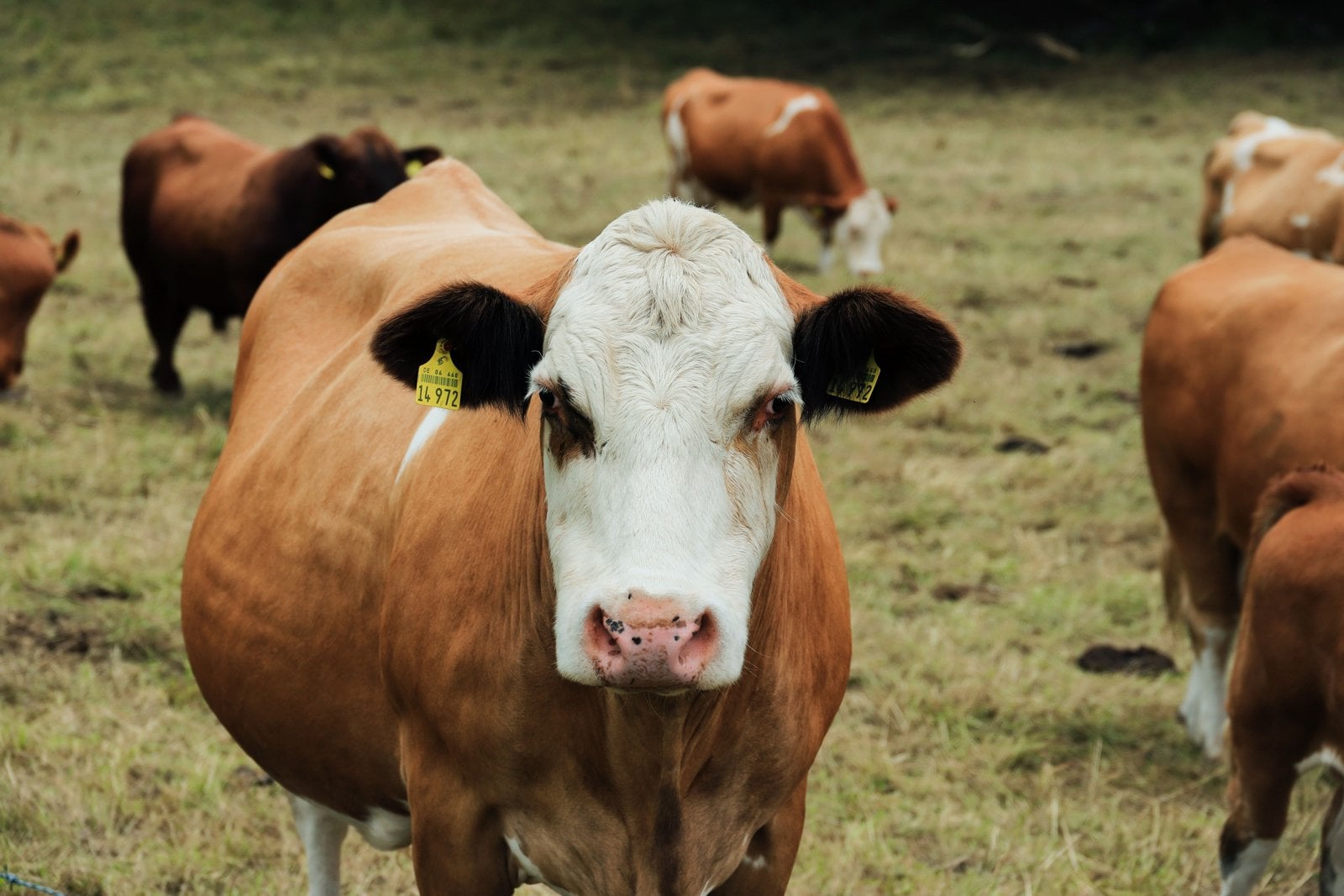
Wildlife has less and less room. A 2018 study in PNAS calculated how the biomass of all life on Earth is distributed. For mammals the result is stark: livestock make up roughly 60 percent, humans 36 percent, and all wild mammals together, from shrews to blue whales, about 4 percent. Birds look similar: farmed poultry outweighs all wild birds about three to one. The oceans are under pressure too. According to a 2025 FAO report, 35.5 percent of assessed fish stocks are overfished.
The animal ethics view.
Earth Day is an environmental day, and the campaign talks about soils, emissions and health. Animals themselves often appear in these debates only as a source of emissions. Yet behind the numbers are living beings. In Germany alone, around 746 million animals were slaughtered in 2025, each an individual capable of pain and fear.
That is exactly why the 2027 theme is an opportunity. When the whole world talks about food, it becomes hard to avoid the question of why we keep and kill animals for food at all when we can live without doing so. A plant-based diet is the step where the climate, biodiversity and the animals themselves all win.
What you can do on Earth Day.
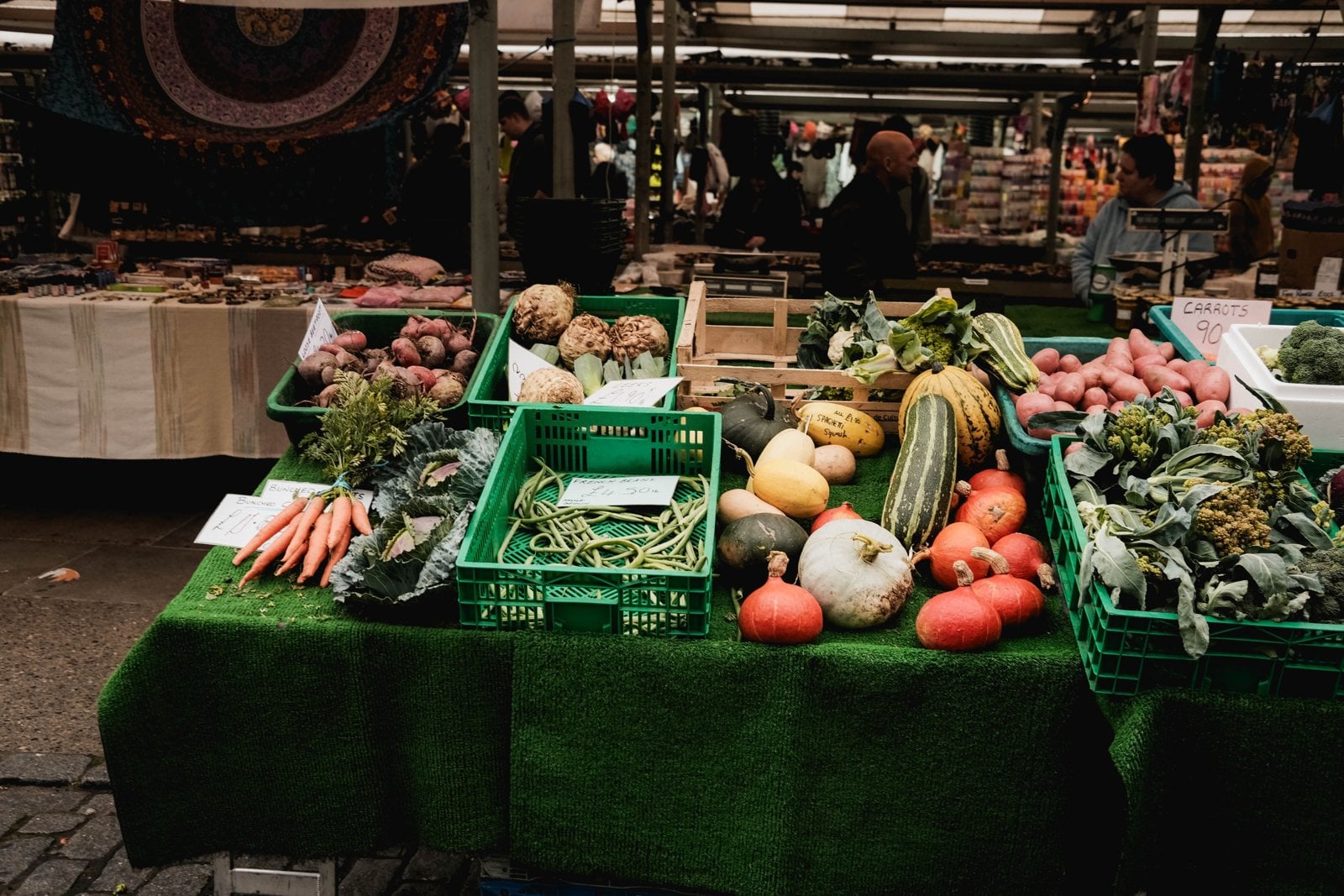
- Eat plant-based. On your plate, this is the step with the biggest impact, as the numbers above show. A good vegan cookbook helps you get started.
- Waste less. Plan your shopping, use leftovers and check food past its best-before date before throwing it away.
- Invite others. A shared plant-based meal on 22 April often convinces more than any argument.
- Take part. Sign up for campaign updates at earthday.org, or join schools, clubs and local groups organising events.
- Push for change. Ask politicians, canteens and schools for more plant-based options.
Frequently asked questions.
When is Earth Day 2027?
On Thursday, 22 April 2027. Earth Day takes place on 22 April every year.
What is the Earth Day 2027 theme?
“Food for Our Planet”, a multi-year EARTHDAY.ORG campaign calling for a transformation of food systems, built on three pillars: Healthy People, Healthy Soils and Healthy Futures.
Who founded Earth Day?
US Senator Gaylord Nelson had the idea, and activist Denis Hayes organised the first Earth Day on 22 April 1970.
How much do our diets contribute to climate change?
According to a study in Nature Food, about a third of all human-made greenhouse gases. More than half of food production emissions come from animal-based foods.
Sources ●
EARTHDAY.ORG: Earth Day 2027, history. UNFCCC. Global Footprint Network. Crippa et al. 2021, Nature Food. Xu et al. 2021, Nature Food. Poore & Nemecek 2018, Science. FAO 2023, Pathways towards lower emissions. UNEP Global Methane Assessment. Bar-On et al. 2018, PNAS. Destatis. Researched with the help of Anara, all figures checked against the original sources. Photos: Lara Jameson, Christina & Peter and Airam Dato-on / Pexels. Graphics: This Is Vegan. This article contains affiliate links. If you buy through them, we receive a small commission at no extra cost to you.
Want our reporting to show up first in Google's Top Stories? Add This Is Vegan as a preferred source on Google.