




Since 20 October 2026, the British brand allplants has belonged entirely to the French food group Fleury Michon, best known in France for packaged ham. It is the brand’s second change of owner in under two years. For the market, it is one more case of a pattern we have been tracking in Germany for months: the animal industry buying its way into plant-based.
In short
- What happened: Fleury Michon acquired 100 percent of allplants, including the team, sales operations and brand rights
- How big: allplants turns over about 5 million euros a year, under 1 percent of the group’s 836 million euros
- Why: Fleury Michon wants to use allplants to get its own plant-based range into British supermarkets
- The catch: the buyer’s own “Tranches Végé” list powdered egg white as an ingredient, so they are not vegan
- What stays: Ella Mills, who rescued the brand from administration in 2025, stays on as brand ambassador according to vegconomist
Contents7 chapters
- 01What exactly was sold
- 02allplants: from poster child to administration and back onto the shelf
- 03Who Fleury Michon is
- 04The catch: at Fleury Michon, “Végé” does not mean vegan
- 05The pattern: the animal industry buys what threatens it
- 06The animal ethics angle: who gets your money
- 07Frequently asked questions
What exactly was sold.
Fleury Michon announced the acquisition in a press release on 20 October 2026. Signing and closing happened the same day. The group takes over the entire share capital of the British company, along with its sales operations, its team and the rights to the allplants brand. No price was disclosed. The business is small: roughly 5 million euros in annual revenue, with earnings before interest, tax, depreciation and amortisation “close to break-even”, as the release puts it.
What matters is the plan. allplants is meant to become the “base” for placing Fleury Michon’s own plant-based range in British supermarkets. The UK plant-based market, the release says, is more developed than the French one. In plain terms: the group is buying shelf space at Tesco, Sainsbury’s, Waitrose, Ocado and Whole Foods, where allplants says it is listed.
allplants: from poster child to administration and back onto the shelf.
The brand’s history is a case study of the British plant-based boom and its hangover. Brothers Jonathan and Alex Petrides founded allplants in 2016 as a delivery service for frozen vegan ready meals. In 2021 the company raised 38 million pounds in a funding round. Then the losses mounted: a pre-tax loss of 9.86 million pounds in the year to March 2023, according to trade media, after more than 10 million the year before. On 22 November 2024, allplants entered administration and 65 staff lost their jobs.
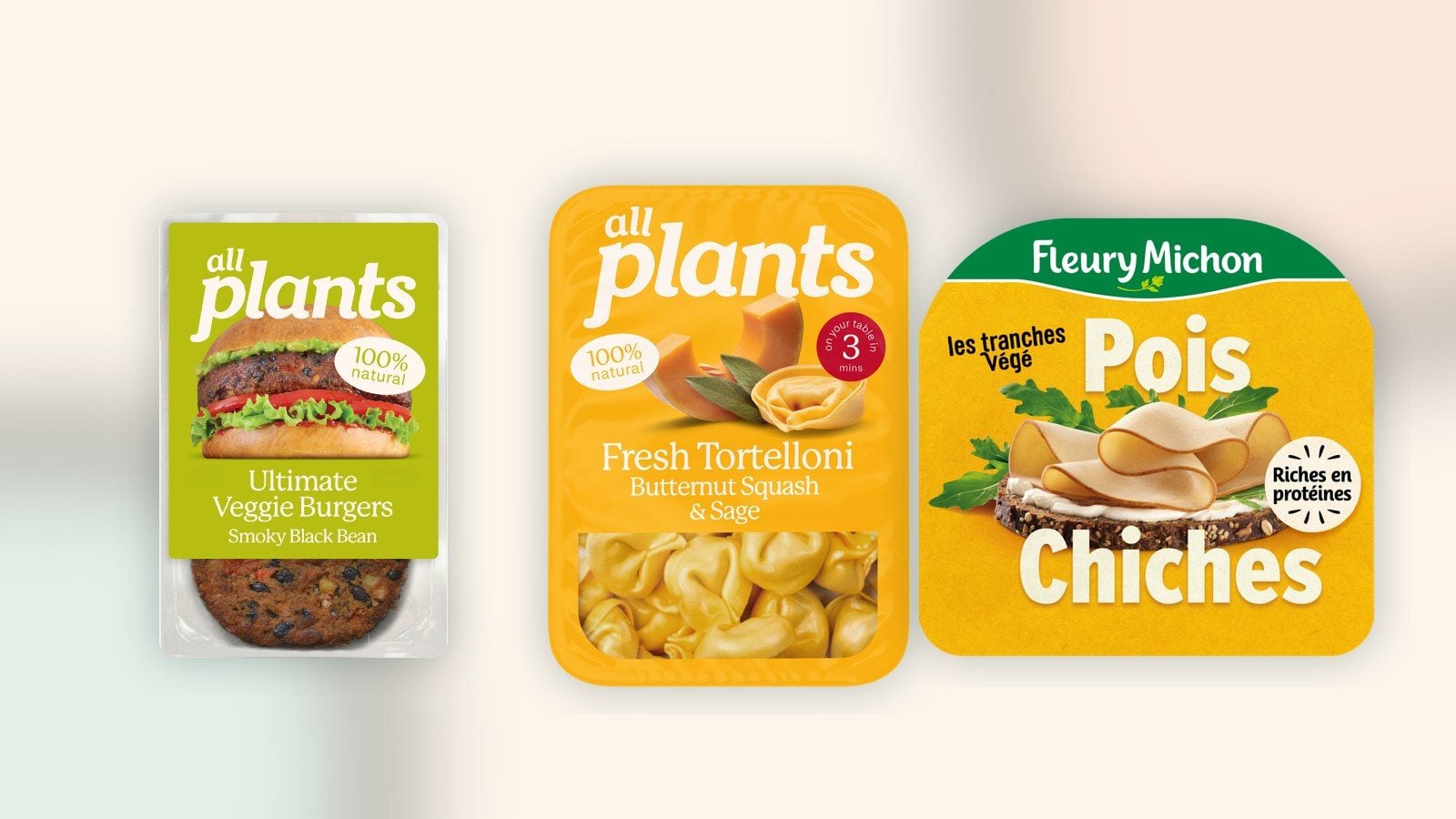
Then came Ella Mills. The founder of Deliciously Ella had sold that company to Swiss group Hero in September 2024 but kept her smaller brand, Plants. In February 2025 she and her husband Matthew Mills bought the allplants name and customer data out of administration. The recipes were not part of the deal; meal kit company Grubby secured those. Mills rebuilt allplants as a chilled brand: black bean and sweet potato burgers, filled tortelloni, tofu goujons, pesto, high-protein fusilli and bowls, plus frozen meals through the brand’s own shop. The products are marketed as “100% plant-based”.
Eight months after the relaunch, the couple has sold again. On Instagram, Mills wrote that she and Matthew had worked together for twelve years and built and sold two food companies, as quoted by vegconomist. She stays on as brand ambassador.
Who Fleury Michon is.
Fleury Michon is a family-controlled company from Pouzauges in the Vendée, founded in 1905 and listed on the Paris stock exchange. In France it is as much a household name as Rügenwalder Mühle is in Germany. Its core business: pork ham, charcuterie, sliced poultry, surimi and ready meals, plus airline catering, which now accounts for 13 percent of revenue. In 2025 the group turned over 836 million euros, up 3.6 percent. It earned little on that: operating profit was 12.2 million euros, a margin of 1.5 percent. The company blames soaring chicken and turkey prices after bird flu.
Growth in French retail in 2025 came from two corners, according to the group: pork charcuterie and the “Tranches Végé”. Fleury Michon launched these slices made from chickpeas, red lentils and white beans in March 2024, after what it describes as three years of development and 300 recipe trials. In 2023 it had already put plant-based strips co-developed with Swiss start-up planted into French supermarkets. At the launch of the slices, chief executive Billy Salha described the strategy as a food model in which plant proteins “complement” animal ones. Replacing them was never mentioned.
The catch: at Fleury Michon, “Végé” does not mean vegan.
If you assume a ham maker is buying a vegan brand in order to go vegan itself, read the ingredients. We did, on Fleury Michon’s website on 23 October 2026. The “Tranches Végé Pois Chiches” consist of water, 19.6 percent chickpeas and, as the third ingredient, “blanc d’œuf poudre”, powdered egg white. The same goes for the new “Haricots Blancs saveur Jambon” variant, white beans with ham flavour. For the red lentil and red bean versions, the Open Food Facts database also lists egg white powder. All four slices are vegetarian, none is vegan. The word “vegan” does not appear anywhere on the site.
That makes the takeover more interesting than it first looks. Fleury Michon says it wants to bring its own plant-based range to the UK through allplants. Which products will land on British shelves under which brand, it does not say. If the egg slices were ever sold under the allplants label, the “100% plant-based” promise would be history. We did not put a press enquiry to the company, so that answer is outstanding. If you buy allplants, start reading the small print.
The pattern: the animal industry buys what threatens it.
allplants is the latest entry on a long list. JBS, the world’s largest meat company, bought the Dutch brand Vivera in 2021 and, through Vivera, The Vegetarian Butcher from Unilever in September 2025. In Germany, the Müller Group, a dairy company, took over plant milk and tofu maker Berief this summer; we traced the background in Müller buys Berief. The Endori brand moves to Rügenwalder Mühle from 2027, a company that still processes around 11,000 tonnes of meat a year alongside its alternatives. Vantastic Foods and the online shop velivery have belonged to the Ponnath Group, a Bavarian meat and sausage company, since 2017. And in North America, meat group Maple Leaf Foods picked up Lightlife and Field Roast in 2017 and 2018 for a combined 260 million dollars.
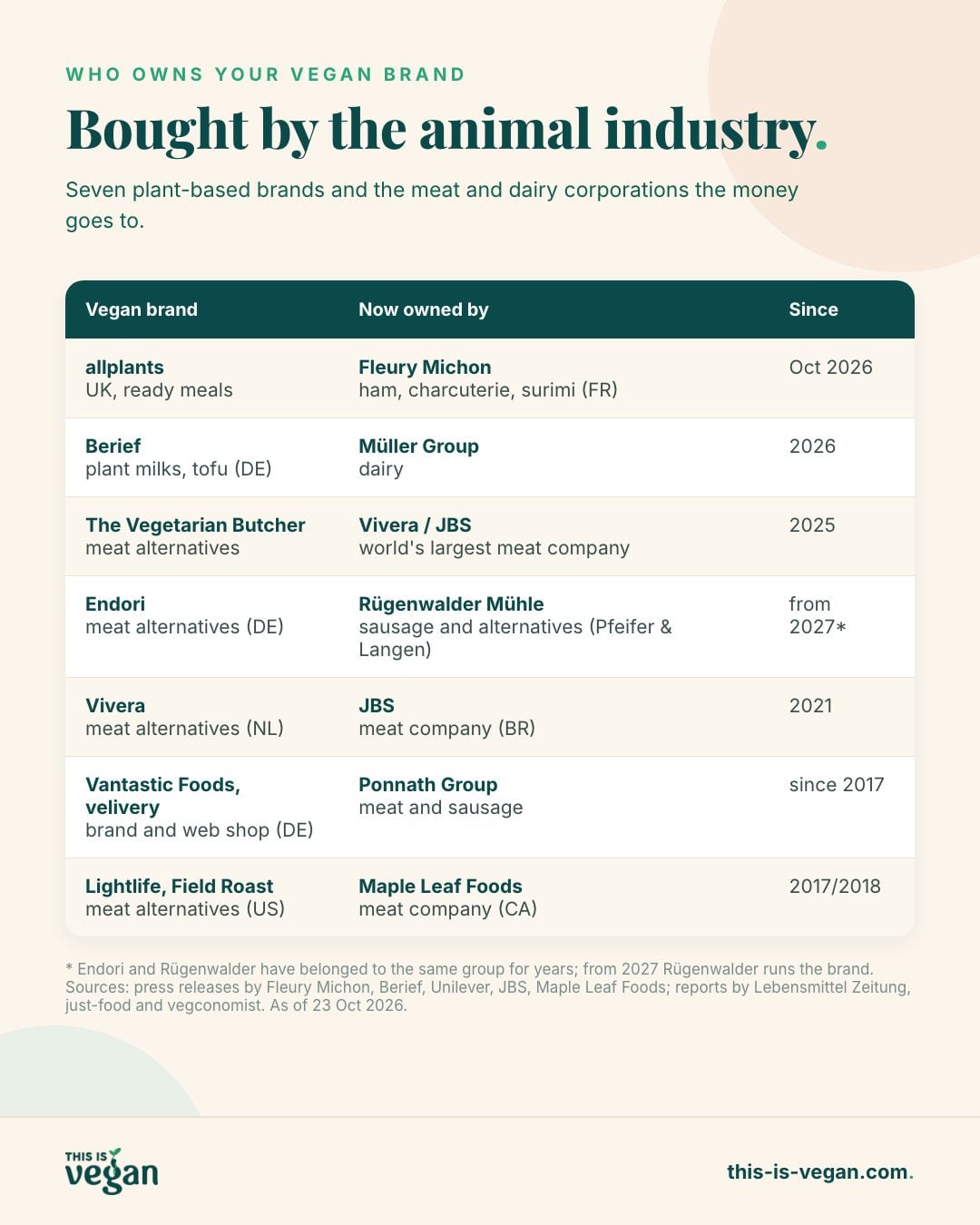
The logic is sound business. After the 2021 hype, plant-based brands are cheap, many are loss-making or, like allplants, one bad quarter from closing. The corporations bring distribution, production capacity and capital that small brands lack. And they hedge against the day their core business shrinks. Fleury Michon says as much: the acquisition offers “long-term growth prospects”.
For brands like allplants, a deal like this is often the only alternative to a second administration. That is understandable. It just does not change where the money ends up.
The animal ethics angle: who gets your money.
When you buy an allplants burger, you are now funding a company whose main business is pigs and chickens. That is not aimed at Ella Mills or the team in London, it simply describes the cash flow. The margin from the chilled aisle goes to a group that grew mainly on pork charcuterie in 2025 and calls chicken prices its biggest problem.
There are two ways to read it. The optimistic one: every euro Fleury Michon earns from plants makes it a little less dependent on animals, and a ham maker turning chickpea slices into a bestseller moves the French market more than a start-up with 5 million in revenue ever could. The sober one: the same company markets its plant slices as a complement to ham, mixes in egg white and has just launched a “ham flavour” variant. Nobody is talking about leaving animal farming. The animal remains the business model; plant-based is the insurance policy.
For you, it means this: if you want your money to stay away from companies with an animal business, you now need to know the ownership structure, because the packaging will not tell you. For UK shoppers, allplants just dropped off that list. In Germany, our guide Who owns your tofu? lists independent producers.
Frequently asked questions.
Who owns allplants now?
Since 20 October 2026, 100 percent of allplants belongs to the French food group Fleury Michon, known for ham, charcuterie, surimi and ready meals. Before that, Ella and Matthew Mills had owned the brand since February 2025, when they bought it out of administration.
Are allplants products vegan?
allplants markets its range as “100% plant-based”. Whether that stays the case after the takeover is open. Fleury Michon’s own “Tranches Végé” contain powdered egg white and are therefore not vegan.
Where can you buy allplants?
In British supermarkets including Tesco, Sainsbury’s, Waitrose, Ocado and Whole Foods, and as frozen meals delivered within the UK. The brand is not sold in Germany.
Why does a meat company buy a vegan brand?
Because plant-based brands are cheap after the hype and give corporations shelf space, new customers and growth while the meat business stagnates or gets more expensive. Fleury Michon explicitly cites the more developed UK market and its own plant-based range as reasons.
Sources and method ●
Acquisition: Fleury Michon press release, 20 October 2026 (revenue, earnings, scope, rationale). Ella Mills as brand ambassador, Instagram quote and retailer list: vegconomist, 22 October 2026. 2025 group figures: Fleury Michon full-year results of 8 April 2026 as reported by Zonebourse. Tranches Végé: press release of 27 March 2024 with the Billy Salha quote; ingredient lists on the product pages Pois Chiches and Haricots Blancs saveur Jambon, accessed 23 October 2026; for lentils and red beans Open Food Facts (user-maintained database, October 2026). planted partnership: planted announcement, June 2023.
allplants history: just-food on the administration (November 2024), Food Manufacture on Grubby and the recipes (March 2025), just-food on the sale of Deliciously Ella (September 2024). Range and retailers per allplants.com, 23 October 2026.
Other acquisitions: just-food on Vivera and The Vegetarian Butcher, Maple Leaf Foods on Field Roast, Lebensmittel Praxis on Ponnath and Vantastic. Müller/Berief and Endori/Rügenwalder: our own reporting, linked in the text.
Still open: the purchase price, the future of the Plants brand, and which Fleury Michon products will reach the UK under which name. We did not send a press enquiry. The assessment in the animal ethics section is our editorial view.
Diesen Artikel gibt es auch auf Deutsch.
FAQ - What readers ask
Who owns allplants now?
Are allplants products vegan?
Where can you buy allplants?
Why does a meat company buy a vegan brand?
Want our reporting to show up first in Google's Top Stories? Add This Is Vegan as a preferred source on Google.