Significantly more people in Switzerland are vegan than a year ago. Their share of the population aged 14 and over rose from 0.5 to 0.8 percent, an increase of 60 percent. That’s according to the annual analysis by Swissveg, the Swiss association representing vegetarians and vegans. It is based on the country’s largest consumer survey. The most surprising part is who is driving the increase: almost entirely men, and almost entirely in German-speaking Switzerland.
In short
- 0.8 percent of people in Switzerland aged 14 and over are vegan, about 58,000 people. A year earlier, it was 0.5 percent.
- In total, 4.9 percent avoid meat and fish, a share that has stayed around 5 percent for five years.
- Among men, the share of vegans more than doubled, from 0.3 to 0.7 percent. Among women, it rose from 0.7 to 0.8 percent.
- 57.7 percent eat meat alternatives at least occasionally, and 18.4 percent eat cheese alternatives.
Where the figures come from.
Every year, Swissveg analyzes the MACH Consumer study, run by the Swiss media and market research organization WEMF. According to Swissveg, 30,375 people aged 14 and over took part. That’s a very large sample, but it has limits: 0.8 percent corresponds to only about 240 vegan respondents, and subgroups such as men or individual language regions are smaller still. Year-on-year swings should therefore be read with caution. The interpretation comes from Swissveg itself, an association that advocates for vegan eating.
According to Swissveg, 4.9 percent of people aged 14 and over currently avoid meat and fish entirely, compared with 5.0 percent a year earlier. That works out to 374,000 people, about 58,000 of them vegan. In 2015, the share was still below 3 percent. From 2016 to 2021, it grew by an average of more than 10 percent a year and has hovered around 5 percent since. Within that group, something shifted this year: more people are vegan, slightly fewer vegetarian.

Men are catching up.
Among men, the share who don’t eat meat rose from 3.3 to 4.0 percent. Among women, it fell from 6.7 to 6.0 percent. The shift is even clearer for veganism: among men, the share doubled from 0.3 to 0.7 percent, while among women it rose only from 0.7 to 0.8 percent. Women are still ahead, but the gap has almost disappeared.
Younger respondents are still more likely to be vegan than older ones. According to Swissveg, their share rose from 1.2 to 1.6 percent, twice the average. At the same time, younger people are less likely to be flexitarian, meaning they consciously eat little meat: 17.8 percent compared with 22.4 percent of the overall population. Germany’s official Nutrition Report shows a similar pattern, as we reported this week: young Germans are more likely to be vegan and more likely to eat meat every day.
German-speaking Switzerland leads.
According to Swissveg, the entire increase in vegans came from German-speaking Switzerland. There, 0.9 percent are now vegan, compared with 0.4 percent in French-speaking Romandy and 0.3 percent in Italian-speaking Switzerland. For vegetarians, it’s the other way round: their share fell from 5.7 to 4.9 percent in German-speaking Switzerland, while it rose from 1.5 to 2.1 percent in Romandy and from 1.6 to 2.5 percent in Ticino.

Plant-based products reach the majority.
For retailers, another figure matters more: 57.7 percent of respondents eat meat alternatives at least occasionally, 2.7 percentage points more than a year earlier. That’s about 4.4 million people. More than 60 percent of these buyers otherwise eat meat, and about 30 percent are flexitarians. Vegans still drive sales, though: 75.3 percent of them buy meat alternatives several times a week, compared with 2.2 percent of meat eaters.
Milk alternatives reach about 40 percent of the population, cheese alternatives only 18.4 percent. Swissveg attributes this to a smaller selection and higher prices. Among vegans, the share who buy plant-based cheese rose from 67 to about 86 percent. How contested the market is in Switzerland also showed when an oat drink brand had to change its product name there.
An animal ethics perspective.
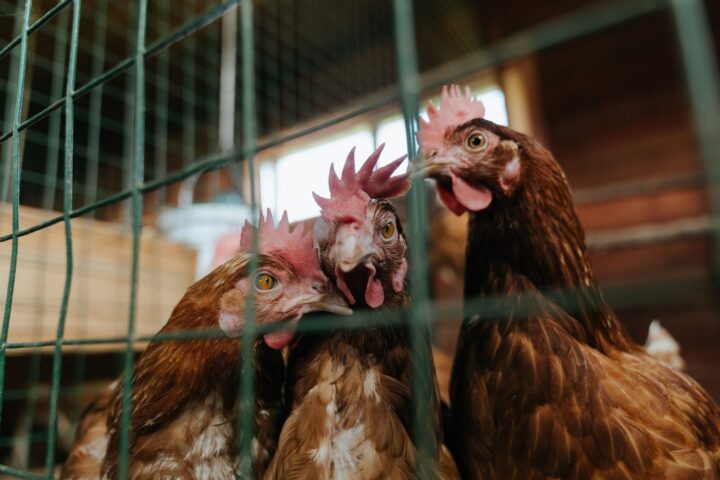
58,000 people who don’t eat animal products isn’t many in a country with just over 7.6 million people aged 14 and over. The direction matters more than the number itself: vegans also avoid milk and eggs. Cows and hens are used for those too and eventually slaughtered. That men in particular, who until now were much less likely to give up animal products, are taking this step more often is good news for animals.
At the same time, about 95 percent of people in Switzerland still eat meat. In a national vote in September, 72.5 percent rejected a popular initiative for a more plant-based food system. Still, the fact that more than half the population eats meat alternatives at least occasionally shows how open many people are. If you want a cheesy flavor without expensive vegan cheese, nutritional yeast* goes a long way.
How we researched this
All figures come from the Swissveg Analysis 2026, published on November 1, 2026, which is based on WEMF’s MACH Consumer survey. The raw survey data isn’t public, so we report the sample size and figures as Swissveg published them. Swissveg is an advocacy group for vegetarian and vegan eating. The figures are only partly comparable with data from other countries, because questions and methods differ. We have no business relationships with Swissveg.
* Affiliate link: if you buy through this link, we earn a small commission. The price stays the same for you.