







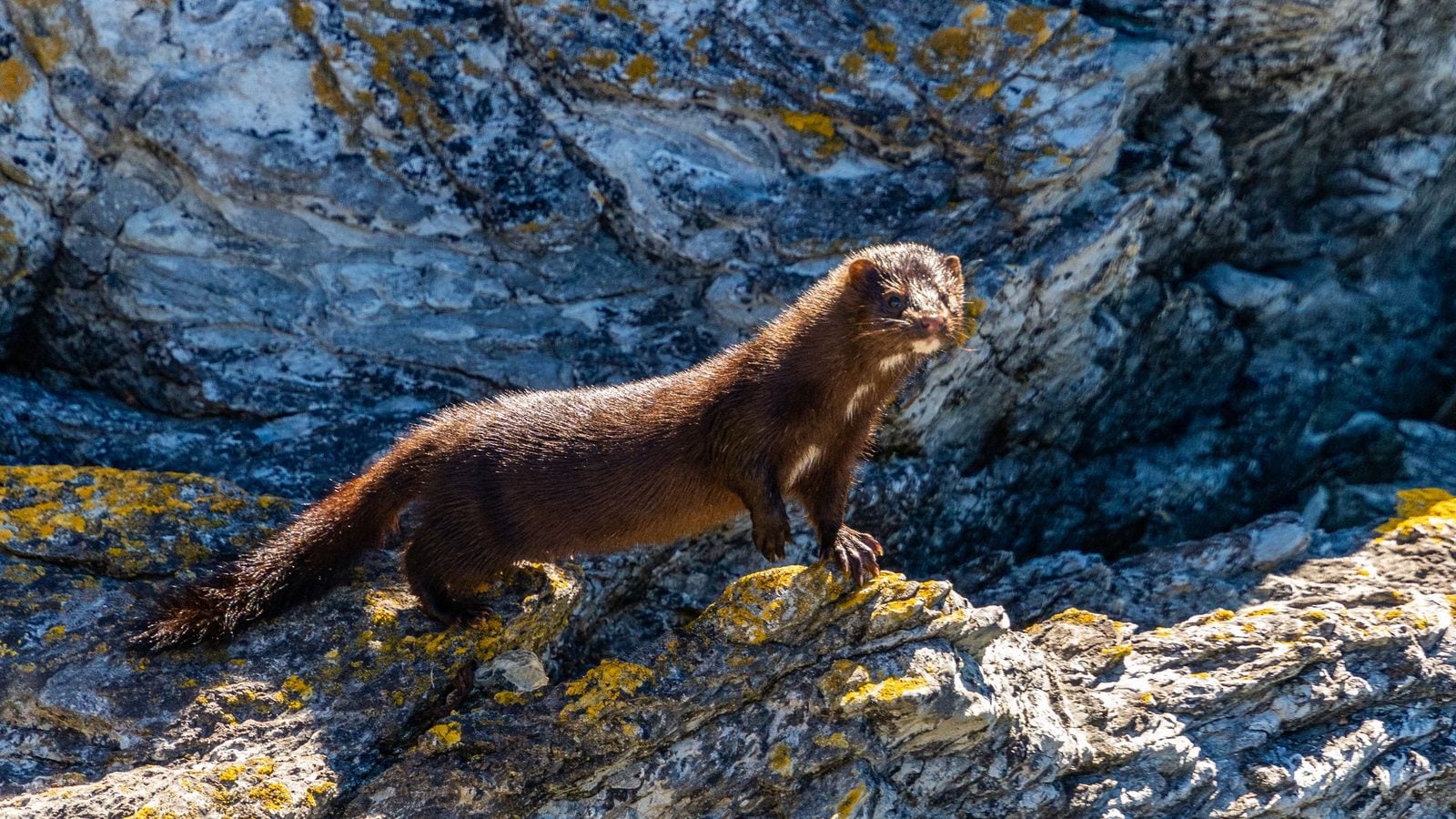
This article was produced in cooperation with the German Good News Magazin.
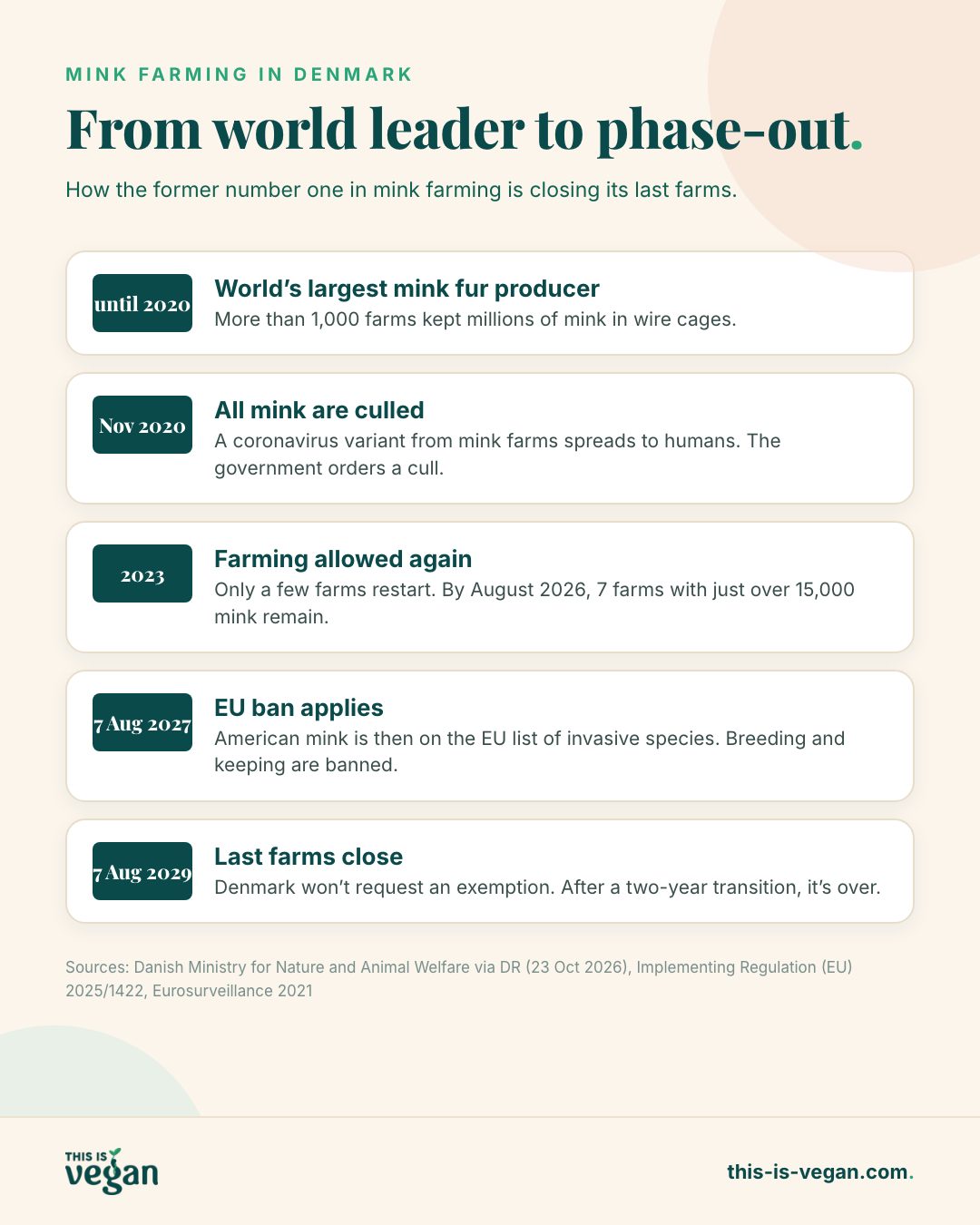
Denmark once produced more mink fur than any other country in the world. Now mink farming there is coming to a definite end. On Friday, 23 October 2026, the Danish government decided not to ask the EU for an exemption from its ban. The country’s last seven mink farms must close by August 2029 at the latest.
In short
- The decision: Denmark drops its application that would have let mink farming continue despite the EU ban
- The legal basis: The EU has listed American mink as an invasive species, breeding and keeping are banned from 7 August 2027
- The end date: Existing farms get a two-year transition, until 7 August 2029
- What’s left: seven farms with just over 15,000 mink
- Still missing: an EU-wide ban on all fur farming and on fur imports
Contents8 chapters
What the Danish government decided.
The decision lies with Denmark’s Ministry for Nature and Animal Welfare, created in its current form after the change of government in 2026. In his ministry’s press release, Social Democrat minister Christian Rabjerg Madsen explained: “An industry should not continue just because it has existed for a long time. It also has to make sense for society, for the economy and for the animals. The government has chosen animal welfare.”
The ministry also points to the 2025 opinion of the European Food Safety Authority EFSA. Meeting its welfare recommendations would require a fundamental overhaul of Danish mink farming. Carl Valentin of the Socialist People’s Party, one of the four coalition partners, said mink “simply don’t belong in small cages where they can’t express their natural behaviour”.
The previous government of Social Democrats, Venstre and the Moderates voted against listing mink in Brussels in 2025 and announced it would seek a Danish special arrangement, as DR and Avisen.dk report. Existing farms would then have been allowed to carry on at their current level. Sophie Løhde of the liberal party Venstre told DR the U-turn was “natural”, since it had already been clear under the old government that an exemption was very unlikely to be granted.
Not everyone is happy. The Denmark Democrats accuse the government of stringing farmers along. The industry association Danske Mink wants parliament to decide rather than a single minister. Compensation is also unresolved. According to DR, the ministry will look at each of the seven businesses individually.
Why an invasive species law ends mink farms.
The EU still has no fur farming ban of its own. The end of mink farms comes through nature conservation instead. With Implementing Regulation (EU) 2025/1422 of 17 July 2025, the European Commission added American mink (Neogale vison) to the list of invasive alien species of Union concern. For mink, the listing applies from 7 August 2027. From then on, breeding, keeping, transporting and selling the animals is prohibited.
The reason: mink that escape from farms spread in the wild. They hunt water birds, amphibians and small mammals and push out native species such as the critically endangered European mink. The regulation itself says the date was deliberately pushed back. Member states with mink farms were meant to get time to apply for an exemption on grounds of “imperative reasons of overriding public interest”. That is exactly the application Denmark is now not making.
From the world’s top producer to seven farms.
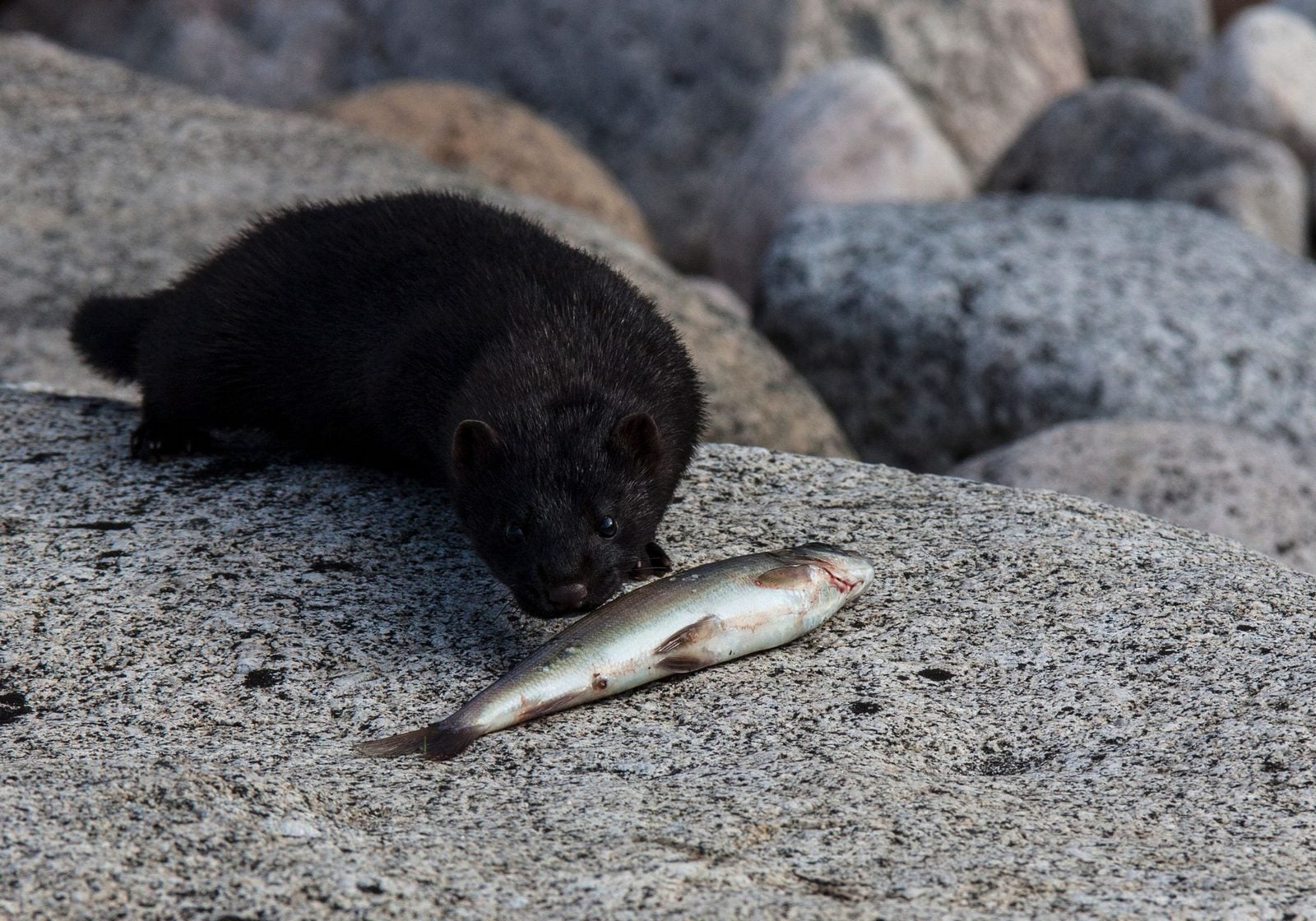
Until 2020, Denmark was the world’s largest producer of mink fur. Before the pandemic, according to Humane World for Animals, there were 1,147 mink farms with around 17 million animals, and the Kopenhagen Fur auction house in Glostrup near Copenhagen was the industry’s most important trading floor. Then came the pandemic. The coronavirus spread through mink farms in North Jutland, and a variant that emerged there jumped to humans. A research team from Statens Serum Institut described the outbreaks in early 2021 in the journal Eurosurveillance.
After outbreaks were found on 290 farms, the government ordered all mink in the country to be killed in November 2020. A commission of inquiry later found that the order initially lacked a legal basis. According to Humane World for Animals, farmers received over three billion euros in compensation. Kopenhagen Fur announced its closure that same month and held its final auction in 2024. Farming was allowed again from 2023, but hardly anyone restarted. According to Denmark’s central livestock register, seven mink farms remained in August 2026. DR puts their combined stock at just over 15,000 animals.
What animal protection groups say.
For the animal rights organisation Anima International, the decision ends a long campaign. Its Danish branch, founded in 2000, says it has campaigned against mink farming for 26 years. Director Joh Vinding called the news a great relief, according to Avisen.dk. Britta Riis, director of Dyrenes Beskyttelse, Denmark’s largest animal welfare organisation, called it “a huge victory for the mink”.
Humane World for Animals Europe also welcomed the decision. “Once the world’s largest fur producer, Denmark is now consigning this industry to history,” said Dr Joanna Swabe, Senior Director of Public Affairs, in a press release. The European Commission, she said, must take “this signal seriously” and move towards an EU-wide ban on fur farming.
Anima pairs the celebration with a demand to Brussels: now it’s time for an EU-wide ban on fur farming and fur imports. The European Citizens’ Initiative “Fur Free Europe” collected over 1.5 million valid signatures for this in 2023. The European Commission had said it would decide on next steps by March 2026. It has not yet put forward a legislative proposal.
Where fur animals are still farmed in Europe.
The EU mink ban affects other countries too. Finland, Greece, Spain and Lithuania still keep mink. Finland has already submitted its application for an exemption to the European Commission. Finland and Poland already secured one for raccoon dogs when that species was listed in 2019. Other fur animals such as foxes and chinchillas are not covered, because they are not considered invasive. A handful of chinchilla farms in Denmark itself still produce fur.
According to Humane World for Animals, fur farming is banned in 24 European countries, including 18 EU member states. Even so, over six million mink, foxes, raccoon dogs and other animals are still kept on nearly 1,200 farms in the EU. Economically, the industry is weak. According to the report “A full-cost account of the EU fur industry” by Griffin Carpenter from 2025, the number of animals killed for fur in the EU fell by 86 percent within a decade to 6.3 million in 2024. The sales value of the pelts dropped by 92 percent over the same period to an estimated 183 million euros.
Poland, long Europe’s largest fur producer, banned fur farming by law in December 2025. Its farms may keep running until the end of 2033, though. Switzerland decided on 2 October 2026 to ban the import of and trade in fur from cruel farming by law. Why mink farms are also a disease risk is explained in our article on bird flu on a US mink farm.
An animal ethics perspective.
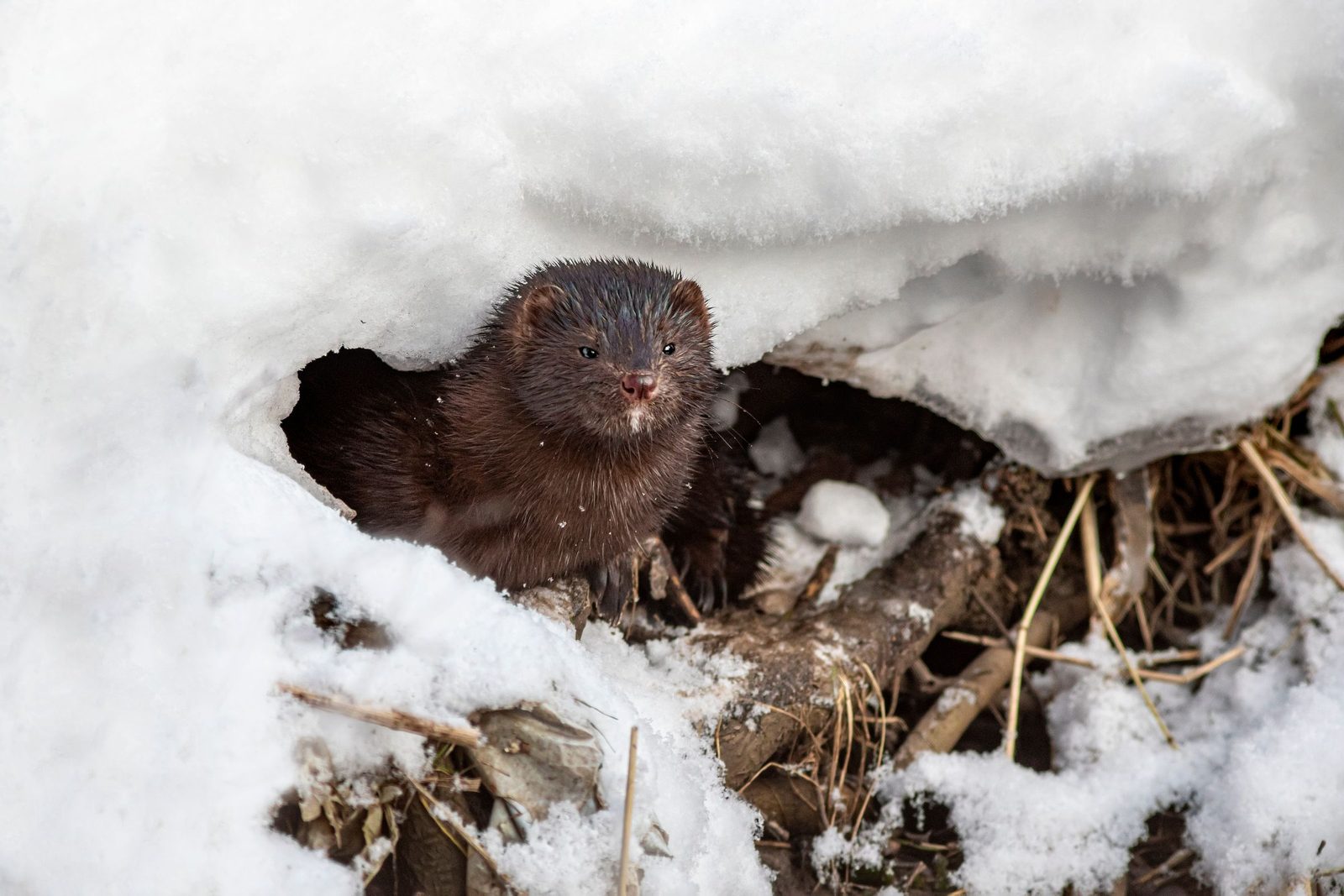
Mink are solitary animals that roam large territories along the water in the wild, swimming, diving and using several dens. On fur farms they live in wire cages, often in pairs, until they are killed for their fur after a few months. In its 2025 scientific opinion, the European Food Safety Authority EFSA came to a clear conclusion: the biggest problems, such as lack of movement and lack of stimulation, can hardly be solved within the cage system. That mink need water was shown back in 2001 by a study in Nature: the animals worked harder for access to a swimming pool than for almost anything else.
The route to this ending is telling. The EU is not banning mink farms because mink suffer in them, but because escaped animals harm native wildlife. The outcome is the same either way: no more mink will be born for coats and pompom hats. That the Danish minister explicitly names animal welfare as his reason sends an important signal. For foxes, raccoon dogs and chinchillas, however, nothing changes, and fur from China or the US can still be imported into the EU. How fashion brands can opt out voluntarily is shown in our article on Woolrich.
What you can do.
- No real fur, not even as trim. Pompoms, hood trims and keyrings are often real fur, even on cheap items.
- Read the label. In the EU, garments must state if they contain “non-textile parts of animal origin”.
- Support organisations. Anima, Humane World for Animals and the Fur Free Alliance keep pushing for an EU-wide ban.
- Choose warm without fur. A good vegan winter coat keeps you just as warm, without a single animal in a cage.
Frequently asked questions.
Is mink farming now banned in Denmark?
The EU ban on breeding and keeping American mink applies from 7 August 2027. Existing farms get a two-year transition. Because Denmark is not applying for an exemption, its last farms must close by 7 August 2029 at the latest.
How many mink farms are left in Denmark?
According to Denmark’s central livestock register, there were seven farms in August 2026. Together they keep just over 15,000 mink, according to DR. Before the pandemic there were 1,147 farms.
Is the EU now banning all fur farms?
No. The ban only covers American mink, because it is classed as an invasive species. Fox, raccoon dog and chinchilla farms are not affected. The European Commission has not yet decided on a general fur farming ban.
Why did Denmark cull all its mink in 2020?
The coronavirus spread on Danish mink farms, and a variant that emerged there infected humans. Fearing it could undermine vaccines, the government ordered a nationwide cull in November 2020.
Sources ●
Post by Anima International on Instagram, press release of the Danish Ministry for Nature and Animal Welfare, reports by DR and Avisen.dk of 23 October 2026, press release by Humane World for Animals Europe of 23 October 2026, statement by the Finnish government, A full-cost account of the EU fur industry (2025), Implementing Regulation (EU) 2025/1422, EFSA opinion on the welfare of animals kept for fur (2025), Larsen et al. in Eurosurveillance (2021), Mason et al. in Nature (2001). Photos: Juan Marcos Alvarez, Teterin Oleg and Erik Karits / Pexels. This article was produced in cooperation with the Good News Magazin. It contains affiliate links. If you buy something through them, we earn a small commission at no extra cost to you.
Want our reporting to show up first in Google's Top Stories? Add This Is Vegan as a preferred source on Google.