






In Salt Lake County, Utah, US authorities last week confirmed highly pathogenic avian influenza on a mink farm for the first time. What sounds like a local notice is the latest entry on a list that has been growing since 2020. And it reaches the European Commission at a moment when 1.5 million signatures are sitting on its desk.
Diesen Artikel gibt es auch auf Deutsch.
The essentials
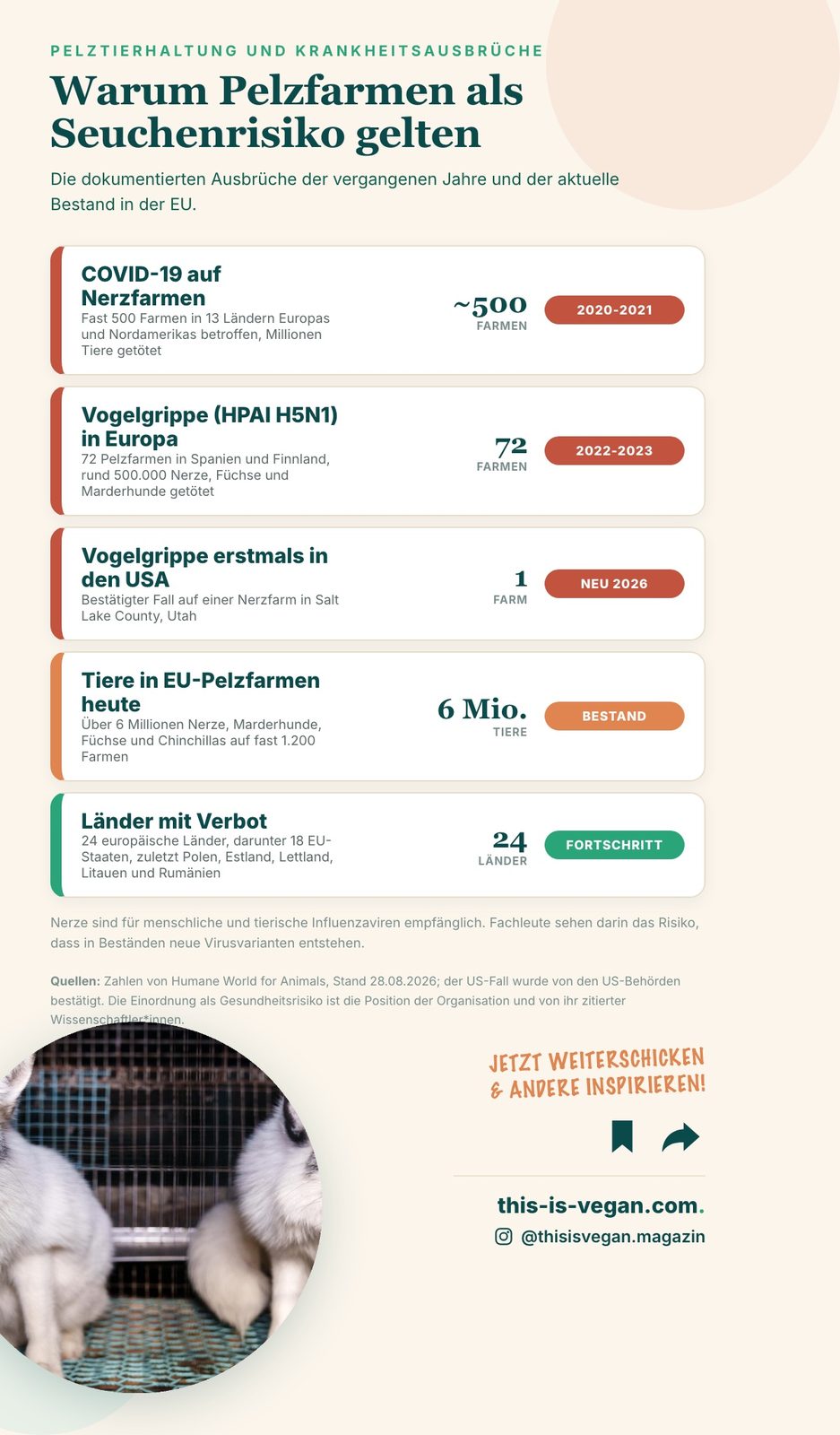
Highly pathogenic avian influenza (HPAI) has been detected on a US mink farm for the first time. In Europe, outbreaks hit 72 fur farms in Spain and Finland in 2022 and 2023, preceded by COVID-19 outbreaks on almost 500 mink farms across 13 countries.
The animal protection organisation Humane World for Animals calls it a wake-up call for the European Commission, which is currently deliberating its response to the citizens’ initiative “Fur Free Europe”, signed by more than 1.5 million EU citizens.
Contents6 chapters
Why minks in particular
The reason virologists pay attention to mink farms lies in the animals’ biology. A mink’s upper respiratory tract is physiologically similar to a human’s. They are susceptible to human and animal influenza viruses, which makes them what experts call a “mixing vessel”: a place where two virus types meet and something new can emerge.
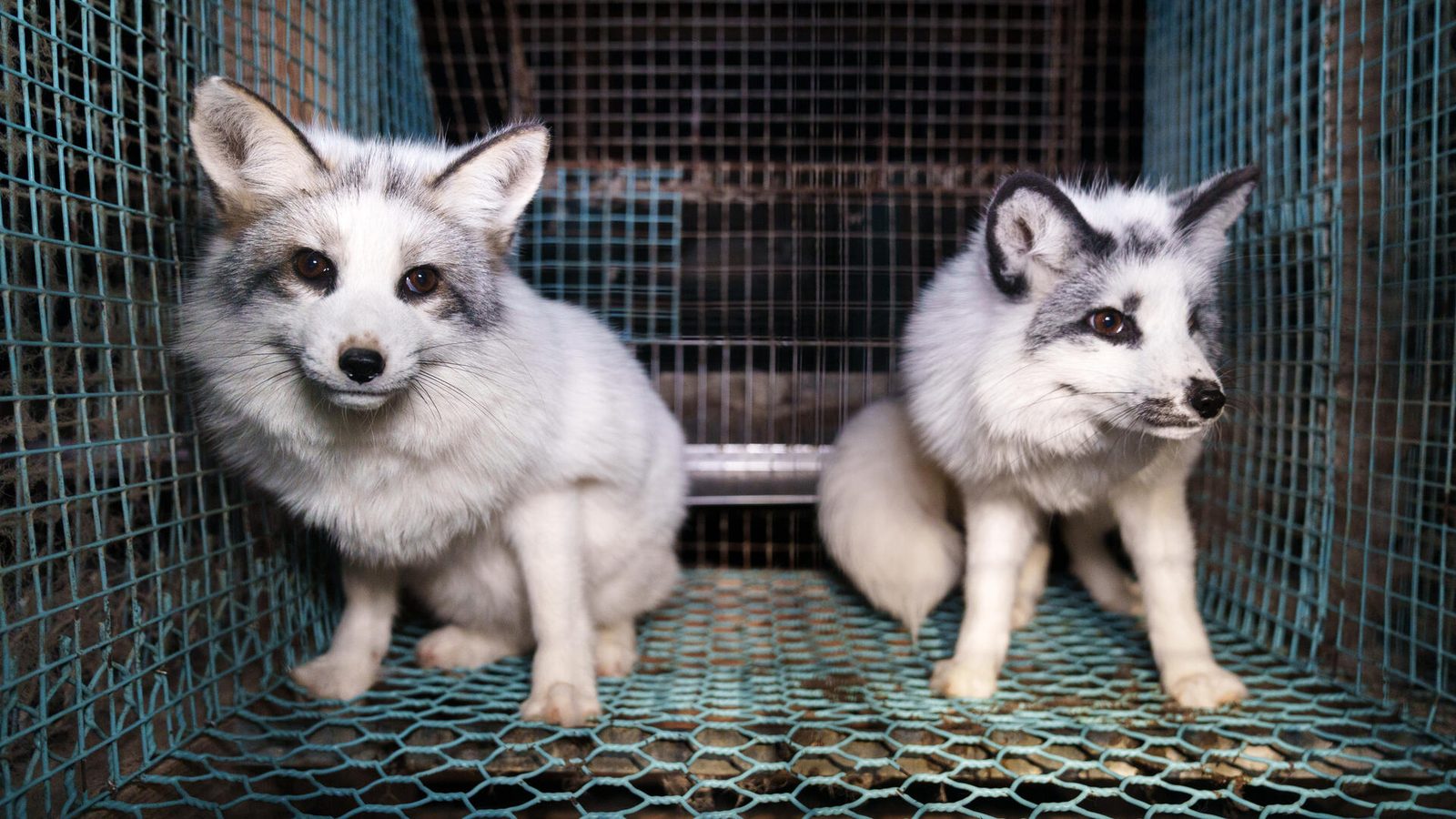
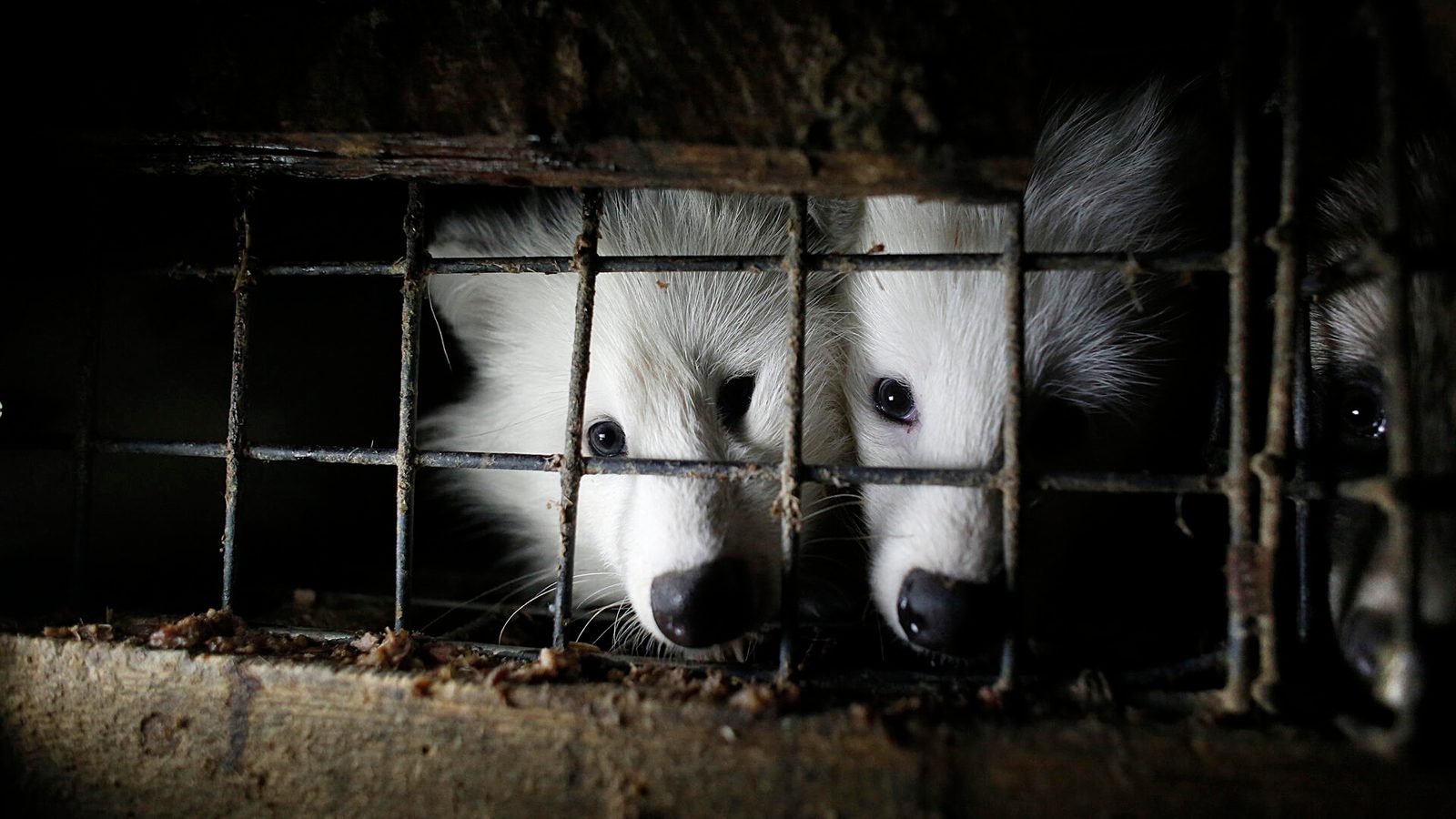
Then there is the housing itself. Thousands of animals in a confined space, cage beside cage, are ideal conditions for transmission, according to Humane World for Animals. And viruses can travel not only via living animals but also through faeces, carcasses and run-off water, meaning well beyond the farm fence, towards people and wild animals nearby.
The backstory: 500 COVID farms, 72 avian flu farms
The Utah case does not stand alone. Animals on almost 500 mink farms across 13 countries in Europe and North America were infected with COVID-19, and millions were killed for infection control. The virus demonstrably passed back and forth between humans and mink, which prompted Denmark to cull its entire stock in 2020.
With avian influenza the pattern repeated: 72 European fur farms were affected in 2022 and 2023, mainly in Spain and Finland. Around 500,000 mink, arctic foxes, red foxes and raccoon dogs were killed.
“It was only a matter of time before avian influenza was also detected on a US mink farm, as we have already seen here in Europe. Fur farms, mink farms in particular, pose a serious health risk to people and wild animals in the surrounding area.”
Sylvie Kremerskothen Gleason, country director of Humane World for Animals Germany (translated from German)
What is on the table in Brussels
In 2023, more than 1.5 million EU citizens signed the European Citizens’ Initiative “Fur Free Europe”, calling for an EU-wide ban on fur farming and the fur trade. The Commission has still not published its political response. It has only commissioned an opinion from the European Food Safety Authority (EFSA), which, as Humane World for Animals describes it, confirms the systemic animal suffering on fur farms.
Important context: even if the Commission tables a legislative proposal, that is only the beginning. Both the European Parliament and the Council can amend it, and both must adopt it.
The rest of Europe has long moved on. Fur farming is already banned in 24 European countries, including 18 EU member states, with Poland, Estonia, Latvia, Lithuania and Romania joining most recently. Germany has had no fur farms since 2019, because animal welfare standards made the business unviable. An official ban is still missing, however, as in Bulgaria and Sweden. Put differently: anyone who wanted to could start again here.
A business that does not add up
What stands out is how weak the economic case has become. An analysis by an environmental economist cited by Humane World for Animals concludes that fur farming costs EU citizens up to 446 million euros a year once subsidies, disease control and follow-up costs are counted. The sector has been unprofitable for years.
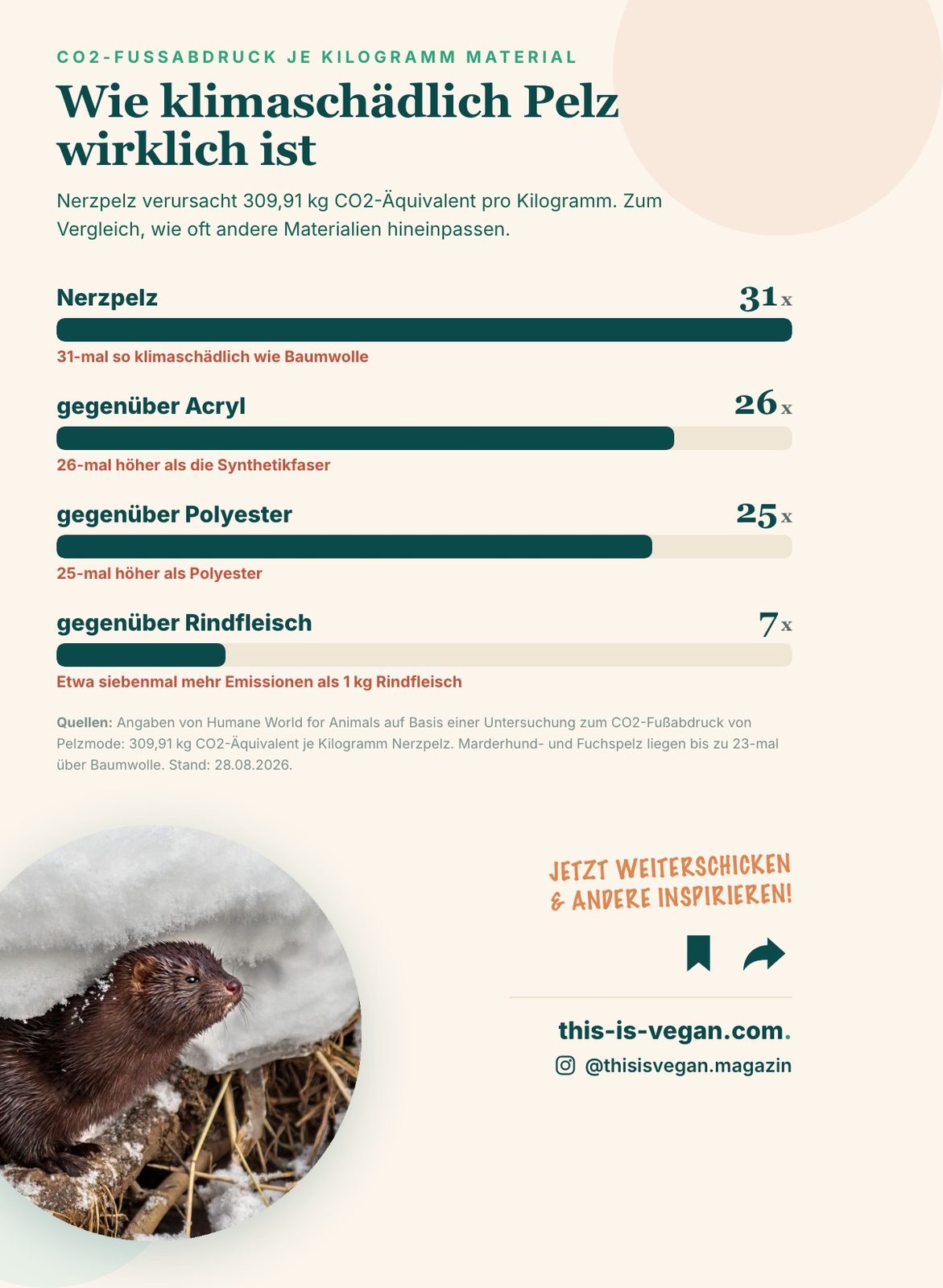
Then there is the carbon footprint, and it is remarkably bad. One kilogram of mink fur causes 309.91 kilograms of CO2 equivalent, according to the study cited by the organisation. That is 31 times as much as cotton, 26 times as much as acrylic and 25 times as much as polyester. The comparison that sticks: farming carnivorous animals such as mink produces roughly seven times more emissions than producing one kilogram of beef. Which makes sense once you follow it through: mink eat animals that have to be produced first.
Fashion has already decided
While Brussels hesitates, the industry in question has moved on. Worldwide, more than 1,600 brands and retailers have committed to fur-free policies. From Germany these include Karl Lagerfeld, Hugo Boss, adidas, Puma, Mustang, VAUDE, s.Oliver, Jack Wolfskin and Zalando; internationally Max Mara, Saint Laurent, Gucci, Alexander McQueen, Balenciaga, Valentino, Prada, Armani, Versace, Michael Kors, Jimmy Choo, DKNY, Burberry and Chanel.
When Chanel, Gucci and Prada drop the same material, that is no longer a niche trend. It is a market signal.
What this means for you
Fur rarely shows up as a coat in everyday life; more often it is a detail: hood trim, a pompom on a hat, a patch on gloves. That is where a second look pays off, because real fur is often cheaper than good faux fur. A practical tip: with real fur you can see a leather layer at the base of the hairs, while faux fur sits on a woven backing. EU labelling rules for real fur exist, but they are regularly circumvented.
How animal suffering and health risks overlap in other areas is the subject of our interview with Wiebke Plasse on the exploitation of wild animals, and what a new life after bad captivity can look like is in our report on the tigers from Saxony.
Transparency and sources
This article is based on a press release from Humane World for Animals Germany dated 28 August 2026, including the fur farming facts compiled there. According to the organisation, the detection of highly pathogenic avian influenza on a mink farm in Salt Lake County was confirmed by US authorities. Figures on outbreaks, stocks, costs, carbon footprint and brand commitments come from Humane World for Animals or from the studies it cites, including an analysis of the carbon footprint of fur fashion and an economic analysis by an environmental economist. The quote from Sylvie Kremerskothen Gleason comes from the press release and was translated from German by us. As of 28 August 2026.
Images: Humane World for Animals (fur farms), stock (wild mink), This Is Vegan (infographics, in German). The fur farm photos document the practice in general and do not show the affected farm in Utah. No money changed hands for this article.
Want our reporting to show up first in Google's Top Stories? Add This Is Vegan as a preferred source on Google.