







Born in circus wagons on an industrial site, raised in private ownership: six tigers from a private facility in northern Saxony have stepped into their enclosure at the Spanish AAP rescue centre for the first time since quarantine. Waiting for them is a 3,000 square metre area. In 2025 the keeper in Saxony put her outdoor space at around 240 square metres, for up to ten tigers at the time.
Diesen Artikel gibt es auch auf Deutsch.
What happened?
Tigress Saphira and her five roughly two-year-old cubs were seized by the veterinary authority from a private facility in northern Saxony on 1 July 2026 and handed over to the animal welfare organisation AAP (Animal Advocacy and Protection). They have lived at AAP’s rescue centre in Spain since then.
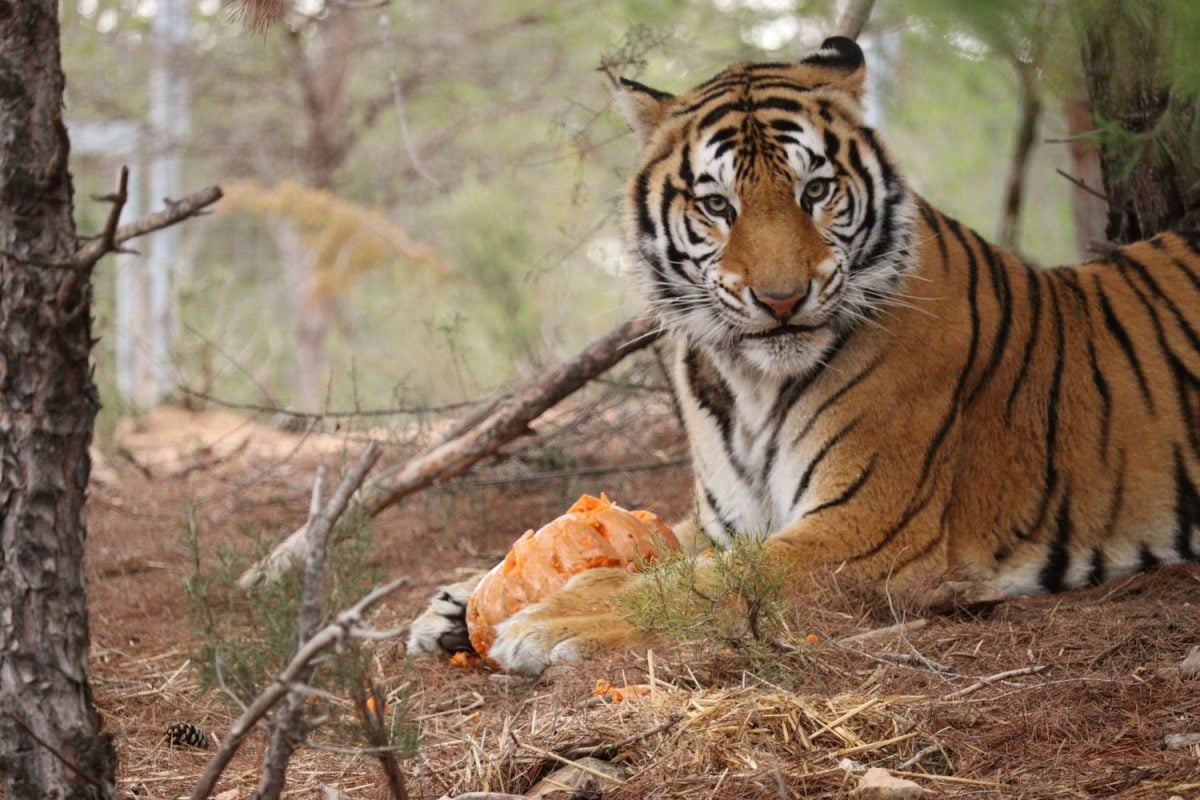
After quarantine and an initial settling-in period, they have now been let outside for the first time, into a smaller transitional enclosure to begin with. The final large enclosure measures 3,000 square metres.
Contents5 chapters
The first step into the new enclosure
After completing quarantine and an initial settling-in phase at the Spanish rescue centre, the gates were opened. Under close observation, the animals explored their new territory step by step. Anyone picturing big cats bursting joyfully into the open has it wrong: tigers are cautious animals, and the process is designed around exactly that.
That is why they are not going straight into the final large enclosure, but into a smaller transitional one first. There, Saphira and her cubs can settle into their new surroundings at their own pace: natural ground, unfamiliar smells, a place to bathe. Only once they have gained enough confidence in their surroundings will they move to the permanent enclosure.
AAP is providing media with a roughly three-minute video of these first moments, free to use with attribution. It is available for download here.
How the six tigers got to Spain
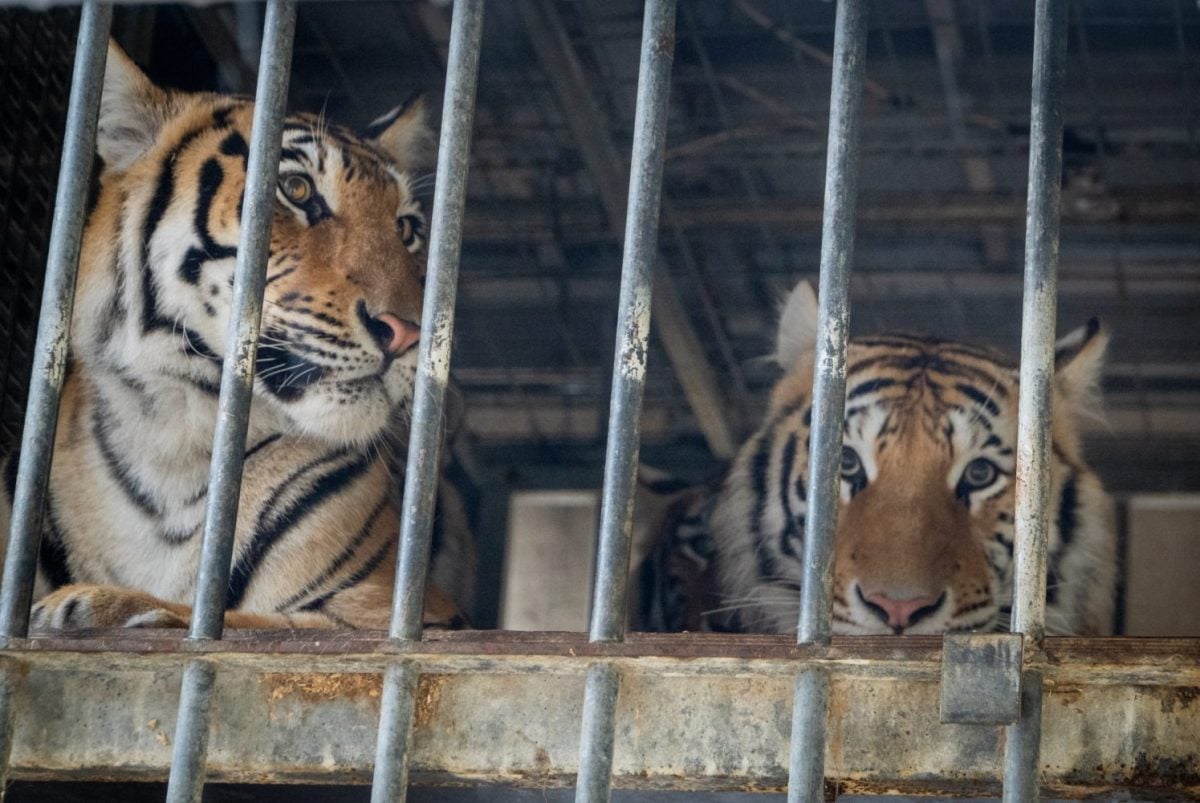
The backstory is grim. According to AAP, the five cubs were seized because, per the authorities, housing conditions did not meet legal requirements. For the mother, a second reason applied: there was no species protection certificate for her. Under German federal nature conservation law, that document is required to prove the legal origin of an animal of this endangered species.
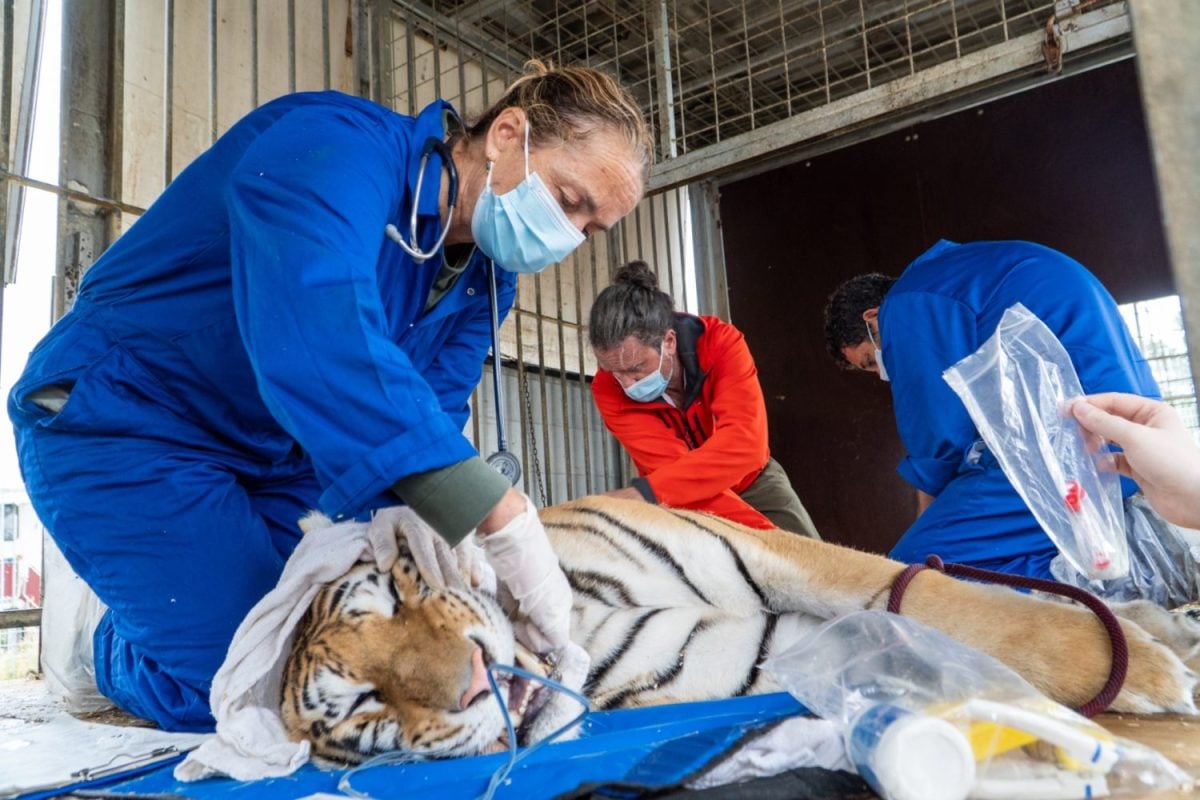
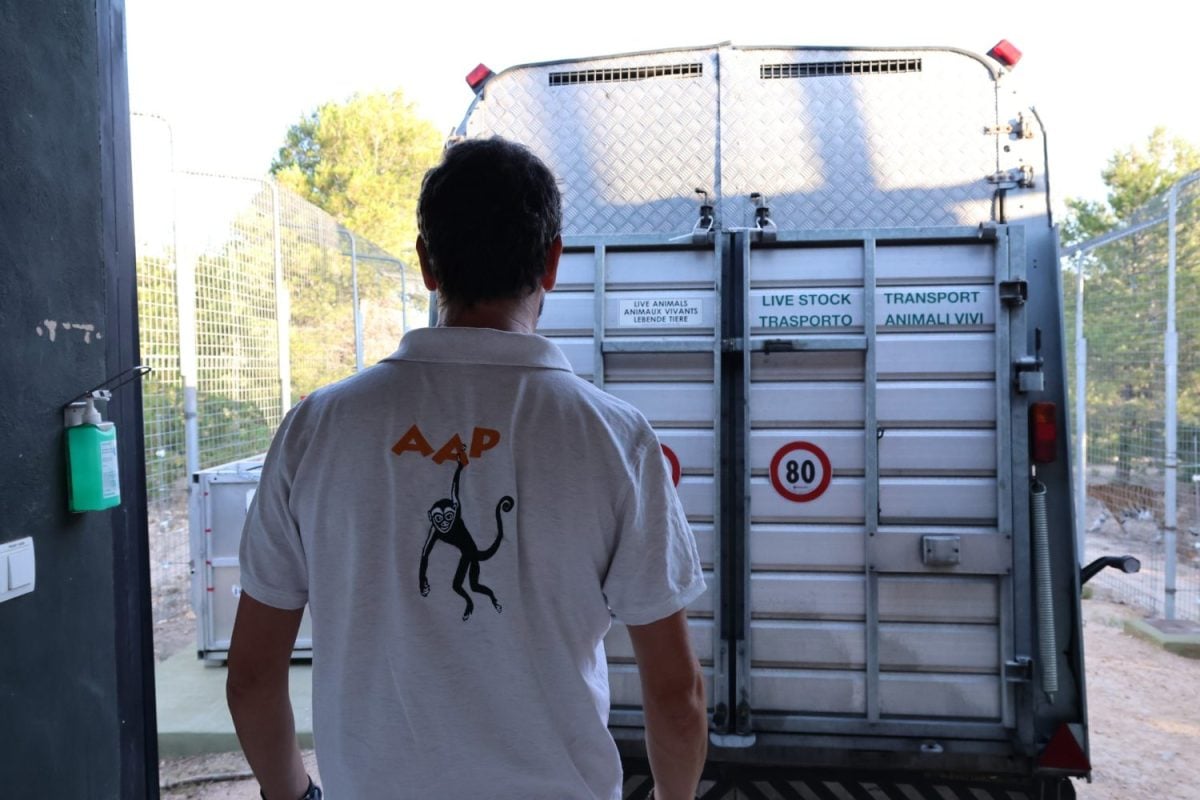
For AAP this was, by its own account, the largest tiger rescue the organisation has ever carried out in Germany. Each animal travelled in its own sturdy crate, accompanied by a team including a vet. They were deliberately not fed en route: in the wild, tigers eat only about twice a week, and such a pause burdens them less than a full stomach on a long journey. Water was provided regularly.
3,000 square metres instead of a circus wagon
The numbers make the difference tangible. According to AAP, the group’s shared outdoor enclosure measures 3,000 square metres, roughly four Olympic swimming pools. The legal minimum for a group this size under Germany’s mammal welfare guidance is 600 square metres. Add natural ground, a bathing option, several shaded retreats and permanent access to temperature-controlled indoor areas.
It comes at a cost: around 660 euros per day for the group, roughly 241,000 euros a year, funded largely by private donations, AAP says. The animals are cared for by a team of vets and animal behaviour experts who develop an individual enrichment programme for each animal.
The real problem: big cats in private hands
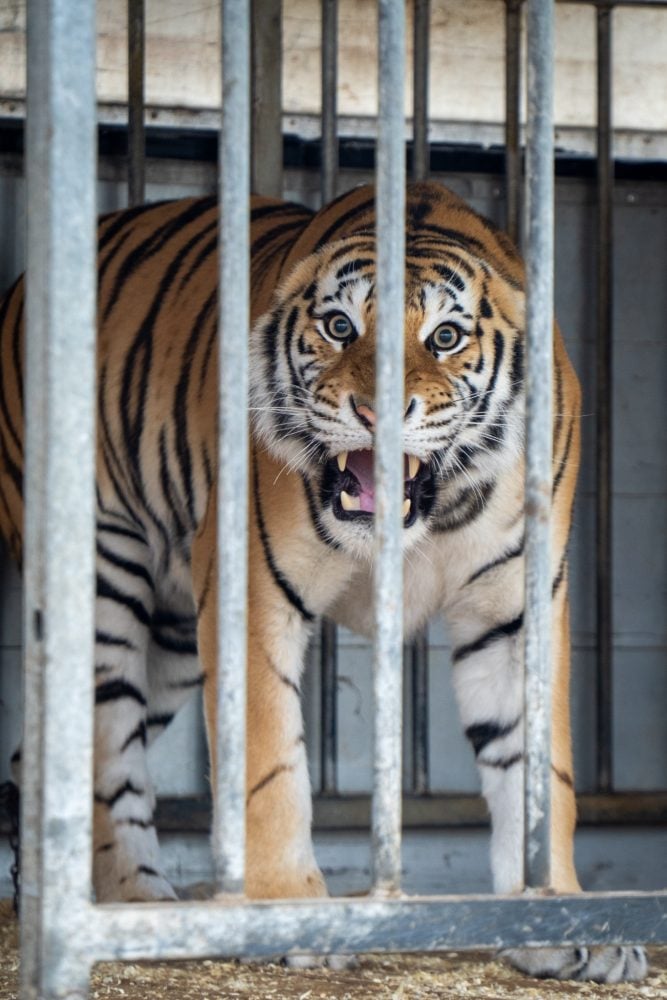
That six tigers could be born in a private facility at all comes down to a regulatory gap. Germany has no nationwide rules for privately keeping dangerous wild animals; the federal states handle it differently. AAP has therefore campaigned for years for a positive list: a definitive list of species that may be kept privately at all. Anything not on it would be off limits.
How serious the situation is had already become clear in Saxony: in Schkeuditz near Leipzig, a tiger escaped from a private facility and was shot by police, and a 72-year-old helper was seriously injured. AAP says it had offered the authorities free accommodation for the animals back in May 2025.
AAP’s own standard is at least 20 square metres of climate-controlled indoor space per animal and at least 500 square metres of naturalistic outdoor enclosure for one to two animals. The organisation considers such conditions simply unachievable in a private facility without professional infrastructure, no matter how committed the keepers are.
What stays with us
Six animals that, according to AAP, were born and raised in circus wagons on an industrial site now have 3,000 square metres to themselves. That is good news, and it deserves celebrating. Still, the uncomfortable question remains why it had to come to this, and why Germany still has no uniform rules for wild animals in private hands. The rescue solves one case. A positive list would solve the pattern.
How systematically wild animals suffer under human control is also the subject of our interview with Wiebke Plasse of Welttierschutzgesellschaft on animal cruelty on social media. And what it looks like when authorities do intervene is covered in our piece on the Cologne court ruling on an animal experiment.
Transparency and sources
This article is based on a press release by AAP (Animal Advocacy and Protection) of 28 August 2026 on the opening of the outdoor enclosure, plus AAP’s earlier reports on the seizure and the animals’ arrival in Spain, as of 28 August 2026. Details on the reasons for seizure, enclosure sizes, costs and housing standards come from AAP or from the authority statements cited there, and were translated from German by us. We did not separately request comment from the veterinary authority or the former keepers for this article.
Images: AAP Animal Advocacy and Protection. The photo from the natural enclosure shows the rescue centre in Spain and does not necessarily show one of the six animals from Saxony. No money changed hands for this article.
Correction, 19 September 2026 ●
An earlier version said the six tigers had real ground under their paws “for the first time” and had “never encountered” natural ground, new smells and a pool. That was wrong, and a reader rightly pointed it out. The facility in Dölzig did have outdoor areas: in 2025 the keeper put the outdoor space at around 240 square metres, with access from each circus wagon. The authorities did not object to a missing outdoor enclosure but to the area falling short of the space requirements in the German mammal guidelines for a group this size, alongside the missing CITES certificate for Saphira. AAP never claimed the animals had no experience of natural ground or water either. On 27 August the news agency dpa put it precisely: after almost eight weeks the tigers were exploring an outdoor enclosure “for the first time again”, referring to quarantine. We have corrected the sentences in question. Whether the ground in Dölzig was soil, sand or paved cannot be established from independent sources, so we no longer make any claim about it. What stands is the difference in size: about 240 square metres there, 3,000 in Spain. Thank you for the correction.
Want our reporting to show up first in Google's Top Stories? Add This Is Vegan as a preferred source on Google.