




Many labs now work with cell cultures instead of animals. That counts as animal-free testing. But the liquid the cells grow in often contains the blood of unborn calves. A new open-access book by researchers from around the world shows how much animal material is still hidden in research, and that science can now do without it.
Key facts
- Fetal bovine serum: an estimated 800,000 litres are produced worldwide each year, from one to two million unborn calves
- Matrigel: the standard gel for 3D cell culture comes from tumours grown in mice
- Antibodies: around 478,000 animals were used in the EU in 2022 for blood products and antibodies
- The alternative: animal-free media and materials exist and deliver reliable results in tests
Contents7 chapters
What fetal bovine serum is.
Cells need nutrients, hormones and growth factors to survive outside the body. For decades they have got them from fetal bovine serum, or FBS, usually added to the culture medium at 5 to 20 percent.
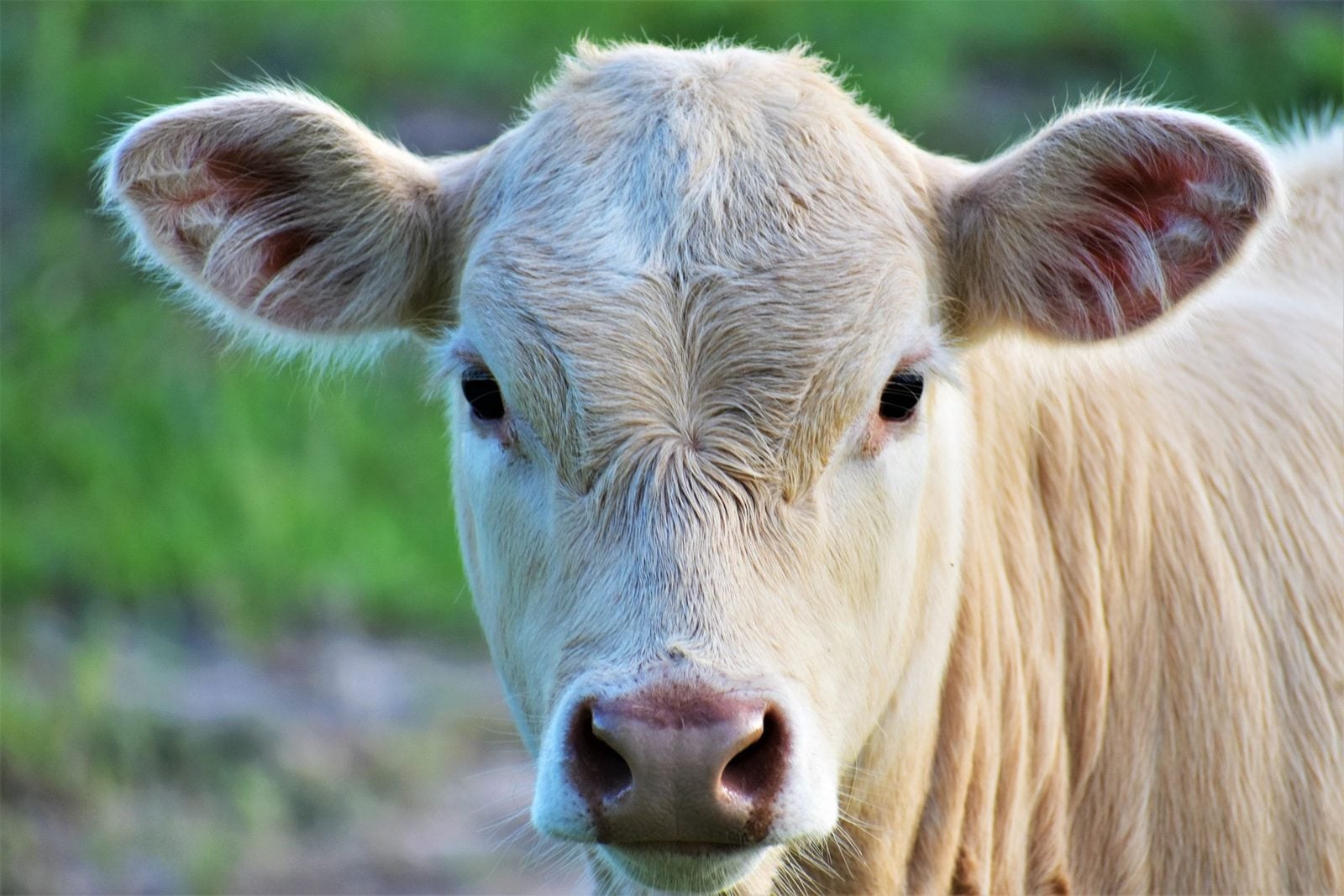
It is collected at the slaughterhouse. When a cow turns out to be pregnant at slaughter, blood is drawn from the fetus. According to the studies cited in the book, this is done by puncturing the heart of fetuses three to nine months old, usually without anaesthesia. The calves die either from the blood draw or beforehand from lack of oxygen, without being properly killed.
Nobody knows exactly how much is used. The authors around Tilo Weber of the German Animal Welfare Federation’s Animal Welfare Academy arrive at roughly 800,000 litres a year and one to two million fetuses. They say themselves that this is a projection from older sources and that no official figures exist, not even in the EU. Whether the fetuses suffer is disputed. Serum producers argue that unborn calves are not conscious in the womb and have already died from lack of oxygen by the time blood is drawn. Weber and colleagues challenged this in a 2021 paper. There is no consensus, so the authors argue for giving the animals the benefit of the doubt.
A common objection is that not using the blood would be a waste because it is there anyway. Weber disagrees: pregnant cows should not reach a slaughterhouse in the first place. Mandatory veterinary checks before transport could prevent that, sparing both the calves and the cows, some of them heavily pregnant, the stress of transport.
Matrigel and antibodies.
Serum is the best-known example, but not the only one. Researchers who grow cells in three dimensions, for instance into mini-organs, usually embed them in a gel called Matrigel. It is harvested from tumours. Mice are implanted with cancer cells and killed when the tumour reaches almost a fifth of their body weight.
Antibodies, among the most important tools in biomedicine, also often come from animals. According to one chapter, 477,632 animals were used in the EU in 2022 for routine production of blood products and antibodies. 49,309 mice went through the ascites method, in which tumour cells make fluid build up in the abdomen. It is considered especially painful. More than half of the research antibodies sold commercially still come from animal blood.
A scientific problem too.
The researchers do not argue with animal suffering alone. Animal-derived materials are scientifically unreliable. Serum is a natural product whose composition varies from batch to batch, which makes results hard to reproduce. A large study of more than 600 commercial antibodies found that over half failed in at least one tested application, while lab-made recombinant antibodies performed better. And anyone studying human disease in human cells distorts the model by adding cow blood and mouse tumour.
It works without animals.
The book brings together 18 papers, and many present concrete solutions: chemically defined media with known ingredients, gels made from plant fibres or synthetic polymers, and antibodies produced without animals using bacteriophages, viruses that infect bacteria, often in weeks instead of months.
- Skin model without any animal material: one team built a full-thickness model of human skin without animal collagen or serum. It stayed stable for 35 days and was reproduced in two labs.
- Curriculum without animals: researchers developed a guide for a graduate-level lab course that trains students in animal-free cell culture. It makes the course easy to adopt in the curricula of other universities.
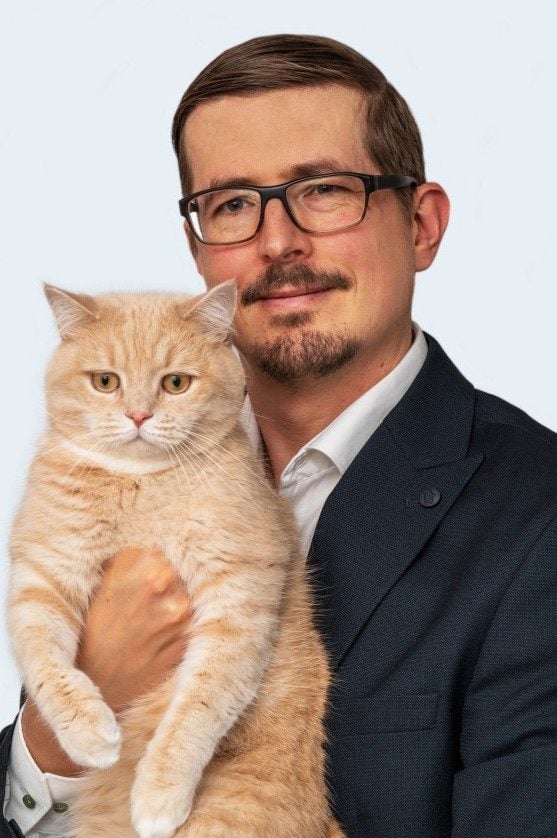
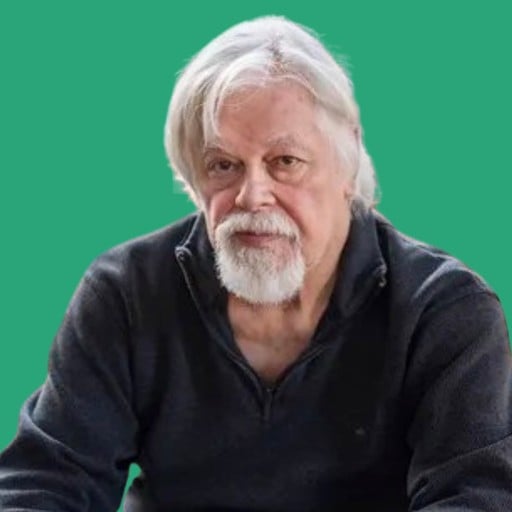
“Animal-free materials protect animals and people, raise scientific quality and support sustainable research.”
Tilo Weber, Animal Welfare Academy of the German Animal Welfare Federation and co-editor of the book. Quote translated from German. Photo: Deutscher Tierschutzbund
What this means for cultivated meat.
The first lab-grown burgers were grown in fetal bovine serum, which ruled them out for vegans from the start. Many companies now use serum-free media. According to the book, one such medium briefly matched growth in 20 percent serum, and another cut costs by 38 percent. The authors point out a detail worth knowing: “serum-free” does not automatically mean free of animal components. Serum-free media can still contain individual proteins from cow blood. The authors therefore recommend media explicitly labelled animal-component-free.
How to read the book.
The volume was published by Frontiers in Toxicology and its papers are peer-reviewed. It is still not a neutral overview. It wants change. The editors are also authors, one works for an animal welfare organisation, and several chapters come from researchers with stakes in companies selling animal-free antibodies, media or scaffolds, which is disclosed in each case. The book is also candid about limits: some of the systems presented are not yet fully animal-free, and animal-free media often have to be adapted for each cell type.
Animal ethics perspective.
Fetal bovine serum is often described as a by-product of the meat industry. The word plays it down. These are unborn animals whose mothers are slaughtered while pregnant, and a product valuable enough to have its own market. Buying serum makes slaughtering pregnant cows a little more profitable.
For everyone who opposes animal testing, there is an uncomfortable insight here. A method is not animal-free just because no animal sits in a cage. That is no argument for animal experiments: non-animal methods spare animals enormous suffering even where they are not yet perfect. The goal has to be research that uses no animal material at all, also because it produces better results.
Sources ●
Oredsson, Weber (eds.): “Advancing in vitro cell culture practices: achieving truly animal-free experiments and scientifically reliable and reproducible methods”, Frontiers in Toxicology, eBook, October 2026, 18 papers and an editorial, DOI 10.3389/978-2-8325-8796-6, CC BY 4.0. Figures are taken from the chapters and the sources cited there, which we did not verify individually. Header photo: Al d’Vilas / Pexels, stock image. Portrait: Deutscher Tierschutzbund. Tilo Weber reviewed the German version of this article for accuracy before publication. This article is not sponsored.
Want our reporting to show up first in Google's Top Stories? Add This Is Vegan as a preferred source on Google.