






Today is World Coconut Day. Few foods stand for plant-based eating quite like this one: coconut milk in the curry, coconut oil in the pan, coconut yoghurt in the chilled aisle, the cracked-open nut on the beach.
And that is exactly where a problem sits that no ingredient list will show you. In parts of Southeast Asia, chained macaques pick the nuts. Not everywhere, not for every coconut, but often enough to be worth a second look when you shop.
The short version
- In southern Thailand and parts of Malaysia and Indonesia, pig-tailed macaques are used to pick coconuts.
- A study of 158 animals produced a welfare score of 4.8 out of 12. 157 of 158 were on a chain or a leash.
- The concern applies above all to canned coconut milk from Thailand. The world’s largest producers are Indonesia, the Philippines and India.
- The ingredient list will not help you. What helps: check the origin and ask the brand.
Diesen Artikel gibt es auch auf Deutsch: Warum Kokosnüsse nicht immer vegan sind.
Contents9 chapters
- 01Why monkeys at all?
- 02What researchers measured in 158 animals
- 03How it became public, and what the industry says
- 04Which products are affected
- 05What you can do when you shop
- 06Why this is a vegan question, not just an ingredient question
- 07Coconuts on Bali
- 08World Coconut Day, celebrated honestly
- 09The podcast episode with Maria Clara Groppler
Why monkeys at all?
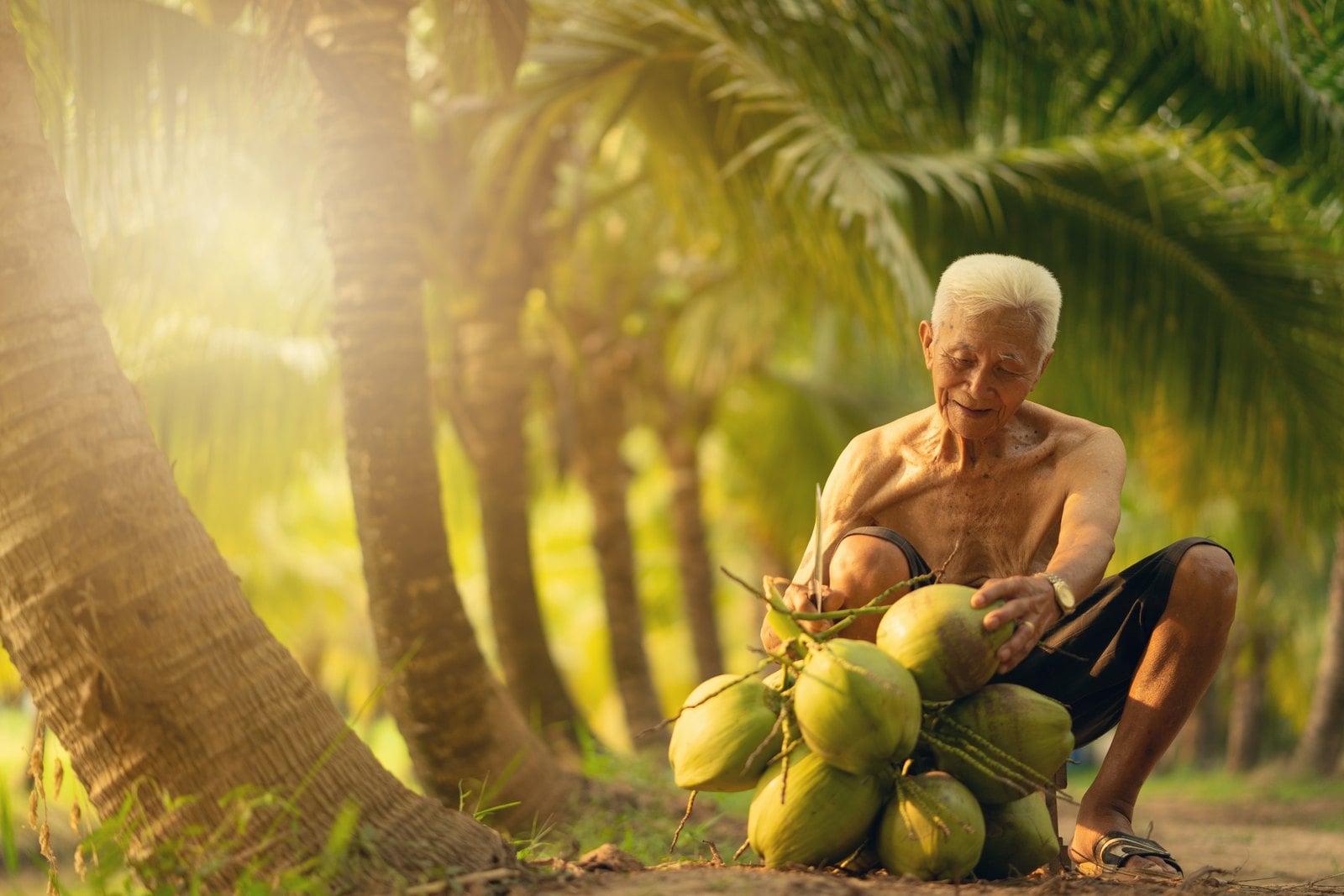
Coconut palms grow up to 30 metres tall. To harvest at the top you climb, use a telescopic pole or a lift. Or you send an animal up.
Pig-tailed macaques climb fast, grip securely and twist the nuts off the stem with their hands. According to figures cited in the research literature, a person manages around 80 nuts a day, a trained monkey between 500 and 1,000. The calculation behind it is purely economic.
The practice is old and has been documented in Thailand for at least a century. What is new is that we now know fairly precisely how the animals fare.
What researchers measured in 158 animals
In 2021 the journal Applied Animal Behaviour Science published the most thorough investigation to date. A team from Oxford Brookes University and Chulalongkorn University in Bangkok interviewed 89 coconut farmers in the first half of 2019, across the three southern Thai provinces of Surat Thani, Chumphon and Prachuap Khiri Khan, which hold 62 percent of the country’s coconut growing area. Between them they kept 279 macaques. The researchers assessed 158 of them directly, using the “five domains” of animal welfare.
The mean score was 4.8 out of a maximum of 12. The individual findings:
- 157 of 158 animals were tethered: a metal ring around the neck with a rope or chain attached. The leashes were typically a metre or shorter, which rules out physical contact with other macaques.
- 139 of 158 showed fear or distress during observation.
- Not a single animal had any form of enrichment. Only 19 had any structure at all to hide in, usually a barrel.
- According to their keepers the animals worked seven days a week, around 6.5 hours a day, climbing more than 50 trees and harvesting 500 to 1,000 nuts.
- 95 percent of the animals kept were male. They work for 10 to 12 years and are “retired” at 14 to 15.
Two details stay with you. Almost a third of the animals were bought as infants, meaning they grew up without their mothers. And against the aggression that follows from this kind of confinement, keepers named two remedies: beating, or removing the canine teeth.
Where the animals come from is the second sore point. Of 86 answers, 56 named other farmers, 19 the wild and 11 so-called monkey schools. Both species of pig-tailed macaque are internationally listed as threatened, the southern one as endangered. Thailand’s 2019 wildlife protection act makes it illegal to take them from the wild, trade them or keep them without a permit. It happened anyway, openly, with nobody making a secret of it.
The authors’ conclusion is sober: the species-specific needs of the animals were “largely not met”, and no legislation exists that would change this.
How it became public, and what the industry says
The practice became widely known through PETA Asia. From 2019 onwards, investigators visited coconut farms and monkey schools in Thailand and have published several investigations since. The pressure worked: tens of thousands of retailers worldwide dropped products from the Thai brand Chaokoh, in Germany including REWE in September 2021.
The other side disputes the scale. Thailand’s trade minister at the time called monkey labour “very rare”, the companies named rejected the allegations, and in 2020 the government announced a code system to make “monkey-free” goods traceable. One coconut farmer told reporters quite openly why it is hard to do without: the trees are simply very tall.
That is precisely why the study is so useful. Behind it stand primatologists, some of them based in Thailand, not an animal rights organisation. And it describes a normal state of affairs, not isolated cases.
Which products are affected
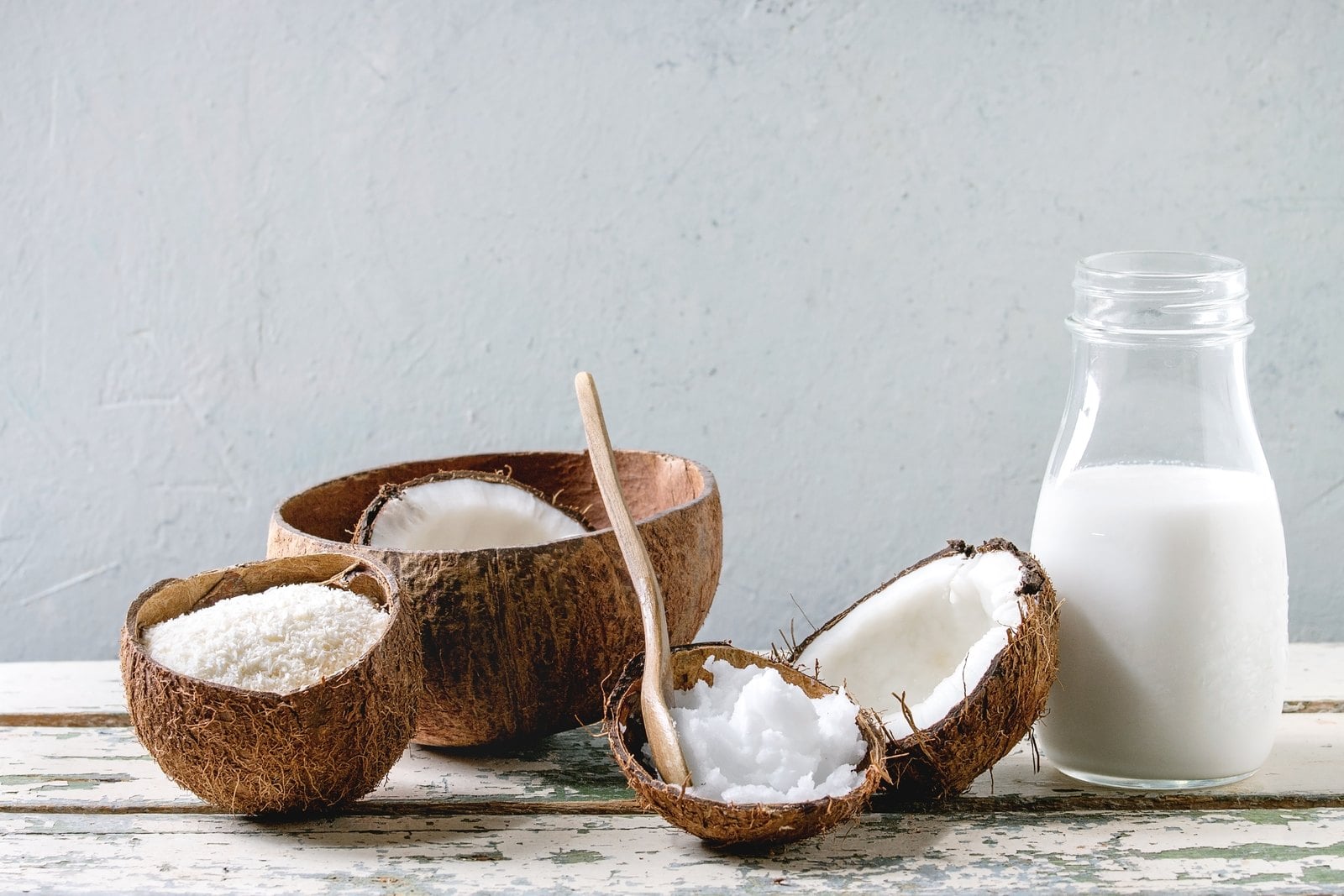
A look at the world map helps here. The largest producing countries are Indonesia, the Philippines and India, together around three quarters of world production. Thailand is considerably smaller, but plays a big role in canned coconut milk, because several of the brands that reach European shelves are based there.
Which means the suspicion does not fall on the coconut as such, nor on the majority of nuts harvested worldwide. It falls on particular origins and particular product groups. Most of all canned coconut milk and coconut cream, to a lesser extent oil, flakes and water.
The catch: the can often says only “product of Thailand”, or nothing at all. Organic certification does not help here, because it does not cover this question.
What you can do when you shop
- Read the country of origin. If it says Thailand, an enquiry is worth it. Origins commonly named as less problematic are Vietnam, Sri Lanka and the Philippines.
- Ask the manufacturer. An email with a single question (“Do your suppliers use monkeys for harvesting?”) takes two minutes and lands in a statistic that purchasing departments genuinely read.
- Use existing lists. PETA maintains overviews of brands that have ruled the practice out.
- Do not despair over perfectionism. Buying coconut milk more consciously achieves more than changing nothing out of frustration.
Why this is a vegan question, not just an ingredient question
Living vegan means not using animals. That is the whole point, and it does not stop at the ingredient list.
A macaque who has been on a one-metre chain since infancy, works seven days a week and has had his teeth pulled so he cannot bite anyone, is being used for a food product. The fact that he is not a component of that product changes nothing. It only makes the situation harder to see.
Animal ingredients are printed on the pack. Animal labour is not. If you understand veganism as a stance towards animals rather than as a diet, you also have to ask who actually harvested, carried or pulled a product. With coconuts the answer is sometimes: an animal who was never asked.
The same logic applies elsewhere. It is why, with animal testing, we look past the approval statistics to the animals themselves, and why we do not judge milk, eggs and honey by whether they contain “meat”.
Coconuts on Bali
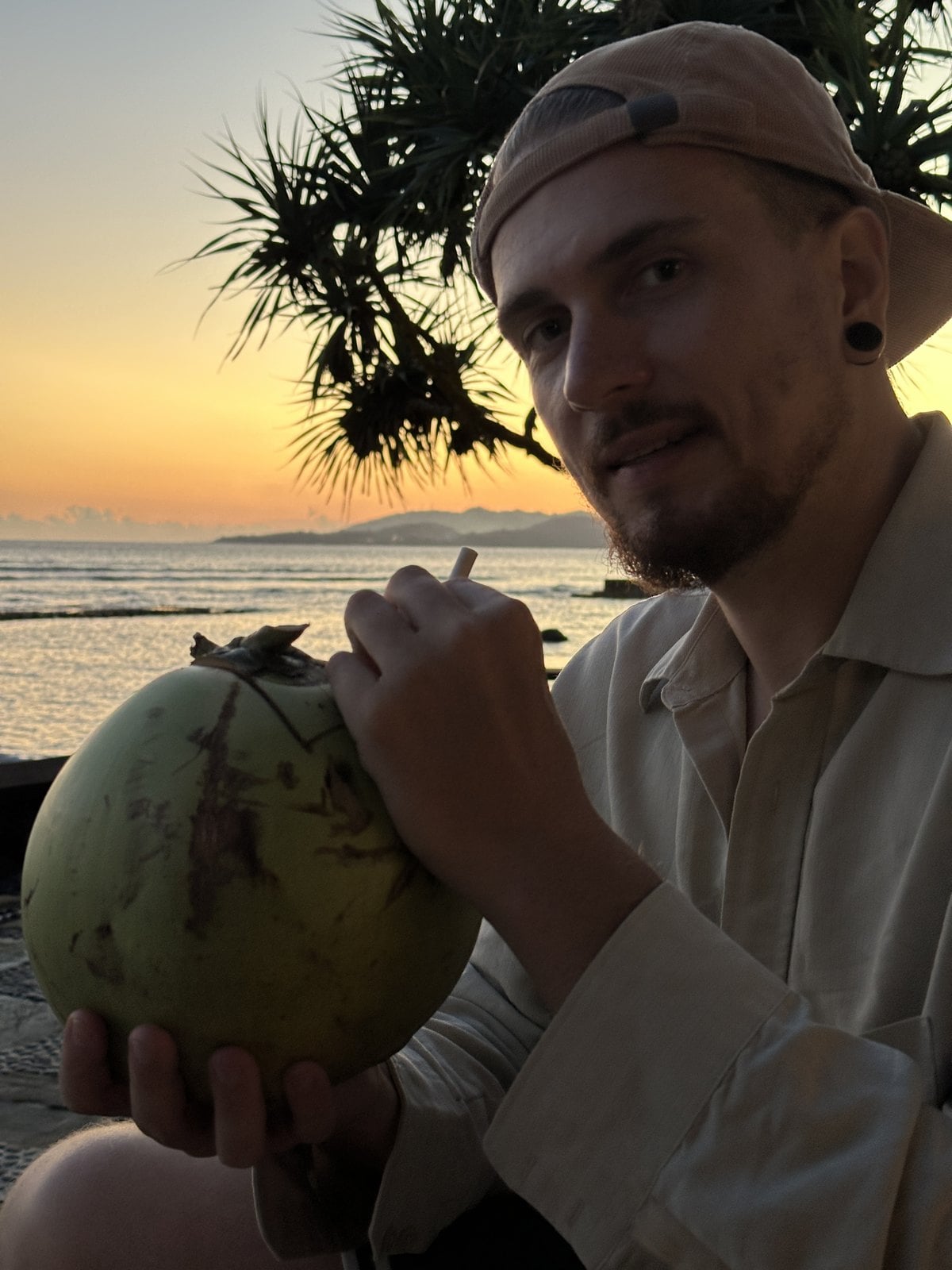
Part of our team lives on Bali, where the coconut is less a superfood than everyday life. It gets cracked open at the roadside, drunk, then spooned out, and the shell goes back into circulation as a bowl or as firewood. Getting it down from the palm here is normally done by people who climb.
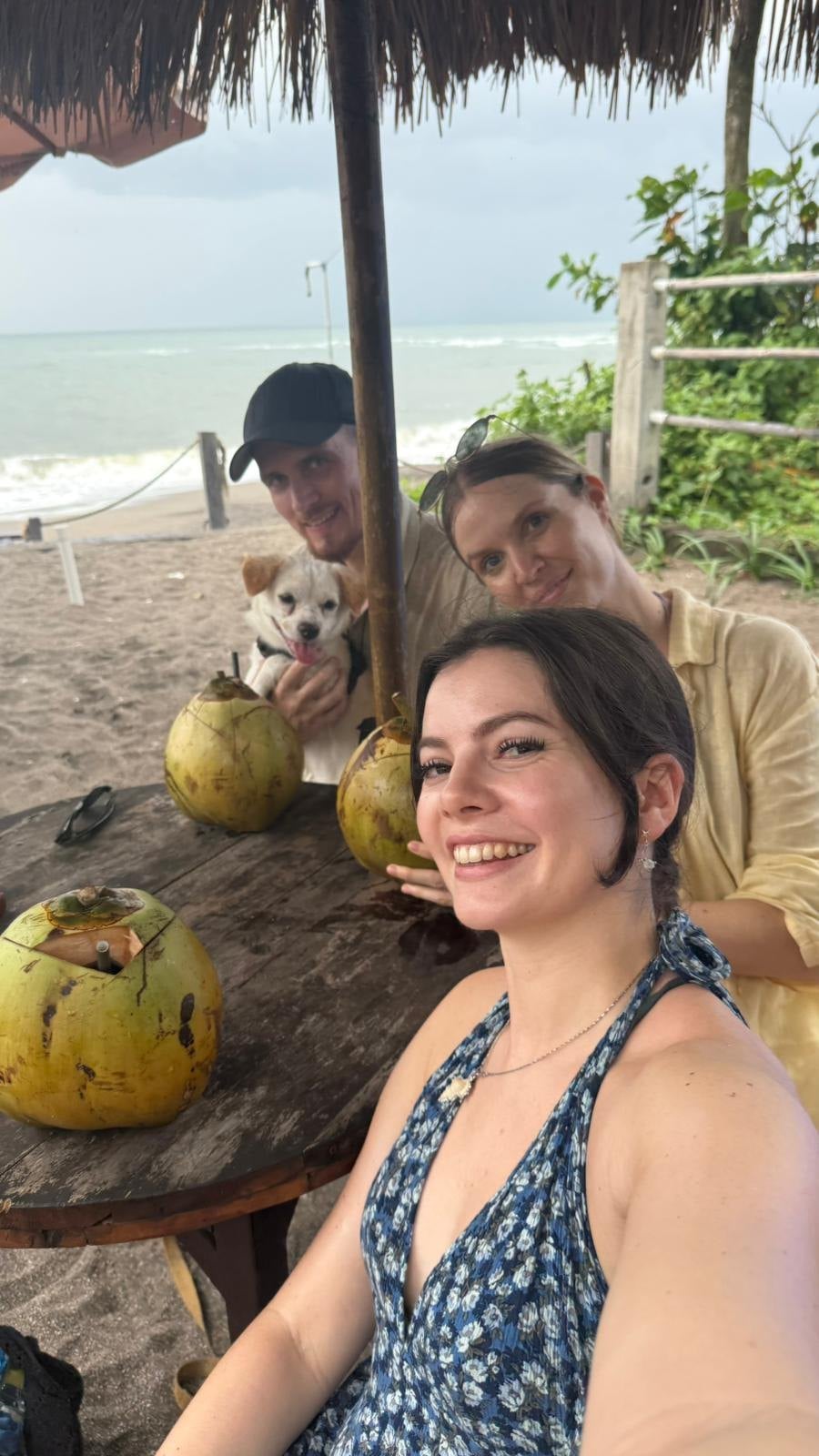
In the picture above, Maria Clara Groppler is with us. She was a guest on our Plantbased Podcast, talking among other things about comedy as activism and about a night-time investigation in an “organic” egg-laying operation. A few months later we met again on Bali, with coconuts instead of microphones. The conversation is here to read: Maria Clara Groppler on attitude, humour and hen houses (in German).
Where to eat really well and vegan on Bali, by the way, is something we keep collecting at bali-vegan.com.
World Coconut Day, celebrated honestly
2 September was declared by the Asian and Pacific Coconut Community, an association of the producing countries. So it is an industry day, not an animal protection day.
All the better to use it for a question that appears on no packaging. The coconut remains a wonderful plant-based ingredient. It just deserves that we know how it came down from the tree.
The podcast episode with Maria Clara Groppler
How she stopped eating meat at twelve, what she saw during a night-time investigation in an “organic” egg operation, and why comedy is activism for her: the full episode from our Plantbased Podcast. The episode is in German.
All episodes are at this-is-vegan.com/podcast.
Sources and context
The welfare figures come from: Schowe, Svensson, Siriwat, José-Domínguez, Fourage, Malaivijitnond and Nijman, “Assessing the welfare of coconut-harvesting macaques in Thailand”, Applied Animal Behaviour Science, 2021. The data were collected in the first half of 2019 and cover three southern Thai provinces, not the whole country and not the whole region.
On the investigations and the campaign we refer to PETA Germany and to the article by Veganz, in which PETA spokesperson Tobias Schalyo sets out the origin recommendations. The response of the Thai government and the companies is taken from reporting by Tagesspiegel.
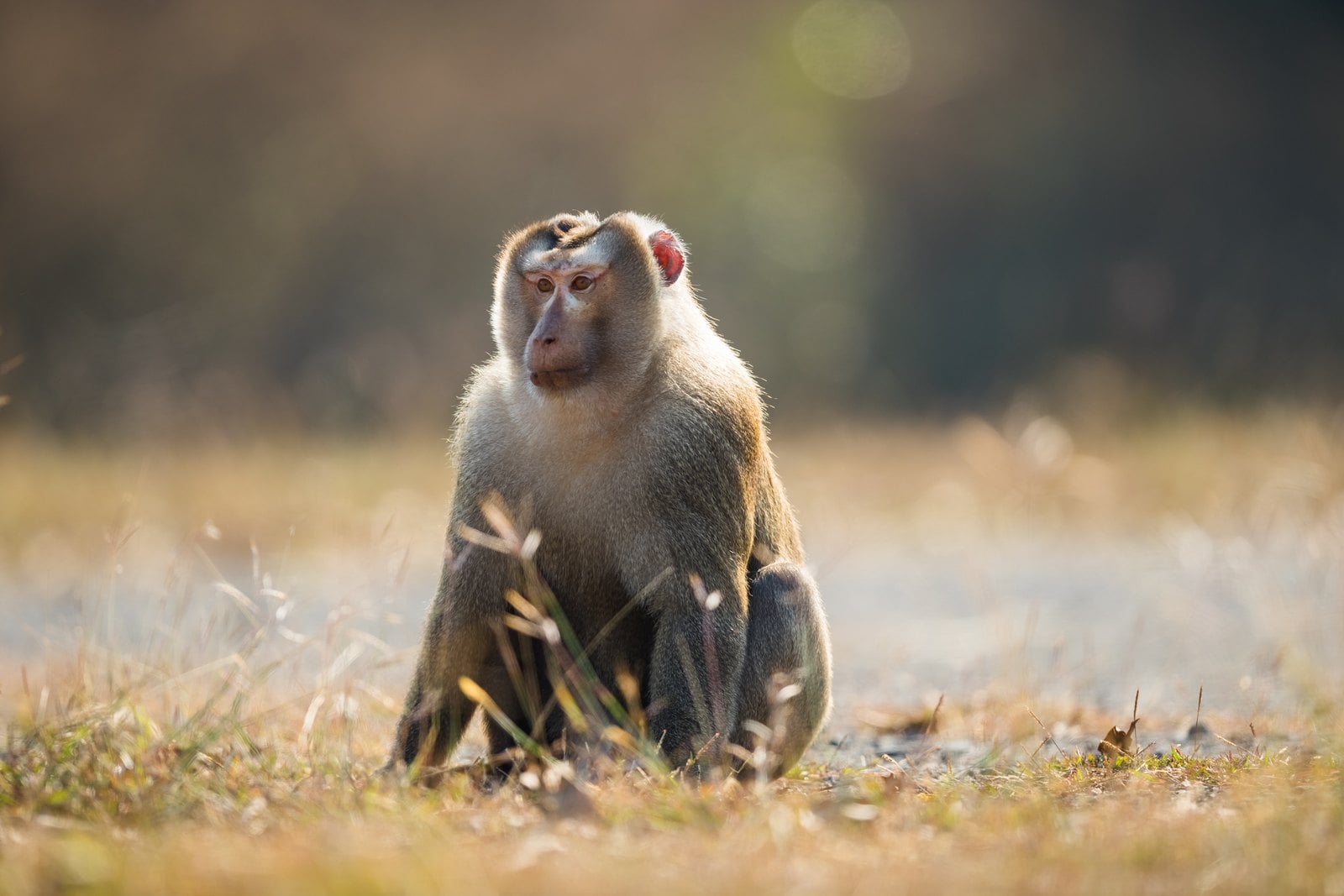
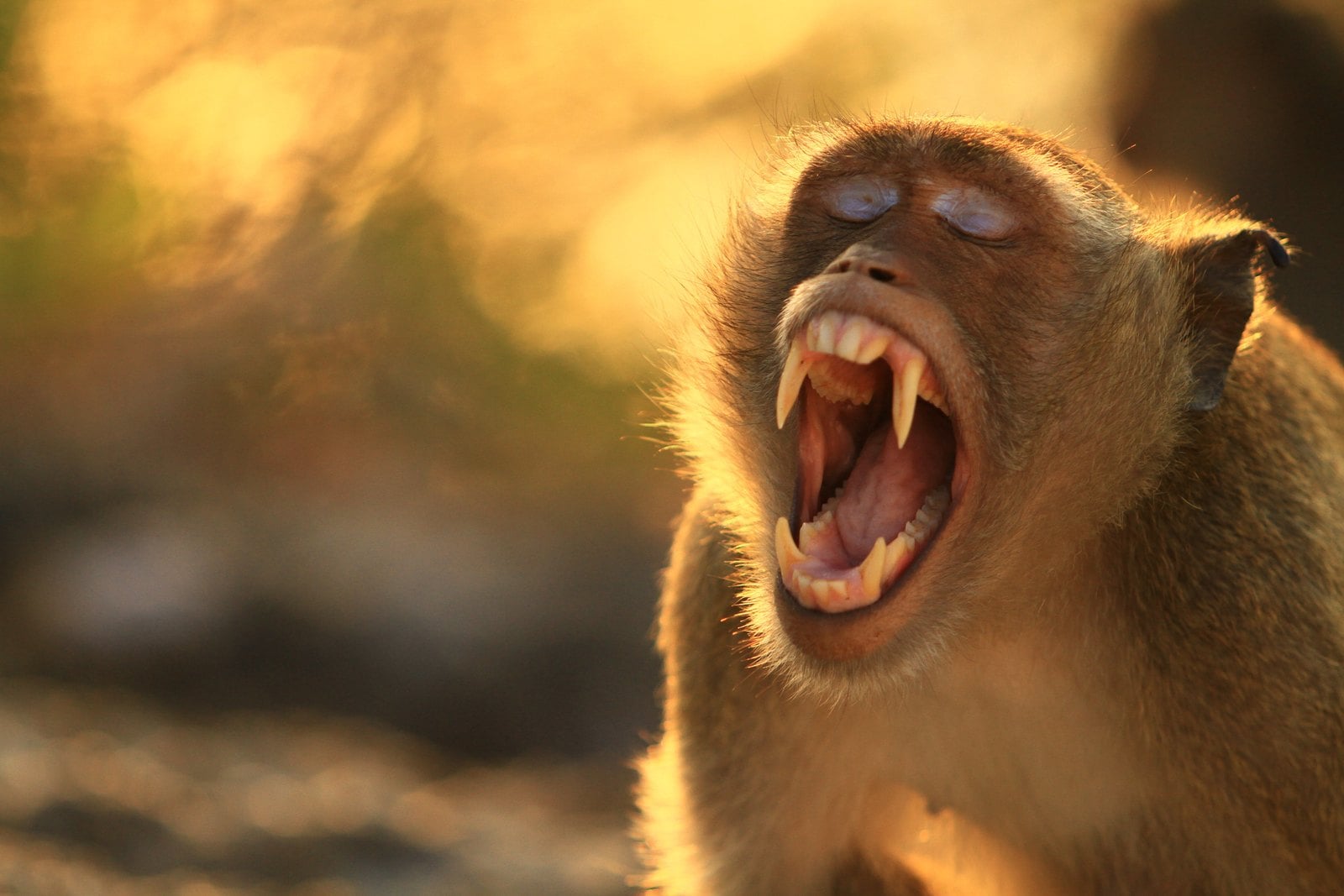
Important: the use of monkeys does not concern the global coconut harvest as a whole. It is regionally concentrated, above all in southern Thailand and in parts of Malaysia and Indonesia. The stock images from Thailand show free-living macaques, not animals from the coconut harvest.
Want our reporting to show up first in Google's Top Stories? Add This Is Vegan as a preferred source on Google.