




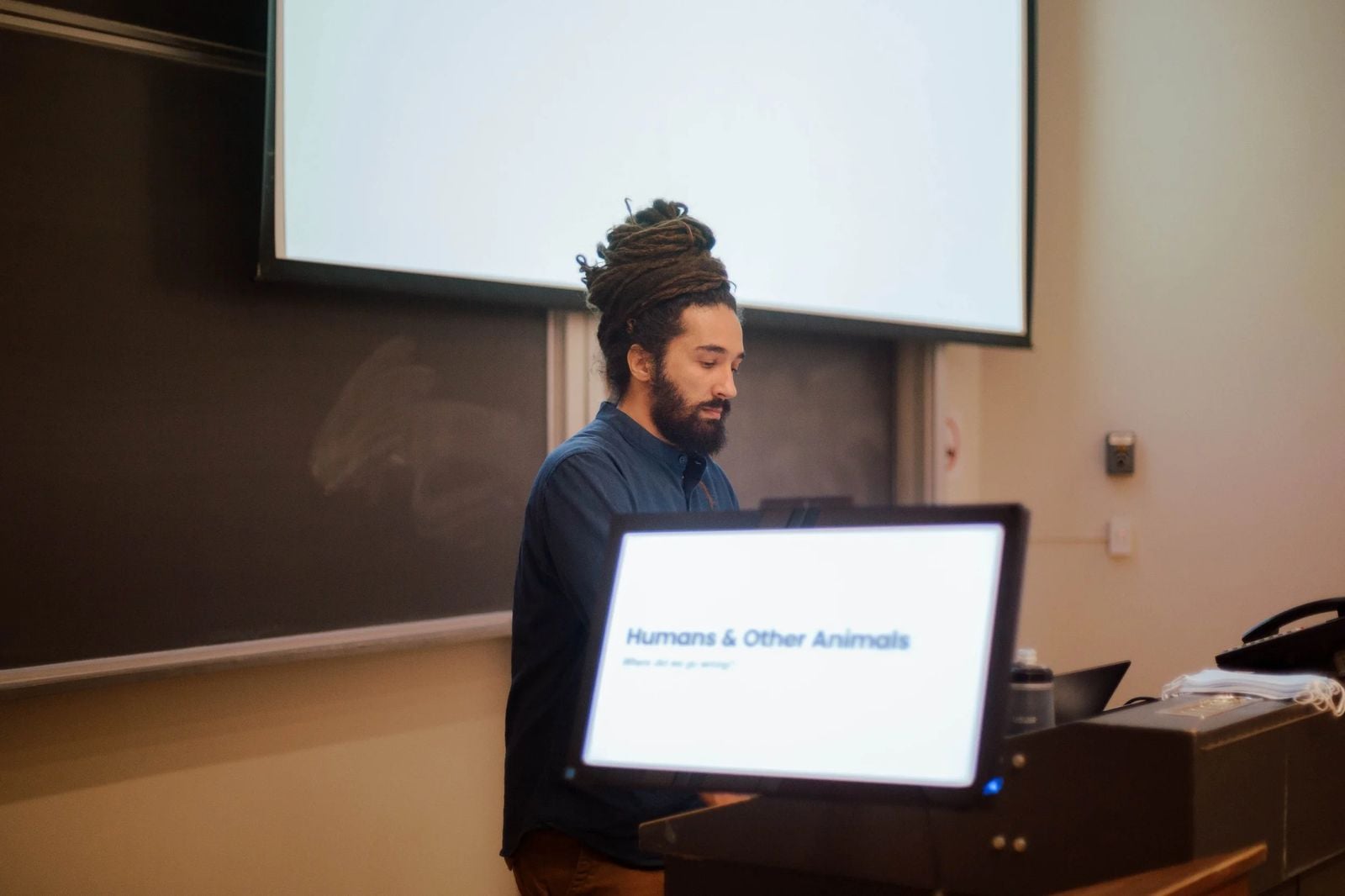
Seb Alex had a comfortable life. Master’s degree in architecture from Paris, a year with the UN refugee agency, then head of international projects at a big firm in Barcelona. He quit with about a thousand euros in the bank, bought a camera and started filming what happens to animals behind closed doors. Today he is one of the best known animal rights activists in the Middle East: founder of the Middle East Vegan Society, co-founder of an animal rights centre in Beirut, lecturer at more than 55 universities and the first Animal Photojournalism Fellow of We Animals Media.
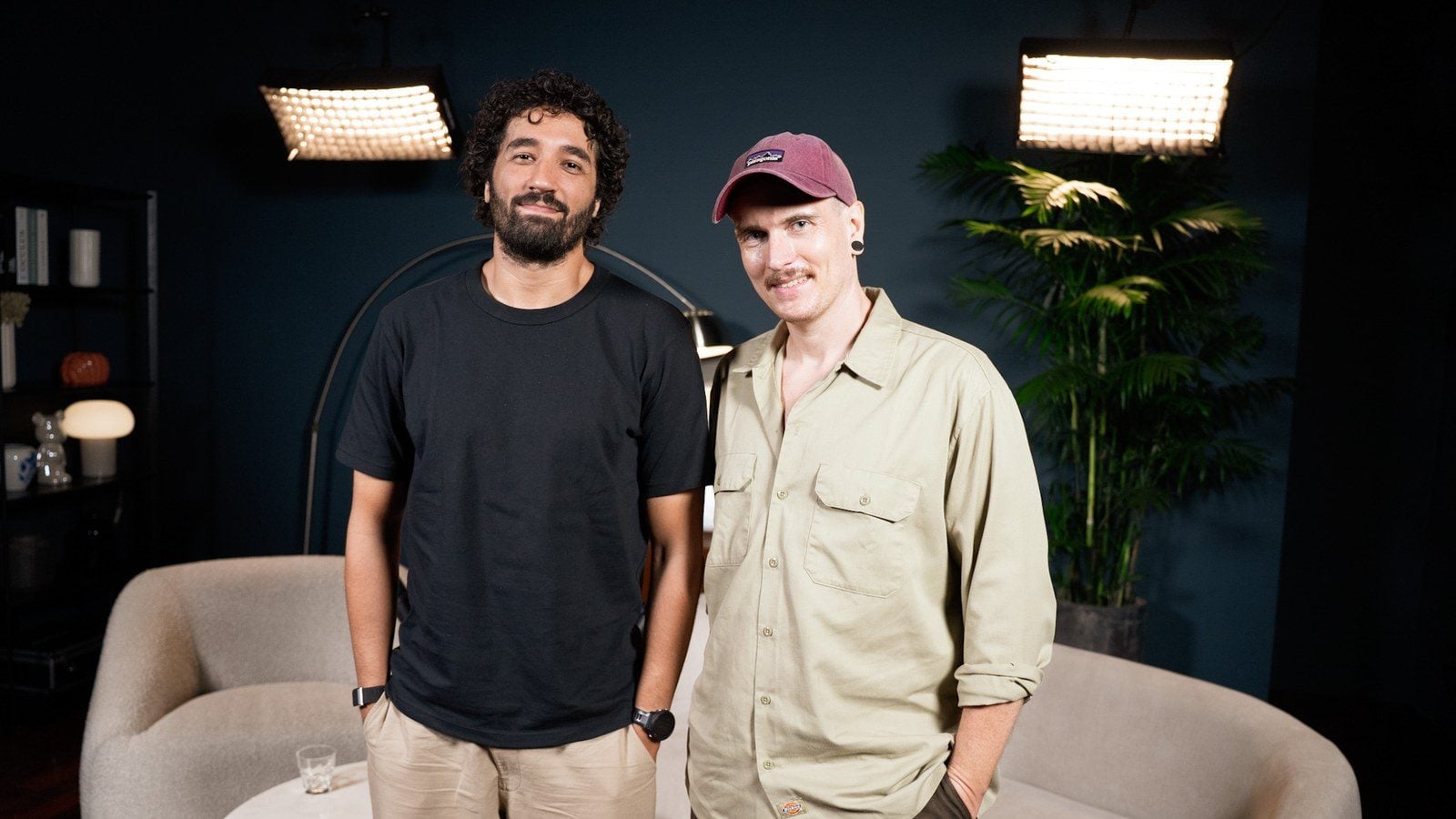
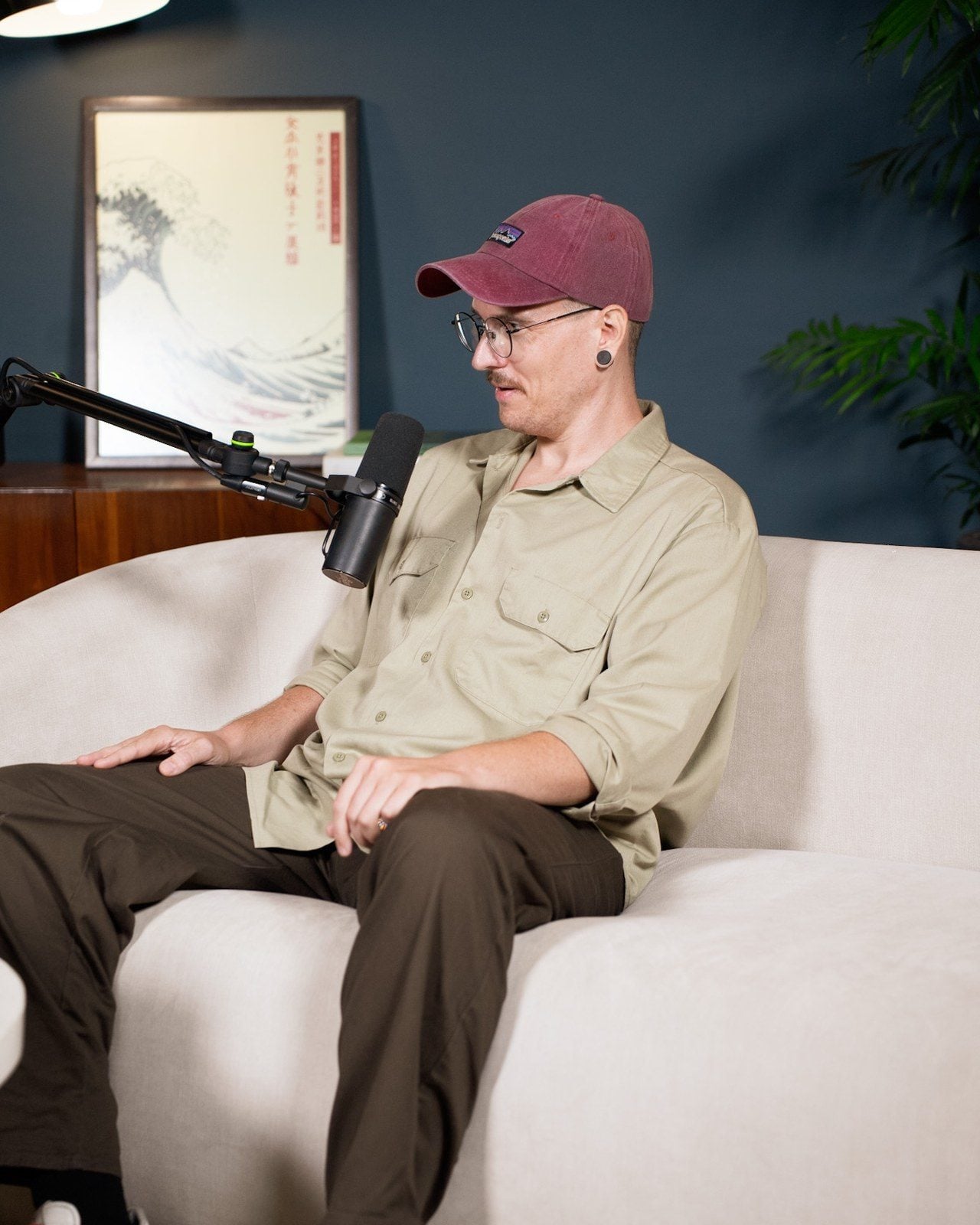
For the Plantbased Podcast, Yannick met him in a studio in Bali, where Seb has lived for seven years. They talked for an hour and a half. About the cat that started everything. About a boss who asked whether he really thought the company cared about ethics. About why vegan mac and cheese makes no sense in Lebanon, how a sustainability score gets hotels to change their menus, and what Seb sees in the eyes of the animals he films.
And about October 2024, when he drove into the most bombed neighbourhood of Beirut to feed the cats and dogs people had left behind. Here is the conversation, edited for reading.
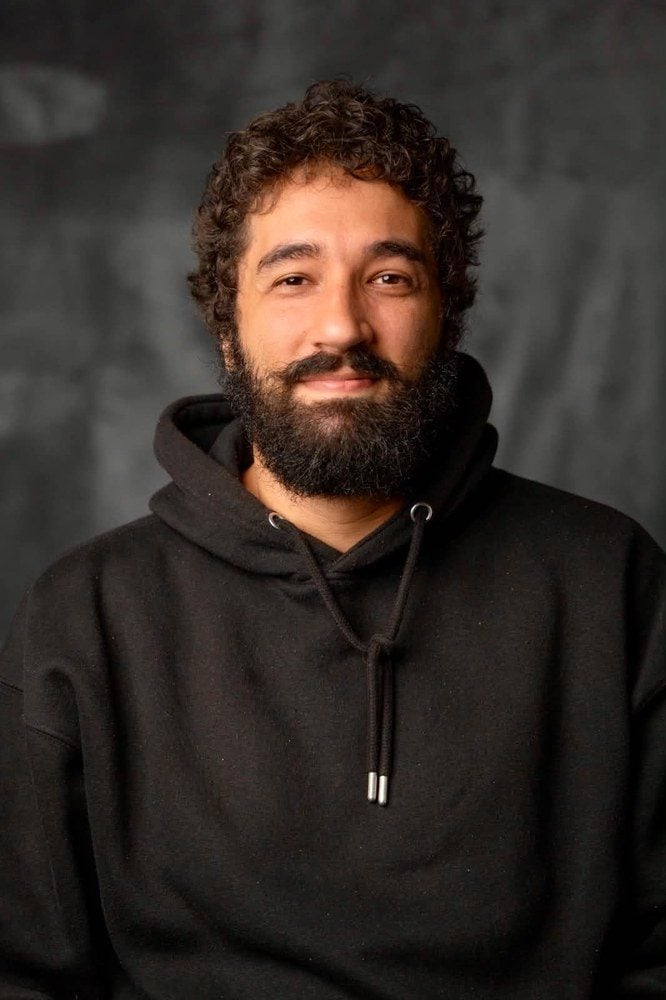
Who is Seb Alex? ●
- Armenian Lebanese, grew up in Lebanon, studied architecture in Paris, lives in Indonesia
- Worked for the UNHCR and as head of international projects at an architecture firm in Barcelona before going all in for animal rights
- Founder of the Middle East Vegan Society and co-founder of the Lebanese Vegans Social Hub in Beirut, an animal rights and vegan support centre
- Has lectured at more than 55 universities and schools in Europe and North America, reaching over 6,000 students, and trained more than 1,300 activists in workshops
- Author of the free ebook When Animal Rights & Logic Meet, available in 20 languages
- We Animals Media Animal Photojournalism Fellow 2022, documenting animals in Lebanon
- Instagram: @seb.alex, website: sebalex.org
Contents12 chapters
- 01Watch the full episode with Seb Alex
- 02From Beirut to Paris to Barcelona, and then to Bali
- 03The cat, the friend and the question he couldn’t answer
- 04“You really think we care about ethics here?”
- 05Middle East Vegan Society: why vegan mac and cheese makes no sense in Lebanon
- 06Hotels, hospitals and a sustainability score
- 07Inside the slaughterhouses
- 08“What about the children in Syria?”
- 09How he stays sane, and what activism actually works
- 10Why influencers quit veganism, and a letter from 1,800 years ago
- 11The answer nobody applauds
- 12Three dinner guests and one book
Watch the full episode with Seb Alex
The whole conversation is on YouTube. Nothing from YouTube loads on this page until you click the preview image.

From Beirut to Paris to Barcelona, and then to Bali
You are Armenian Lebanese, studied architecture in Europe, live in Indonesia and work for the Middle East. What do you call home?
Seb: I lived in Lebanon for the first 20, 21 years of my life. I had already started studying architecture and transferred to a university in Paris, because the education systems are very similar. I got my master’s there, moved to Barcelona, worked with the UNHCR, which is the part of the United Nations that takes care of refugees, and after that in architecture. While I was working in architecture I started organising activism events for animal rights, which led to workshops, which led to lectures.
Eventually I came to Indonesia for a break. That was seven years ago. The break became much longer, so I made Indonesia my home. Of course I always have this weird feeling about what home is. When I go back to Lebanon, it feels different.
What do you like most about living here?
Seb: How slow life can be. And how normal it is to talk to people on the street. In Lebanon it’s the same. When I first got to Paris I didn’t want to rely on Google Maps, so I walked up to people to ask for directions. They would hold their bags and ignore me. With time I realised that’s just any major city. I’m not a big fan of that, so I appreciate having the option here.
The cat, the friend and the question he couldn’t answer
You were vegetarian for eight years before you went vegan. What cracked the self-image?
Seb: I grew up thinking of myself as an animal lover. Then my mom wanted to declaw our cat because he was destroying the couches. I had a big argument with her, made a Facebook group against her, invited all my friends and read the comments out loud in our small flat until she said: fine, I won’t do it.
One of my friends was vegetarian at the time. I was 16. She told me: it’s great that you did that for your cat, but let’s face it, please don’t think you’re an animal lover. You just love your cat. You still eat animals, you pay someone to kill them, and you still go hunting every now and then. How can you justify that?
Technically she was calling me a hypocrite, which nobody likes to be called. So I argued, and she asked me to watch a ten-minute video, Meet Your Meat or Farm to Fridge, I don’t remember which. When it was over I wondered: what’s the best argument I can give now? Because I didn’t want to give up eating meat. I couldn’t find one. So either I act like I don’t have an answer, or I change. I became vegetarian, simply because I had no information about veganism.
“Please don’t think you’re an animal lover. You just love your cat.” ●
And the step to vegan?
Seb: A few years later I was wondering why we, as grown-up human beings, drink the breast milk of the mother of another animal. Logically, biologically, naturally it just doesn’t make any sense. If we need breast milk, it’s the one we get from our mothers. So I googled “why don’t vegans drink milk” and landed on the documentary Earthlings. It explained something I had never thought about: speciesism, discrimination based on species. It’s completely arbitrary, we have no good argument to justify it. And if that’s true, you can’t consider other animals as commodities and just use them. My first reaction was: oh my God, I have to go vegan. At the time it was a struggle to even find soy milk.
Years before that I had met exactly one vegan. I was 20, in Yerevan, watching the sunrise from the top of the Cascade stairs with a friend. An older man kept running up and down the stairs, non-stop. When he sat down I asked how old he was. Sixty. Why do this? He pointed at Mount Ararat and said it was his dream to climb it, but he was old and needed to practise. He was a doctor. At 58 he had realised he was extremely unhealthy and overweight, and he wanted to be a good example for his patients. So he went vegan.
I said: wow, vegan. Where do you get your protein from? I said that to a doctor. He laughed and said all plants have all essential amino acids. A few weeks later he emailed us a photo from the top of Ararat. I’ve been trying to reach him for 15 years to tell him I’m vegan now. His inbox bounces every unknown sender.
“You really think we care about ethics here?”
You had a good position and a good career. How did you decide to leave it?
Seb: The first day of my job I thought: I don’t think I can do this. Massive company, very corporate. I planned to work for a month and go back to waiting tables, which is one of my favourite jobs. After a month they gave me a raise. Two months later another raise, and they made me head of international projects because I speak a few languages. So it was a comfortable life. But I had already started getting active. I had seen photos of activists in the Barcelona metro showing Earthlings on laptops and thought: if I’m against it, not contributing is good, but being out there raising awareness is better for the animals. Whenever I went to work I felt I was wasting time.
Then I got an email asking me to help with a project. I was reading the plan of a university building and the rooms had names like reptile, laboratory. I thought: wait, is this an animal testing lab? My boss was sitting next to me. I said: conference room, please. I told him there’s an animal testing lab in that building and that on the hand I’m using to hold the mouse I’m wearing a bracelet that says “until every cage is empty”. I’m vegan for ethical reasons, I can’t work on this.
He said: completely fine, we’ll give it to someone else. And I thought: oh, thanks. And then: wait, no. Nobody should do this. Do you not look into what you’re taking from clients? He looked at me and said: you really think we care about ethics here? Remember that hospital you worked on in a certain country? Do you think that government can afford a hospital for more than 4,000 euros per square metre? It’s all money laundering.
Eventually I thought: what if I just quit? I had about a thousand euros saved. I’d buy a camera, start posting activism online, open a Patreon page, and if nobody supported me I’d work as a waiter.
“I had a thousand euros saved. I thought: I’ll buy a camera and start posting activism online.” ●
Funny footnote: an Italian university transcribed an interview where I told this story. Years later I found it and read that I had “only” 40,000 euros saved when I left architecture. It was a typo. If anyone read that: I did not have 40,000 euros.
Middle East Vegan Society: why vegan mac and cheese makes no sense in Lebanon
You founded the Middle East Vegan Society because nobody was talking about the region. What does the society do?
Seb: I always got frustrated because a lot is happening in the Middle East, and if any of it happened in the West, everyone would be talking about it. So I stopped complaining and started something. Today we are 13 or 14 people, spread over the world: our social media manager is in Canada, our Arabic translator in Bolivia, others in Lebanon, Saudi Arabia, Jordan and the UAE.
The first thing we worked on was education that is relatable for the culture. Most vegan resources are great for people in Europe, Canada, the US or Australia. Tell an American about vegan burgers and mac and cheese, fine. Say that to a Lebanese person and they look at you: why would I eat vegan mac and cheese? Mediterranean cuisine is already plant-dominant. Almost every meat dish has a plant-based version, not because of veganism, it was always there. Part of the reason is that Arab Christians go vegan for 40 days during Lent. So we tell people: eat what your culture already has in place.
Many activists ask how to talk to religious Muslims about animals. You built a resource for that.
Seb: I’m Armenian, not from a Muslim family, but many of my friends and many animal rights activists I know are religious Muslims. So I asked them: how about a resource that shows what Islam actually says about animals, for activists and for Muslims who are interested in veganism? They wrote it. It’s on veganislam.org, in English and Arabic, and it gets thousands of visits every month, from Muslims all over the world.
The fact first: in Islam, humans have permission from God to kill animals for food. There’s a famous saying that you cannot make haram what God has made halal. Nobody should argue against that religiously. But halal is not a sentence and then move on. There’s a whole process. The animal should not suffer at any point in its life. What does that mean? Factory farms are immediately off the table. The animal must not see or hear blood, other dead animals or even the knife. Go to any slaughterhouse: that’s just not the case. I’ve been in slaughterhouses that print the halal certificate on their products. I’m not Muslim and I know this is not halal.
“98.9 percent of animal products cannot exist under actual halal rules. That’s the share of animals in factory farms.” ●
And the Quran doesn’t only talk about animals when it comes to halal. It says animals are nations like yourselves, communities, not commodities. If you compare how often Islam encourages you to protect animals with how often it says you can kill, it’s very obvious what you should be doing in this day and age.
Hotels, hospitals and a sustainability score
You also work with companies. How do you get a hotel chain to change its menu?
Seb: Let’s be honest, people start businesses to make money. So we don’t come to them and ask whether they’ve thought about what’s good for animals. They don’t care. We have an internal calculator. We put their menu into our system and see how sustainable it is: how many plant-based options, how good they are, where they sit on the menu. They get a score and a list of suggestions. Implement them, the score goes up, and they receive a sustainability certificate from us. In the Middle East, climate change is not a debate. There’s no “it’s a hoax”. So they like it, it’s good for their reputation, and honestly they make more money selling plant-based than animal-based because of the cost difference.
One hotel with twelve branches changed its menu, got our bronze certificate, sold many more plant-based dishes and came back: we want silver. A hospital is switching the meat in a dish it sells about a thousand times a month to locally produced vegan meat. A school that won an award as the most sustainable school in the world has already changed its menu and is changing it further. Governments and municipalities embrace it too, partly because obesity and diabetes rates are very high.
What are the small tricks on a menu?
Seb: The first two items and the last item on a menu sell most, so that’s where the plant-based dishes go. And the name. If you call it “vegan burrito”, nobody buys it. Give more information instead. And never a separate vegan menu. Nobody walks into a restaurant asking for the separate vegan menu. Put the options in the main menu.
Inside the slaughterhouses
You won’t sit at a table where people eat animals. How do you handle that?
Seb: I encourage others to do it only if they feel comfortable, have the privilege and know how to communicate it. I don’t do it as “I’m better than you”. I go into slaughterhouses and farms, I’ve been doing it for years, and I no longer see meat as food. I see it as the victim that went through a lot of suffering and was exploited and killed. I can’t enjoy my time if someone eats that next to me.
My mom has been vegan for six or seven years. My siblings aren’t against it. I told them: I see you a couple of times a year, and it’s very weird for me to sit with you and watch you do so much harm that I’m trying to undo. They said: fair enough. With friends I say the same, in advance. And there’s a study behind it: two groups fill out a survey about animal sentience, one group snacking on nuts and seeds, the other on bacon bits. The people eating animals rated animals as less sentient. So if we talk about animal rights, you are much more likely to listen if you are not eating an animal at that moment.
What was the first slaughter you documented?
Seb: A cow slaughterhouse. They had brought the cows and a calf, which I believe was sick. All the cows could watch, one by one, the previous cow being put on the machine, tied down and having her throat slit. The calf was sitting in a pool of blood. I have all of it documented. If anyone doubts what I’m saying, message me and I’ll send the videos.
Sometimes I have moments of eye contact with the animal. It’s almost like they know I’m not there to harm them, but they also look at me as: why are you not doing anything? Why are you letting this happen to me? This might all be in my head. But I’ve had these moments, and they feel very weird. My only hope is that I publish the footage and people change.
“They look at me as: why are you not doing anything? Why are you letting this happen to me?” ●
And pigs?
Seb: Pigs are intense. In Europe, the so-called most humane way to kill pigs is a gas chamber. They pump in CO2, and a slaughterhouse worker told me it feels like your lungs burning from inside. That’s when you hear the pigs screaming, even from outside the building. When they pass out, they hang them upside down and kill them. And that is sold as humanely slaughtered. The slaughterhouse I could get into used electrocution, which is considered the second best method. It often takes many attempts.
I remember a duck slaughterhouse. The worker grabbed them one by one, slit their throats and threw them aside. He dropped one duck, I lowered the camera to film it bleeding, he forgot, took a step back and stepped on the neck of the duck while it was happening. We do it all for a five-minute meal. Even a five-hour meal wouldn’t justify it. And when I say the way we treat them, I don’t mean we should do this more nicely. We just shouldn’t do it.

“What about the children in Syria?”
What does animal rights activism look like in a region where many people fight for daily survival?
Seb: When I started, people would say: what about children dying in Syria? Syria is an hour’s drive from where I lived. I’d say: tell me what I’m doing every day that contributes to that, and I’ll change. Unless you have an actual answer, don’t exploit the suffering of these people to justify the suffering you cause to animals.
Nowadays people say the same about Lebanon. Israel is trying to invade the south right now, and I have friends who stayed behind. One of them is 2.5 kilometres from the border, surrounded by destruction. His house was bombed last week. He’s there because every morning he drives through the empty villages to feed the animals. I told him to be careful. He said: either I feed them or I get killed feeding them. I’m not running away. He’s not the only one. We’re working on a documentary about them, because in situations like this humans can, for once, identify with what animals go through. They are victims of the same aggression and the same aggressor.
“Either I feed them or I get killed feeding them. I’m not running away.” ●
You went yourself, in October 2024.
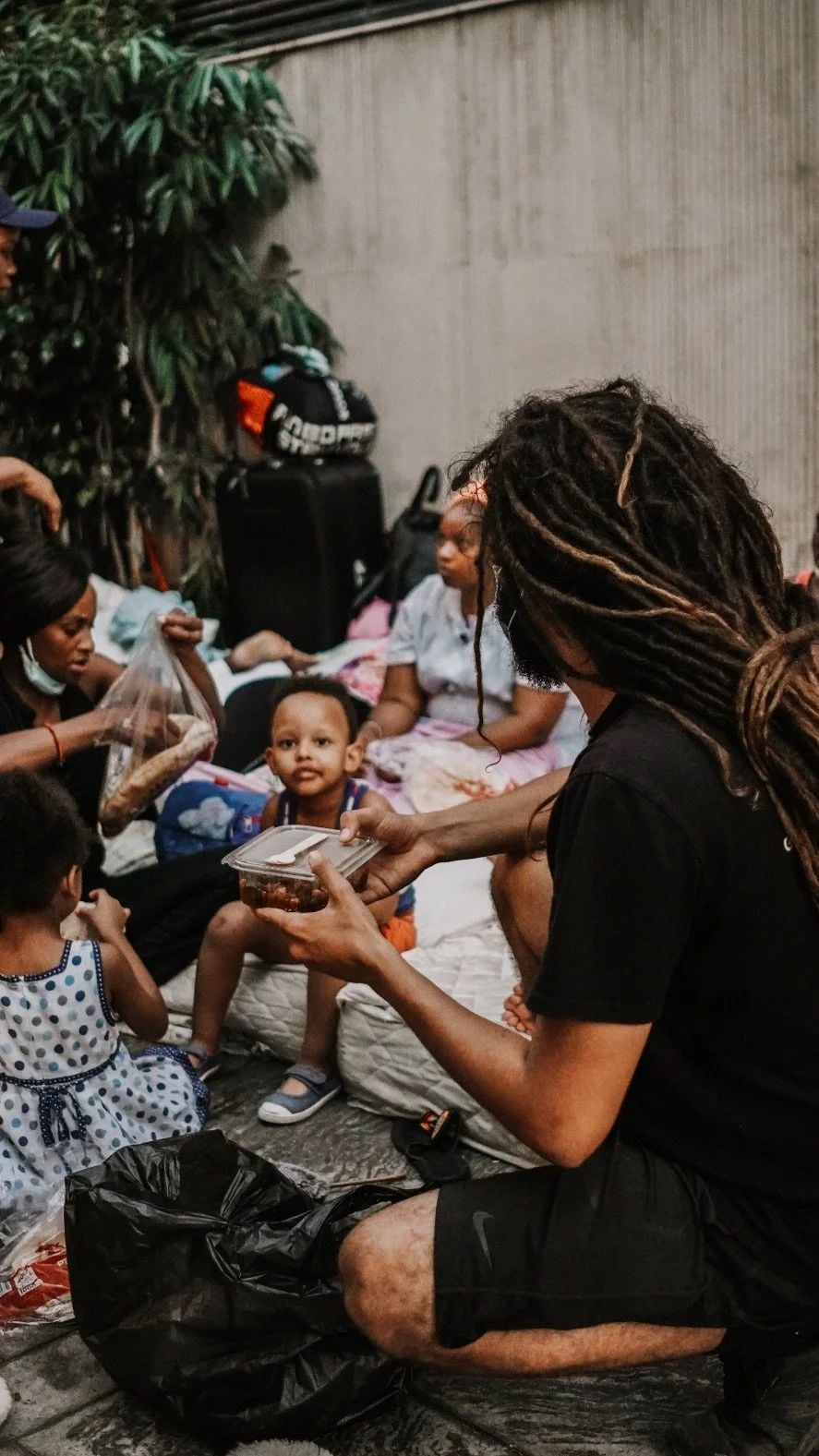
Seb: To the southern suburb of Beirut, the most bombed area. The week before, it had been bombed 56 times. One neighbourhood. People had left overnight and a lot of animals were left behind. I knew Diana, a vegan activist with a dog shelter. She was driving in, filling the trunk with food and walking around feeding the animals. The week before, she had been on Facebook Live when an airstrike hit nearby.
Even driving in I thought: this is not a good idea. You can hear the drones above you, and anyone going in is a question mark for them. We got out of the car and immediately someone asked who we were. Diana explained. Okay, but no photos. Then three motorcycles arrived from different directions, some of them with AK-47s on their laps. You’re thinking: these people are waiting for their death at any moment, and you show up to feed animals. And the smell. Rotting human corpses in the rubble, rotting animals, rotting food in every shop.
One of them was responsible for the area. He pointed at a young man: he stays with you for 25 minutes, and when he says go, you go, because there’s going to be an airstrike. So we walked around with this guy, who made jokes the whole time. Diana asked where the hundred cats from last time were. He said: they party at night and sleep during the day.
Then two men on a motorcycle stared at us in a very weird way. One turned around, and I thought: what’s going to happen? He took out a plastic bag and said: I’m taking care of my neighbour’s cats as well, can you give me some food? This happened a few times. One man with a gun said: I know a street with a lot of animals, follow me. He was telling the truth. We heard an airstrike, a small one, not close. Nobody said anything against people coming in to help animals. Even the strict one said: I only care that you get out of here alive. When it’s over, it’s over. You don’t argue.
Does that change how people see animals?
Seb: My experience says that in these situations humans become much more concerned with animals, because they can identify with the pain. So when someone says “why talk about animals when there’s so much human suffering”, the answer is: the people suffering in these areas care about animals too.
How he stays sane, and what activism actually works
How do you cope with what you film?
Seb: I’ve accepted that this is the world we’re in. So much bad happens that it’s almost normalised. I’ve been in depressive periods. What helps is staying active. The hard part is at home, when I start editing and remember a specific animal. Sometimes I don’t edit for weeks because I don’t want to go back to it. Meditation helps everyone, scientifically, even if it’s just sitting and observing your breath. A lot of people struggle with that, so the second best thing is movement. I practise jiu-jitsu and train for triathlons.
What’s the most effective form of activism?
Seb: A mix of education and politics. If you only educate but the laws don’t change, you’re converting people one by one, and the population grows faster than that. If you only do politics, why would they change a law the population doesn’t want? So you raise awareness and change laws at the same time. And not everyone can do either. Chefs, authors, doctors, people who build websites: find what you’re good at, then check whether you can do it alone or inside an organisation. Even the activist who only writes “watch Dominion” in chalk on the pavement is doing better than nothing.
You’ve lectured at Harvard and at more than 55 universities. The most intense reaction?
Seb: Portugal, 2019. When I arrived at the station they warned me: a lot of drama at the university. It teaches animal agriculture, and the administration was fighting over whether I should speak at all. In the Q&A a woman argued that animal agriculture is good for the environment. I told her the number one cause of deforestation in the Amazon is animal agriculture. She got cornered and said: oh come on, there is no deforestation in the Amazon. A student turned around and said: teacher, please, we’re in a university, respect yourself, you’ve lost this argument. Afterwards two students came to me. They had been emailed to come and argue against me. They said: because of how they reacted to you, we’re going vegan.

Why influencers quit veganism, and a letter from 1,800 years ago
A lot of influencers have gone back to eating animals lately. Why?
Seb: In 2017, 2018 and 2019 the movement grew massively, together with vegan businesses. Many of them didn’t make money, and people started judging the success of a movement by how much money is made in it. That’s extremely misleading. Are people going back to eating animals? Yes. But it’s nothing new. When a movement grows exponentially, people join it as a trend, and you can’t count on them to stay. For me it’s: okay, I move on. We’re up against a multi-billion dollar industry that fights back, the seed oil panic against plant milks being one example. Expecting no resistance was the mistake.
And the market for vegan alternatives is growing faster in the Middle East and Africa than in the West. You can’t judge the movement by one region.
Then I found a book by Porphyry, a philosopher born in Tyre in the south of Lebanon, which ironically is being bombed right now. About 1,800 years ago he wrote a letter to a friend who had gone back to eating meat. He wrote: surely you’re not doing it because you think you need it for your muscles. The same things people say on social media today, in a letter, thousands of years ago. There have always been people who go back.
The answer nobody applauds
Our last guest, Fabi from Vegan Superheroes, left a question for you: what do you do that you don’t get applause for?
Seb: I’m going to trigger a few people. I don’t think we have the right to bring people into existence. It’s a very difficult topic, because it’s literally in our DNA. But I’ve thought about it a lot. There’s a book, Better Never to Have Been by David Benatar, and Al-Ma’arri, a Syrian poet who lived a thousand years ago and was also vegan, was against it too. The stance is called antinatalism: you cannot ask for consent to bring someone into existence, and you are gambling with their life. Benatar argues that suffering always weighs more than happiness. Imagine two rooms, one with the worst suffering imaginable for an hour, one with the greatest happiness, and you can only enter the second if you enter the first. Most people say no.
I think adopt, don’t shop applies to humans too. If I decide to be a father one day, I’d rather adopt. My father passed away, but my parents were absolutely amazing, and I can’t think of a better gift than having parents.
Three dinner guests and one book
A vegan dinner at your place, three guests, dead or alive. Who, and what do you cook?
Seb: Lebanese food, easy. The best vegan cuisine. The guests: I’m thinking about impact, not who I’d enjoy sitting with. Joe Rogan, because his reach is bigger than all of American mainstream media combined. Cristiano Ronaldo, one of the most followed people on the planet, roughly a sixth of the world. And then Jesus and Prophet Muhammad. If they sat down for a vegan dinner, a vast majority of the world would follow.
What do you want to leave the community with?
Seb: Read books about animal rights. Not cookbooks, the philosophy, the reasoning. Animal Rights and Human Wrongs by Tom Regan is a great start. He wrote The Case for Animal Rights, which is heavy, and then this lighter one for everyday people. It helps your advocacy, and it helps you understand that this is a very logical stance.
Affiliate note: the link goes to a selection of animal rights books on Amazon. If you buy through it, you support This Is Vegan at no extra cost to you.
More from the Plantbased Podcast ●
How this interview was made ●
Yannick Haldenwanger recorded this conversation with Seb Alex on 3 April 2026 in a studio in Bali. The recording runs about 95 minutes. For the reading version we shortened the conversation and smoothed the language without changing any statements. The full episode is in the player above and on YouTube, Spotify and Apple Podcasts. Studio photos: This Is Vegan. All other photos come from Seb Alex and sebalex.org and are used with his permission. Figures on lectures, workshops and the food relief programme are taken from sebalex.org (as of September 2026).