


Update, 11 September 2026 ●
Sebastian Everding is no longer a Member of the European Parliament. On 31 August he announced on Instagram that he had stepped down at the end of August. After an acute health situation and a hospital stay of several days, he said, he needs to focus fully on his recovery. His doctors were clear that strain and stress have to be reduced significantly.
According to Everding, his work will be continued by Robert Gabel, who moves up as the next candidate on the Animal Protection Party’s list and was already part of his team. We recorded this interview in June 2026, while Sebastian was still in office. We wish him a full and speedy recovery.
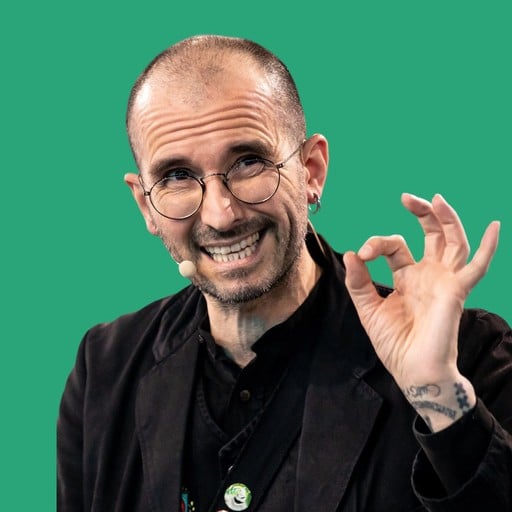
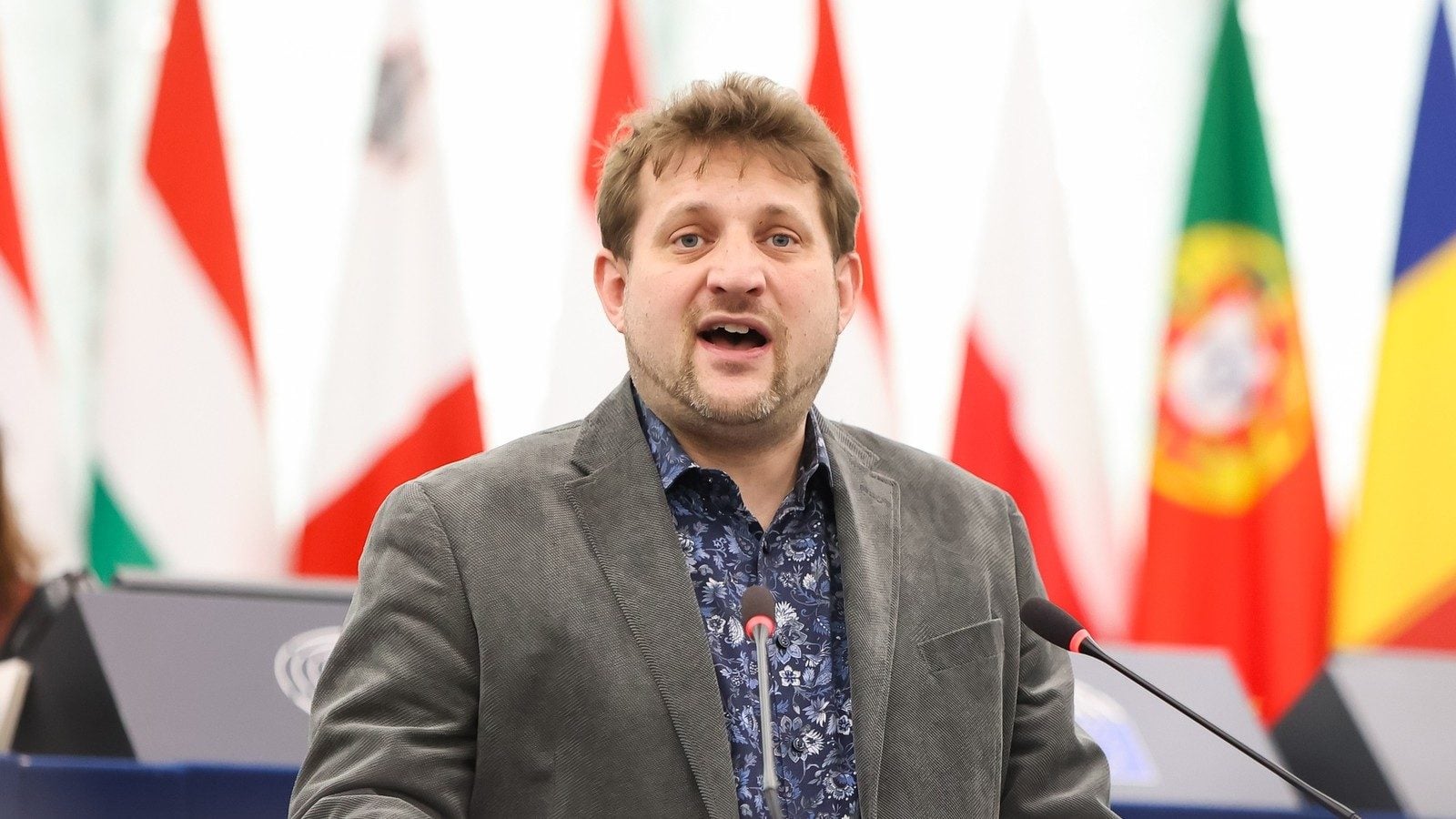
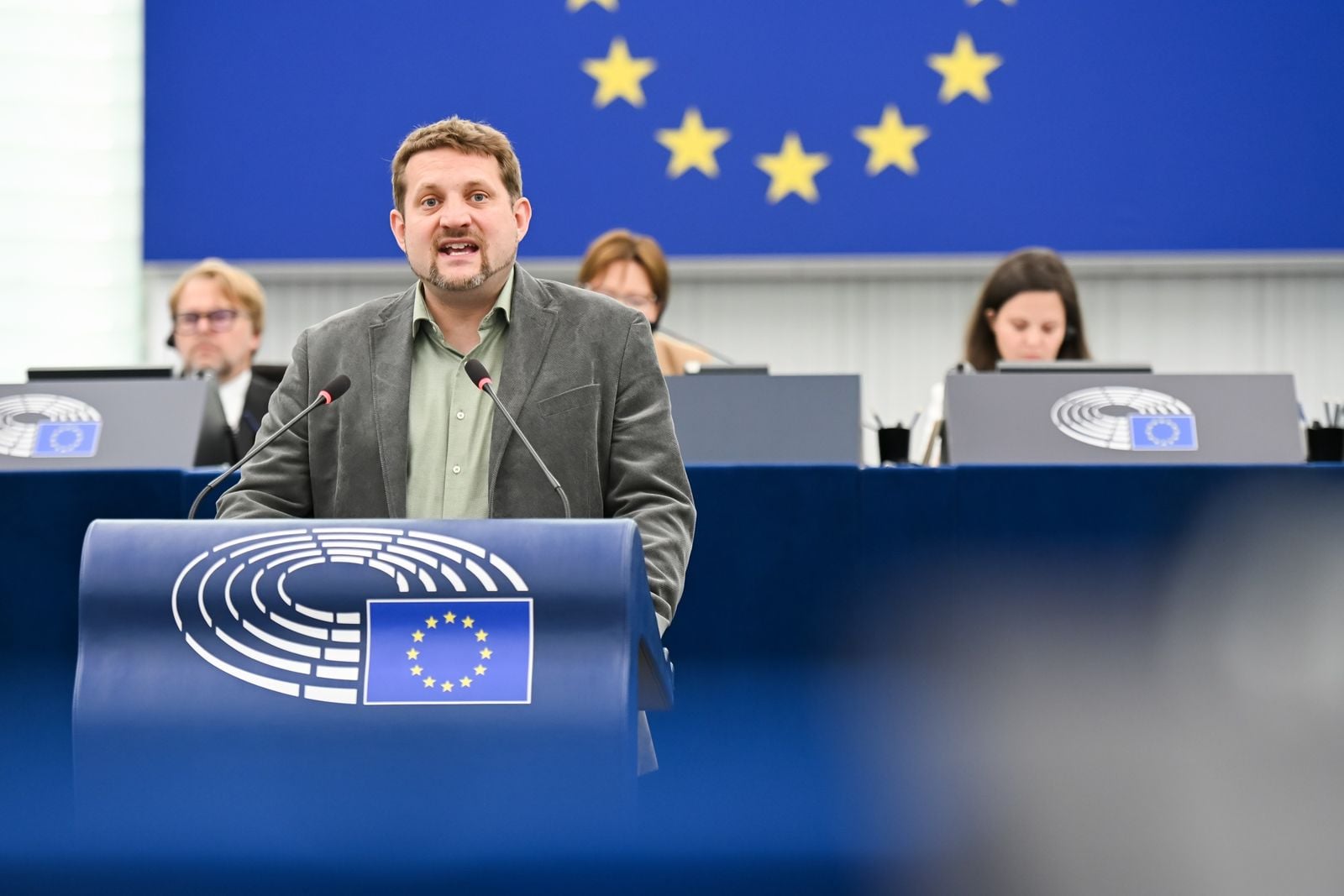
The European Parliament has 720 members. Three of them are vegan. One of them was Sebastian Everding from Dortmund, elected in 2024 for Germany’s Animal Protection Party (Partei Mensch Umwelt Tierschutz), who served until the end of August 2026. He describes himself not as a politician who does a bit of animal welfare on the side, but as an animal rights advocate who went into politics.
Yannick spoke with him for the Plantbased Podcast, remotely between Bali and Brussels, on a morning when Brussels was heading for 36 degrees. They talked about motions that get rejected as soon as his name is on them, a canteen where the vegetarian dish is not vegan four days out of five, Philip Morris, stray dogs in Romania and why the animal rights movement so often gets in its own way.
Here is the conversation, edited for reading. Diesen Artikel gibt es auch auf Deutsch.
Who is Sebastian Everding? ●
- Born in 1983, lives in Dortmund, Germany
- Trained information electronics technician, business administrator and master craftsman, ran a radio and TV shop for years
- Sustainability entrepreneur: turned old chewing gum machines into “bee machines” for wildflower seeds
- Joined the Animal Protection Party (Tierschutzpartei) in 2020, first in Dortmund local politics, Member of the European Parliament in The Left group from July 2024 until the end of August 2026, when he stepped down for health reasons
- Sat on four committees: agriculture, fisheries, environment and health, and was vice-president of the Parliament’s animal welfare intergroup
- Part of the ProSieben documentary “Die Hunde-Mafia” on kill shelters for stray dogs in Romania
- Instagram: @sebastian.everding
Contents12 chapters
- 01Watch the full episode with Sebastian Everding
- 02From a radio and TV shop to the European Parliament
- 03An ordinary Tuesday: marine protection, fox hunting, lead ammunition and waste
- 04The vegan on the fisheries committee
- 05Meat, cancer and a commissioner who says “everything is safe”
- 060.4 percent: the canteen and the question of who here is vegan
- 07Level-3000 vegans and the bratwurst stand at the open day
- 08Romania: kill shelters, a dancing bear and a press conference without the Commission
- 09“We voted for you”: expectations, an emergency boat and 30,000 missing votes
- 10How he copes: forest, dog, cats and more motivation on Mondays
- 11Three people off the street for a vegan dinner
- 12His appeal to the movement: stop fragmenting
Watch the full episode with Sebastian Everding
The full conversation (in German) is available as a video, just over 100 minutes long. The player only loads once you allow YouTube content, nothing is loaded from YouTube before that.
From a radio and TV shop to the European Parliament
Who are you, what do you do? Your CV is too long to read out.
Sebastian: I don’t find it that long, but it didn’t start where I am now. After school and civilian service I decided against university and ended up in a trade: an apprenticeship as an information electronics technician, what used to be called a radio and TV technician. Then business administration, master craftsman school, and for many years I ran a radio and TV shop. You can imagine that selling electronics in the age of big online retailers is not the safest business. At some point I had to close the shop.
After that I taught apprentices, took over a small property management company from my family and rebuilt it along ecological lines. And then, by pure chance, I became a sustainability entrepreneur, upcycling old chewing gum machines to protect wild bees.
And politics?
Sebastian: That is a small open secret: I come from a family of business owners and as a teenager I was in the Junge Union, the youth wing of the conservatives. I thought conservatism was a cool thing. At some point I realised it was no answer to anything. The more I got involved in animal and environmental protection, the further I moved away from those positions. I only became properly politically active in 2019, 2020, through the local elections in Dortmund. And at some point I was asked: Sebastian, don’t you want to run for the European Parliament?
I had to think about that for a long time, because it changes your whole life. You are simply away from home a lot. From Brussels you can still drive back to Dortmund, from Strasbourg you can’t. But after a few conversations my family was completely behind me. Otherwise it wouldn’t work at all.
“I am the animal rights advocate who went into politics, not the politician who does a bit of animal welfare on the side.” ●
An ordinary Tuesday: marine protection, fox hunting, lead ammunition and waste
What does a typical day look like? Is there such a thing?
Sebastian: That is the curse and the blessing of this job. It is always exciting and always different, because the topics change constantly. Something lands on your desk on Monday, the vote is on Wednesday, you have to read up quickly and you know that next week there will be completely different topics again. On many issues I would love to go much deeper, but you don’t have the time.
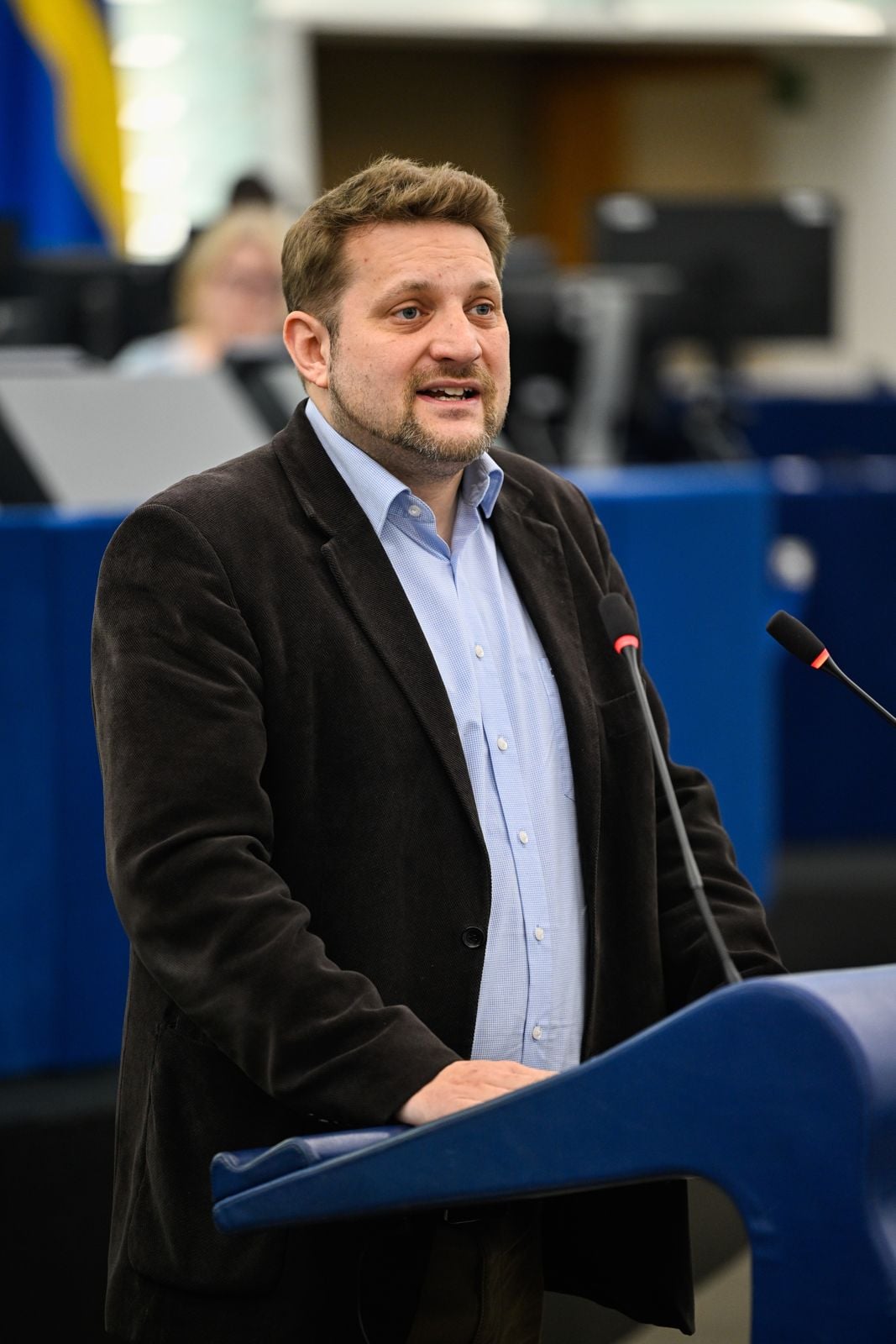
Take last Tuesday. Committee in the morning, the commissioner for oceans was there, I asked him about marine protected areas. Then two NGOs: one on fox hunting, one on wild bird protection. On top of that a topic I took over at short notice from a colleague who fell ill: lead in fishing weights and ammunition. Then the next committee, a big debate on the circular economy act, in other words waste.
Waste and animal welfare, how do those go together?
Sebastian: That earns me a lot of eye-rolling and head-shaking from colleagues. I brought up the issue of animals in the bin: how many animals are produced that are never eaten, that go straight into the waste? I always argue on two tracks. The empathy track, sentient beings, knowing full well that this doesn’t land with many people. He’s talking about animals again. And in addition the economic track: these are wasted resources. The animals were fed, energy was used, they were transported. That gets through to many.
After that video calls, and in the evening the annual reception of Eurogroup for Animals, where you have to do some networking. It is not unusual for me to be in Parliament at 7 or half past and to get back at 9 or 10 at night. In Strasbourg the days are even longer. I am very far away from a 40-hour week. And at the weekend we are at demonstrations, vigils or actions, usually my wife comes along. Last Sunday we were with an animal rights activist in an abandoned building, swapping the eggs of city pigeons.
How much coffee do you drink? Where does the drive come from?
Sebastian: I’m the early-riser type, I prefer starting in the morning and going to bed as early as I can. And it is something I do out of conviction. Especially the activities outside Parliament give me energy. Because, I say this openly: there are so many frustrating moments here. Things get rejected because my party is on them, because my name is on them. Everding is demanding something again, that could hurt farmers, reject. I experience that a lot: with motions, people already check whether it says Everding.
“Of my 2,000 motions, 1,900 were rejected. I concentrate on the others.” ●
You mentioned fox training facilities. What are they?
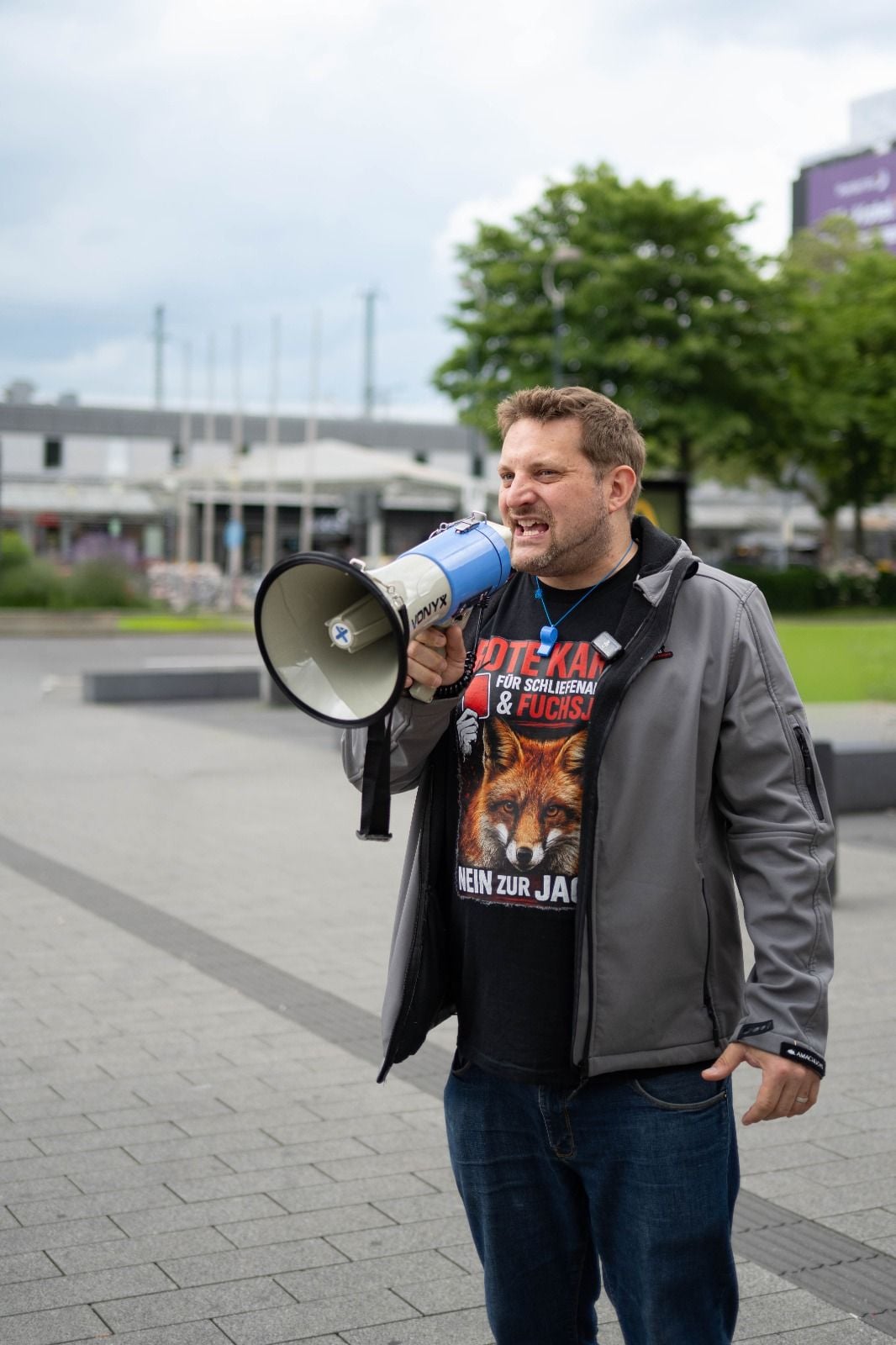
Sebastian: That is a topic close to my heart that I have followed since local politics. There are lots of them in Germany: live foxes are kept and abused to train hunting dogs. When I first heard about it, I thought: What? And nobody knows this? It is one of those many animal suffering issues that happen behind high walls and hedges, where even the immediate neighbourhood knows nothing.
So together with animal welfare associations and fox organisations we held an information event in Dortmund city centre and then marched with big banners to this facility, so that everyone driving past sees: What is that? What’s back there? It’s about creating attention. That is also why I like inviting people into Parliament. I give those who put their time, their money, their whole life into a topic a chance to be heard. Whether it’s city pigeons, foxes, owls or the Balkan lynx, of which fewer than 50 remain. My joke goal: by the end of the term I need to have raised every major animal topic at least once.
The vegan on the fisheries committee
Is Parliament really as full of lobbyists as everyone says?
Sebastian: It’s not just talk, it really is. Although I don’t have many lobby contacts from that direction. I think they deliberately don’t approach me. They go to their usual contacts in the big parties, people they’ve known for years. I’m probably the last person they’d call.
I sit on four committees. On agriculture, most people still see the connection. Then I’m on fisheries, and that one is even more frustrating. I try to take it with humour: there sits the vegan on the fisheries committee, who doesn’t eat fish at all, and everyone goes on about how important fish consumption is, how healthy, and that European fishing fleets must be fully utilised.
At the beginning I asked: Why do European fleets have to fish off African countries? Then it was slowly explained to me that these are mainly Spanish fleets, and: If we’re not there, the Chinese come and fish everything away. So it’s good that we’re there, so please support the fisheries agreement. I simply cannot follow that logic.
And then come the cormorants.
Sebastian: Lots of people say: we have to protect our fishermen, and these terrible seals and cormorants urgently need management because they are harmful. Then I always cite a well-known study from Stockholm University showing how small the impact of seabirds really is. Afterwards a conservative MEP from Schleswig-Holstein asked me what I was thinking. I should tell that to the fishermen, that I want to protect the cormorants. That would be the last straw, I shouldn’t show my face there. That’s the mood as soon as someone says something that doesn’t fit the usual speeches.
Whales and seals, by the way, don’t fall under the fisheries committee at all. They land in the environment committee. Very odd responsibilities. And I’m on the health committee because that’s where all the testing institutions for animal experiments, drug tests and chemicals end up.
Meat, cancer and a commissioner who says “everything is safe”
You volunteered as shadow rapporteur on a health committee report on cancer and cardiovascular disease. Why?
Sebastian: Many asked: What are you doing there, stick to animal welfare. But that is exactly where my animal welfare world and human health meet. For a year now I have been having the same conversation with our commissioner for health and animal welfare. It’s great that Europe has a commissioner for animal welfare. Just a shame the post is so poorly filled.
A year ago I confronted him: What about the WHO, which classifies processed and red meat as carcinogenic? His answer: all food in Europe is safe. Three or four months ago, the next conversation. I quoted studies again, I always try to argue on the science so that it’s not the animal cuddler with puppy eyes in his head. And now he no longer says everything is safe, but: it’s about quantity, moderate consumption is safe. I count that as a small win.
And the lobby in those negotiations?
Sebastian: The negotiations also covered alcohol and tobacco. And suddenly Philip Morris wanted to talk to me. I don’t refuse industry meetings on principle, I’ve met Oatly for example. Companies may earn money with things as long as it’s ethically defensible to me. But Philip Morris is a red line I will never cross. Declined immediately.
Then I sit in the committee and hear colleagues say: we need to look at tobacco in detail, you have to see the differences between individual nicotine products, chewing tobacco is quite different, vapes need to be seen differently too. I thought: hold on, they accepted the invitations I turned down. In the end it became completely unscientific, because things like “moderate alcohol consumption” were written in. What is moderate alcohol consumption? Is it the same for a 20-year-old woman and a 50-year-old man?
“Folks, we are the health committee, not the industry promotion committee.” ●
Sebastian: The rapporteur told me: Sebastian, I understand you, but we have no majority. If seven groups negotiate and two want meat, tobacco and alcohol left in and five say we shouldn’t phrase it that harshly, that’s that. Can you really face your voters and say: in close consultation with the tobacco and alcohol lobby I decided that moderate consumption is fine?
I’ve also been told directly: Sebastian, you and your luxury topic, this is about the economy, about crises, about war and peace. But look at the surveys, how many people say animal welfare, environmental and climate protection matter to them. I don’t represent niche topics. Millions of people in Europe care about this.
0.4 percent: the canteen and the question of who here is vegan
What share of MEPs is vegan? I’d guess two percent.
Sebastian: Then we’d be at the level of the general population. No. There may be vegan people who haven’t outed themselves to me yet. But in fact we are three. That is 0.4 percent of Parliament. I know of a handful of vegetarian MEPs across all groups. I was even told there’s a vegetarian in the far-right group.
What’s the canteen like, in Brussels and Strasbourg?
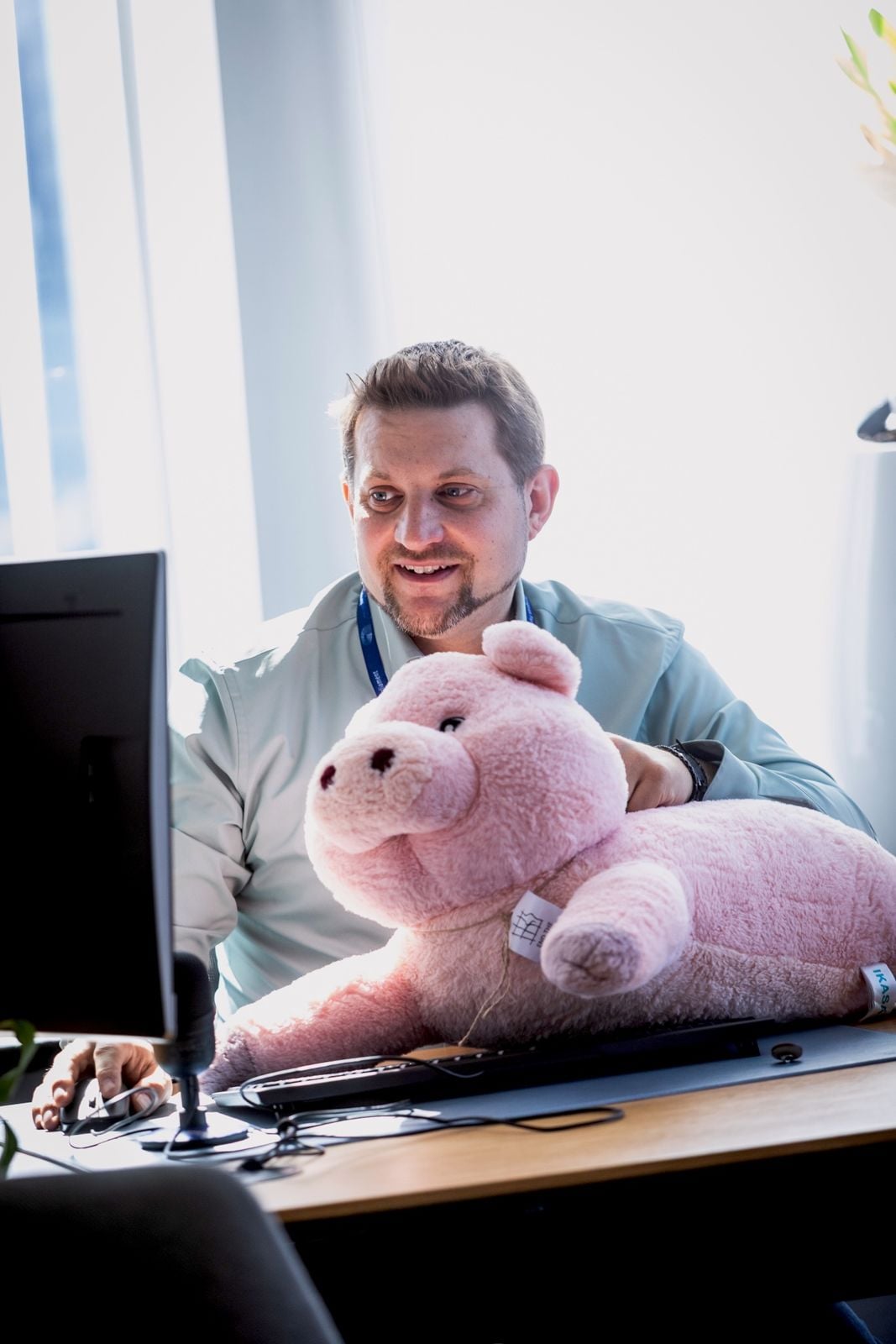
Sebastian: Ugh. I’ve now had five or six emails and two or three meetings with the Parliament administration because at some point I was just angry. As a rule there is one vegan dish a week, if you’re lucky. There’s the vegetarian section, where I go optimistically every day and read: contains eggs, milk. Four days out of five the vegetarian dish is not vegan. Then all that’s left is the salad bar. Salad every day is not exactly a highlight either.
In Strasbourg there is at least a warm vegan lunch every day, but the cooks there are so unimaginative: plain tofu, mushrooms, or my personal hate dish, couscous with falafel and vegetables. The plate is 90 percent dry couscous and dry falafel with three or four pieces of pepper on top. I have never managed to finish it. And that dish is on the menu every single Strasbourg week. I was told: demand is too low to expand the offer.
“I joke that some caterers in Brussels survive purely on my events, because I always book the vegan option.” ●
Sebastian: We try to meet people where they are. As a party we only have vegan catering at party conferences, and I do the same in Parliament. There are always lots of parallel events, and some people say: I’ll go to Sebastian’s event, because I know the food is good there. That’s how I’ve heard so often: This is vegan? It’s really delicious. Aljosha Muttardi used to say on the podcast “Vegan ist ungesund”: be the vegan you would have liked to meet back then. I try to live that. Don’t lecture. I can happily suggest alternatives, and I can tell you why something is bad if you want to hear it.
Level-3000 vegans and the bratwurst stand at the open day
How did you become vegan?
Sebastian: The classic vegan career: less meat, organic meat, vegetarian, then a long vegetarian phase. With camembert I still miss the creaminess. Many people have that one key moment, the livestock transport on the road, the documentary. For me it was gradual. I can’t say since 14 July 2014. At some point it was clear: you love animals, you want to help them and yet you still consume them, that doesn’t fit.
And I have to look back critically myself. For many years I was on the board of an animal shelter. We rescued dogs, cats and rabbits from the worst conditions and nursed them back to health. And the bratwurst stand at the open day was standard. I was just the same.
“None of us were born vegan. For all of us it was a process.” ●
Sebastian: I call them the level-3000 vegans: the ones who spot something non-vegan everywhere and immediately ask whether your shoe is really vegan. For some it happened overnight, respect, I needed longer. I hope that one day I’ll reach the point where I’ve lived vegan longer than not. For now it’s the other way round. You should keep that in mind with a bit of humility: make offers, inform, but never talk down to people.
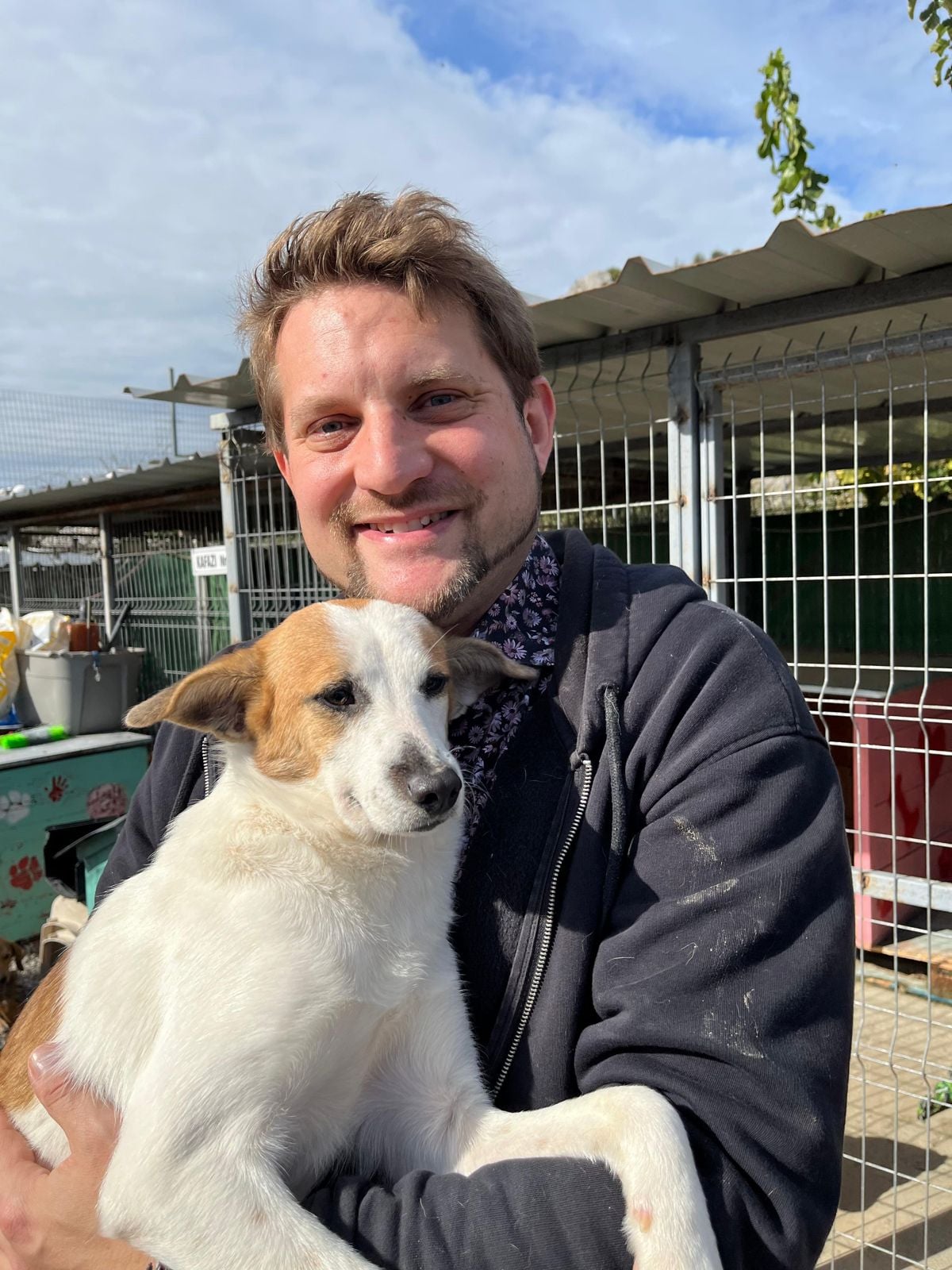
If someone says my heart beats for stray dogs in Romania, then let that person get on with it and support them, instead of saying: you see the suffering of stray dogs but not the suffering in factory farms. I started with dog and cat welfare myself. At some point you see one kind of suffering, and then you see all the others.
Romania: kill shelters, a dancing bear and a press conference without the Commission
You were part of the ProSieben documentary “Die Hunde-Mafia” by Nathan Goldblat. EU money for kill shelters, is that true?
Sebastian: Looking back, that was a really good thing, it’s on my list of highlights. Stray dogs are close to my heart, and finally the topic got some media attention. Otherwise I’m on my own with a handful of colleagues. That’s why I’m very grateful to Nathan, the production team and ProSieben for giving it a stage.
It started with an event on Romanian stray dogs that I organised with NGOs in Parliament. Nathan got in touch asking if he could come. He was still a guest then. The idea for the documentary grew out of that. One point I always insisted on is education. It is proven that the stray dog population is constantly replenished by unneutered house and farm dogs. Everyone told me: we can neuter all day long, if 80 percent of free-roaming farm dogs aren’t neutered, we’ll never get on top of it. That’s why animal welfare has to go into schools, so that at least one generation grows up informed.
And the Commission’s reaction?
Sebastian: When I hold animal welfare events, we get a small room for 30 people on the lowest floor, at the very back on the left. In my introductions I always say: welcome to the most hidden room in the Parliament. If I organised an event on the future of the automotive or arms industry, we’d get the big hall for 500. For the documentary we organised a press conference, made endless calls, sent emails and letters, invited Commission representatives. In the end nobody came.
“Killing animals is never a solution. That applies to stray dogs, and it applies to so-called farm animals too.” ●
Wiebke Plasse of the Welttierschutzgesellschaft, our previous guest, left a question for you: Where in the world did which animal move you the most?
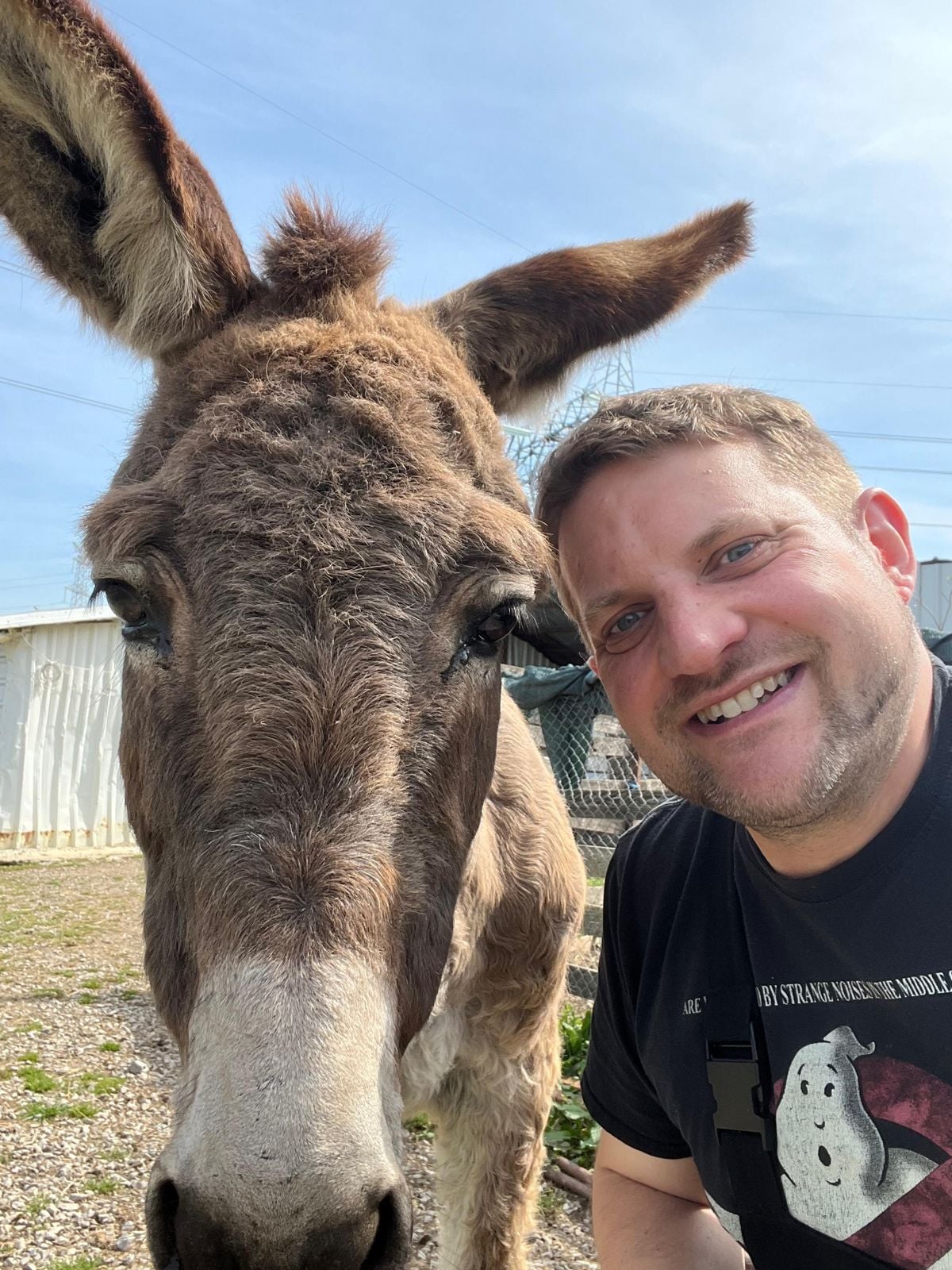
Sebastian: In Romania I have been just as involved with brown bears as with dogs. There is the Libearty bear sanctuary, run by a very committed Romanian woman who takes in every bear from circuses or the worst private keeping. One enclosure there is completely screened off, all the others are not. Why? This bear was trained to spin as soon as people approached, because that’s how he got food. To protect him from spinning every time someone walks past, he is screened off. Such a sad detail.
That’s my negative example. The positive one was in Albania, where I was out with a nature conservation organisation and hundreds of flamingos flew over us. I had never seen flamingos flying in my life, you only know them from parks and zoos, where their wings are clipped so they stand there looking pretty.
“We voted for you”: expectations, an emergency boat and 30,000 missing votes
You apparently get a lot of messages with photos of injured animals.
Sebastian: I have a staff member who sometimes says: Sebastian, tell people to stop sending me videos of beaten, burned, drowned animals. It’s good that people have recognised that here’s someone who cares. But what can I do with a picture of a euthanised dog in Romania? My influence as a single MEP is already vanishingly small on many points inside the EU. Outside the EU? I write countless letters to governments and embassies. Out of 100 letters I might get one reply.
Many colleagues don’t read their emails themselves. I’m too curious for that and I answer a great many messages personally. I just try to dampen expectations. After cases like the stranded whale Timmy, messages came in like: we voted for you in the European elections, now deal with it. As if we had a party emergency boat or a special task force that races off with blue lights. Most of the people active in our party are animal rights advocates at heart. But we decided to change the framework, in Parliament, in city councils. Not to drive to the next pigeon. We simply can’t do that.
What went wrong in the last election, and what can you do better?
Sebastian: We missed the second seat by just over 30,000 votes. That makes me sad when I think about what two of us could have achieved. What hurt us was my predecessor. Mr Buschmann, the name is public, was briefly in this Parliament, and then it came out that as a young man he had held a leading position in the far-right NPD. I believe him that he distanced himself from it, and he did nothing conspicuous in Parliament. But he concealed it, and that did our party major reputational damage. With MEPs and NGOs I first had to rebuild trust: oh, he’s the new one from the Animal Protection Party, the last one was…
On top of that, another animal welfare party ran and took votes too. Over more than 30 years our party has seen several splits, usually to the right. I’ve often experienced people who campaign for animals while holding extremely right-wing views. Someone posts the poor dog in the kill shelter, and then suddenly a video of a far-right politician. And then you hear: the AfD does animal welfare too. A member of my staff is currently analysing which parties in Parliament really voted for animal welfare. On every motion that improves conditions for animals, the AfD voted against.
“If you want animal welfare, you have to vote for animal welfare.” ●
Sebastian: I had a group of students in Parliament and told them: you definitely know my party, it was at the top of the voting advice tool for many of you, and most of you still didn’t vote for it. In European elections there is no five-percent threshold in Germany. You really can vote for us.
How he copes: forest, dog, cats and more motivation on Mondays
How do you stay resilient?
Sebastian: Part of it I can leave behind when I leave Brussels or Strasbourg. At home with my wife, going into the forest with our two cats and the dog, that’s what I need quickly when I’m back. And on Monday, when it starts again, I always drive there more motivated. Because I hope I can change some small thing this week. I was always realistic: I won’t turn the big wheel. But after almost two years I’m slowly understanding where small gaps open up.
One example: in a motion on mental health at work, it was about particularly affected groups. We wrote in people who work in slaughterhouses and cutting plants. That seems to have worked. Or an event on owls, the first time anyone in the European Parliament has talked about owls. I concentrate on those moments, not on the fact that 1,900 of 2,000 motions were rejected.
Three people off the street for a vegan dinner
You can invite three famous people to a vegan dinner. Who, and what do you cook?
Sebastian: I’d let go of the idea of celebrities completely. I’d go out on the street and get three completely random people who have nothing to do with vegan food and bring the usual prejudices: unhealthy, doesn’t taste good. We live in our vegan bubble and think everyone cares about animals, and then you ask for oat milk in a cafe and get stared at. The movement has to arrive in the middle of society, with the bakery assistant and the bank clerk.
And I wouldn’t cook fine dining. Good home cooking. Pancakes, a carrot stew, a lentil stew. Things everyone likes and that fill you up. So the three walk out saying: wouldn’t have thought it, but that’s good, maybe I’ll buy it next time. And when Willi at the barbecue rants about vegans again, they say: Willi, come on, it tastes good.
Which question do you pass on to the next guest?
Sebastian: Do you think it is important to get involved politically? And if not, why not?
Two songs for the Plantbased playlist?
Sebastian: “Countdown to Insanity” by H-Blockx, because I love listening to it in the car when I’m escaping all of this for a while. And “Bleibt alles anders” by Herbert Grönemeyer. I read it as a call for change.
His appeal to the movement: stop fragmenting
What do you want to leave the community with?
Sebastian: It’s great that so many people stand up for animal welfare and animal rights. I just find it a shame that there is often such distance from politics, this ambition to be unpolitical. We can’t achieve improvements as a movement if we say: we leave politics out completely.
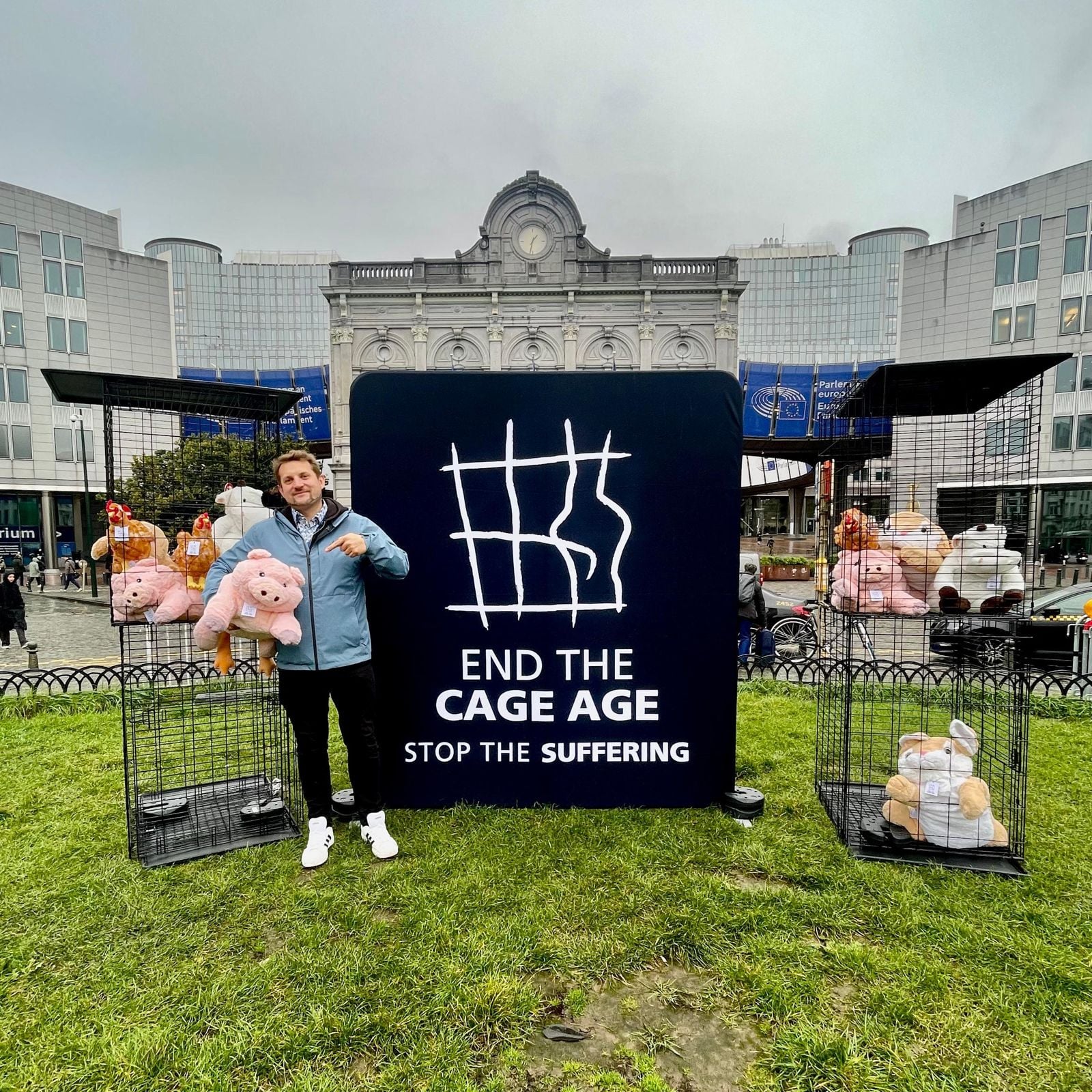
And I wish for much more cooperation. Animal welfare is often an ego thing. The chair of one group said something three years ago, so people stopped working together. Yesterday there were two demonstrations in front of Parliament, independent of each other, one for End the Cage Age, one against live animal transports. Just do it together. In Dortmund we have the honour, irony intended, of hosting Europe’s biggest hunting fair. When you stand in front of that hall with 20 or 30 people while 10,000 hunters walk past, you sometimes get laughed at. And at the same time ten others are demonstrating somewhere else.
“The lobbies are highly organised and invest a lot of money. And we argue among ourselves about whether the banner should be bigger or smaller.” ●
Sebastian: We are a small party with around 2,500 members. There are so many places where we can’t run because we don’t have the people. If we only have two people in a town and need at least three for a nomination meeting, we can’t change anything there. So please, dear animal advocates: let’s work together and let’s be political. Because all of this is always political too.
More from the Plantbased Podcast ●
How this interview was made ●
Yannick spoke with Sebastian Everding in June 2026 for the Plantbased Podcast, remotely between Bali and Brussels, for a good hour and a half. The conversation was held in German; for this reading version we shortened and smoothed it and translated it into English without changing any statements. The full episode is in the player above and on YouTube. The plenary photos come from the European Parliament’s Multimedia Centre (© European Union 2026 – Source: EP, photographers named in the captions), the other photos were provided by Sebastian Everding.