




For a cow to give milk, she has to have a calf, and she has to have one every year. Only about four in ten people in Germany who regularly buy dairy know this. That is the finding of a survey published by animal welfare organisation FOUR PAWS (VIER PFOTEN) on November 17. Almost as many respondents answered “don’t know”.
In short
- Key finding: According to FOUR PAWS, 42 percent of respondents know that a cow has to calve regularly to produce milk. The study report puts it at 43 percent.
- Who was asked: 992 dairy consumers in Germany aged 30 to 69, surveyed online in July 2026 by the Hamburg institute CURTH+ROTH
- The picture in people’s heads: Many think of pastures and meadows. Only half know that male calves are treated as “surplus”.
- Fooled by fiction: A third believe in an EU label for calf transports that does not exist.
- Context: FOUR PAWS commissioned the survey itself, as a baseline for its campaign on calf suffering.
Contents6 chapters
What people know and what they don’t.
At the heart of the study is a list of 15 statements about calves in dairy farming. Respondents had to say whether each one was true, false, or whether they didn’t know. For the statement that a cow has to have a calf every year, 43 percent said “true”, 19 percent “false” and 39 percent “don’t know”. FOUR PAWS gives 42 percent in its press release (in German), the study report says 43. Either way, more than half don’t know for sure.
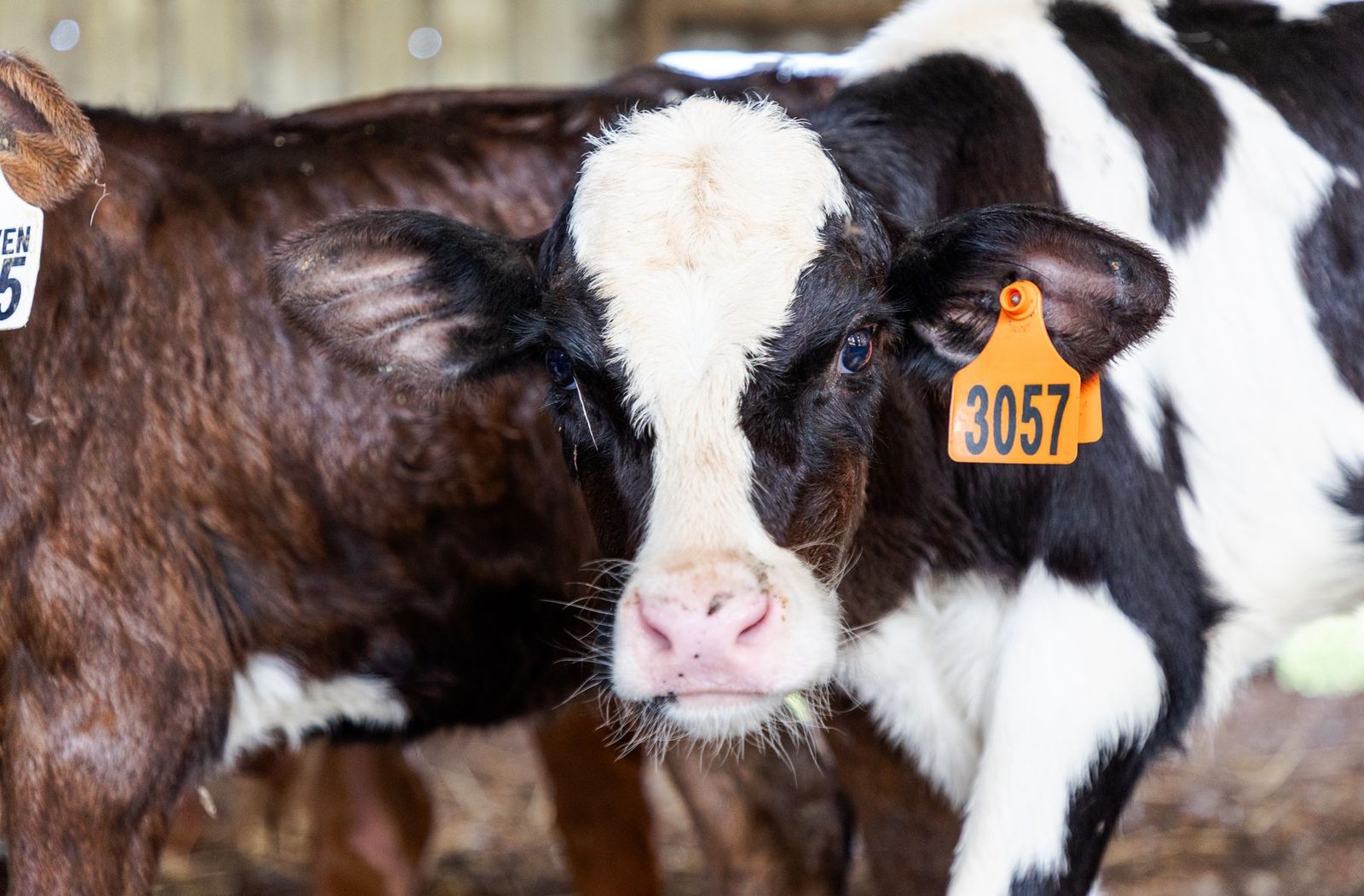
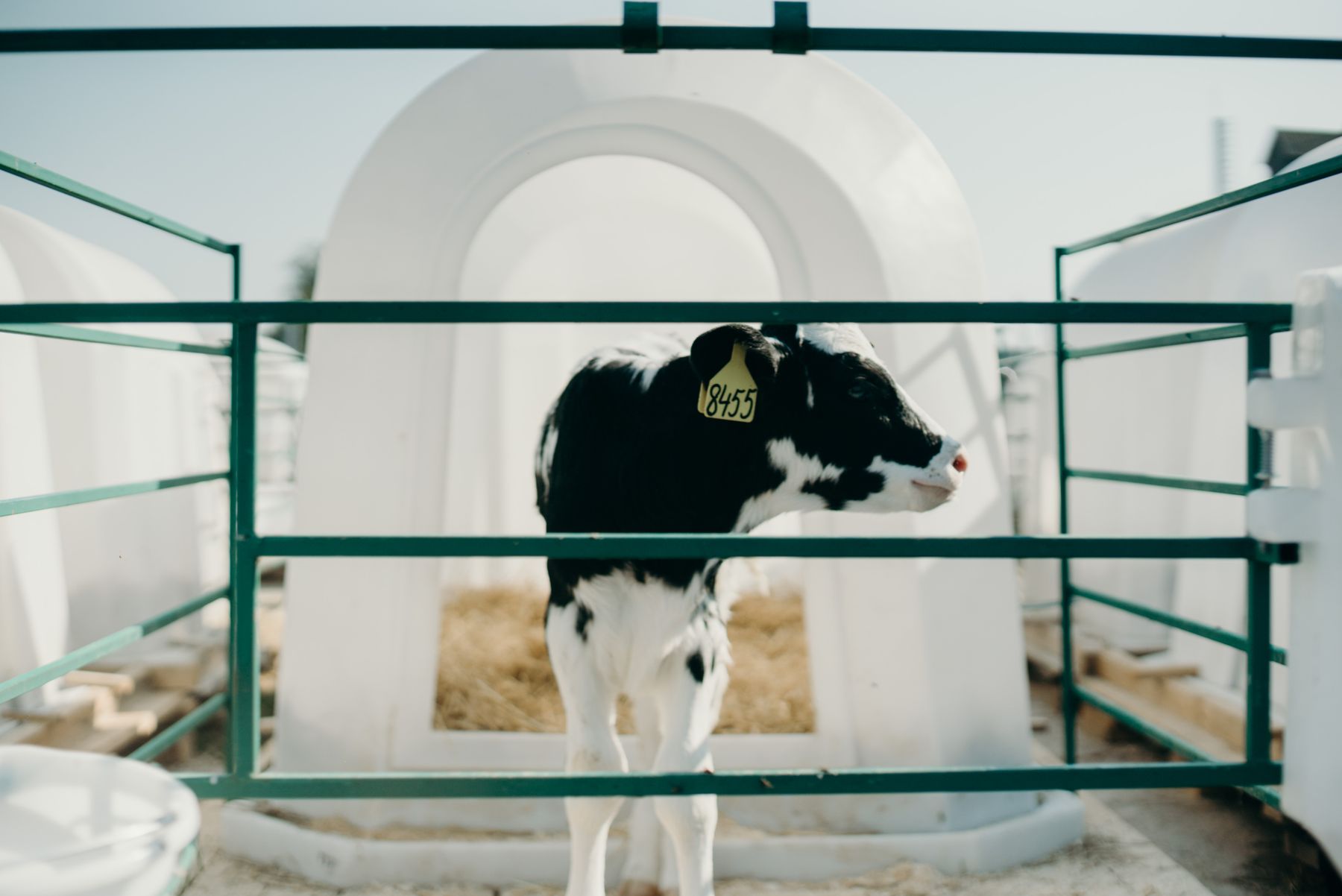
Other basics fare similarly. Half of respondents know that milk and meat production are linked and that male calves are considered “surplus calves” in the industry. 47 percent know that calves are usually separated from their mothers within 24 hours of birth. 41 percent are aware that many calves are transported for fattening, often abroad. 39 percent have heard of single housing in so-called calf hutches.
What the animals go through physically is the least known. Only 24 percent know that calves are often dehorned without anaesthesia. 22 percent know that German law allows calves to be transported from 28 days of age.
A third believe in a label that doesn’t exist.
The researchers included three statements that were made up, to see how easily people accept reassurance on the topic. 33 percent thought it true that an EU label for calf transports has existed since 2022. 23 percent believed in a rule, supposedly in force since 2020, requiring calves to stay with their mothers for at least 90 days. And 22 percent thought calves may only be transported from three months of age. None of this exists.
For most statements a large share of respondents ticked “don’t know”, for some 60 percent or more. Having looked into calf rearing in any depth is the exception: 2 percent say “very intensively”, 9 percent “fairly intensively”. Almost 60 percent have hardly or never looked into it.
Pasture in the mind, barn in reality.
Asked what spontaneously comes to mind about keeping dairy cows, 39 percent mentioned pasture, meadows, nature or outdoor access. That fits the advertising, but hardly the daily life of most animals. According to the German Federal Statistical Office, Germany has around 3.6 million dairy cows on 46,200 farms. More than a third of dairy farms have closed in ten years, and the remaining ones keep getting bigger.
How long a dairy cow lives is shown by data from the Bavarian milk recording association LKV. In 2024, cows in its milk recording scheme left the herd at between 5.8 and 6.9 years of age, depending on breed.
At the same time, empathy and knowledge are far apart. 71 percent fully agree that cows and calves feel pain, fear and stress. But only 11 percent say they actively look into where their dairy comes from and how the animals are kept. When shopping, taste is among the top three criteria for 69 percent, price for 50 percent and animal welfare for 27 percent.
What FOUR PAWS is calling for.
“Calves in the dairy industry are affected by serious animal welfare problems,” says Cecilia Wiesenewsky, campaigner at FOUR PAWS. On its campaign page the organisation asks politicians to end transports of calves under three months old and long-distance transports for fattening, to allow group housing from the eighth day of life with more space and outdoor access, and to permit dehorning only with effective anaesthesia and pain relief. It also wants support for cow-calf contact rearing, where the calf drinks from its mother or a foster cow during its first months.
28 percent of respondents know the term. 77 percent would pay more for a branded yoghurt from cow-calf contact rearing, on average 29 cents on a price of 1.79 euros. Whether that happens at the checkout is another matter: 38 percent also say they usually pick the cheaper product when an animal welfare label pushes the price up noticeably.
Alongside eating less dairy and choosing better-produced dairy, FOUR PAWS explicitly recommends plant-based alternatives made from oats, soy or peas.
How solid the numbers are.
The survey is not a picture of the whole population. Only dairy consumers aged 30 to 69 were asked, through an online panel between July 20 and 27, 2026. According to FOUR PAWS, the sample is representative of this group by age, gender and region. Younger and older people, and anyone who doesn’t buy dairy, are missing.
FOUR PAWS commissioned the survey itself. The report describes it as a baseline before the campaign, and a second wave is meant to show later whether knowledge has changed. That doesn’t make the numbers wrong, but it belongs in the picture. Other surveys come to similar results: in the UK, a YouGov poll for Animal Justice Project found that just over half did not know cows are inseminated every year.
An animal ethics perspective.
Behind every litre of milk there is a pregnancy. A dairy cow is usually artificially inseminated every year, carries her calf for nine months, gives birth and is inseminated again a few months later. The calf usually doesn’t drink the milk meant for them. Some of the female calves later replace their mothers. Almost all male calves and, according to FOUR PAWS, around two thirds of female calves go to fattening farms and end up at the slaughterhouse after a few months. The cow herself is slaughtered when her yield drops.
That so many people don’t know this has a lot to do with marketing. Calves barely appear on packaging or in ads, and cows are almost always shown on pasture. The survey also shows that the vast majority of respondents believe cows and calves have feelings. Once you know how milk is made, you can decide for yourself whether you want to support it. Plant-based drinks made from oats, soy or peas don’t need a calf. If you’re looking for one to start with, the oat drink from Alpro* is a supermarket classic, and we compared barista versions in our barista oat milk test.
How we researched this
This article is based on the FOUR PAWS Germany press release of November 17, 2026 and the published study report by CURTH+ROTH (“Der blinde Fleck im Kühlregal”, dated September 17, 2026), which we read in full. Where the press release and the report differ, we use the figure from the report and point out the difference. The demands come from the campaign page. Herd figures come from the German Federal Statistical Office (reference date May 2026, provisional), the age at culling from the LKV Bavaria evaluation for 2024, which covers Bavarian farms only. The minimum transport age is set out in Section 10 of the German Animal Welfare Transport Ordinance. We have no business relationship with FOUR PAWS.
* Affiliate link: if you buy through this link, we earn a small commission. The price stays the same for you.
Want our reporting to show up first in Google's Top Stories? Add This Is Vegan as a preferred source on Google.