



Anyone selling soy, beef, cocoa, coffee, palm oil, rubber or wood in Germany will soon have to prove that no forest was cleared for it after 2020. On November 12, the German Bundestag passed the law that implements the EU Deforestation Regulation in Germany. It sets out who carries out checks and what happens in case of violations, up to five years in prison. For large companies, the obligations apply from December 30, 2026.
In short
- The vote: The governing CDU/CSU and SPD voted in favour, the AfD, Greens and Left Party against. The law is set to enter into force on December 30, 2026; the Bundesrat still has to deal with it once more.
- Checks: The Federal Office for Agriculture and Food (BLE) checks imports and trade, the federal states check domestic farming and forestry.
- Penalties: Fines of up to 100,000 euros or up to 4 percent of turnover, and up to five years in prison for intentional violations.
- Biggest lever: Around 90 percent of the soy used in Europe is fed to animals, and cattle pasture is a main driver of forest clearing in South America.
- A gap: The European Commission removed leather from the regulation again this summer.
Contents6 chapters
What the EU regulation requires.
The EU Deforestation Regulation, EUDR for short, was adopted in 2023. It covers seven commodities: cattle, cocoa, coffee, oil palm, rubber, soy and wood, plus products made from them such as beef, chocolate, furniture or paper. Whoever first sells such goods in the EU or exports them has to prove that no forest was cleared or degraded for them after December 31, 2020. That includes the exact coordinates of the plots where they were produced and a due diligence statement in an EU-wide information system.
The rules were originally meant to apply from the end of 2024. The EU postponed them twice and simplified them in December 2025 with a further amendment. Large and medium-sized companies now have to comply from December 30, 2026, small and micro companies from June 30, 2027. Traders further down the supply chain no longer have to submit their own due diligence statement.
How strictly goods are checked depends on the country of origin. The EU has sorted all countries into three risk levels. Only Belarus, North Korea, Myanmar and Russia count as high risk. Around 140 countries are on the low-risk list, including all EU member states. Brazil, Indonesia and Paraguay are on neither list, which makes them standard risk.
What the German law covers.
The EU regulation applies directly, but each country has to decide who enforces it and what penalties apply. That is what the German implementing law from Agriculture Minister Alois Rainer (CSU) does. The BLE is responsible for imports, exports, processing and trade. Cattle farming, soy cultivation and logging within Germany are checked by the authorities of the federal states.
Every year, at least 1 percent of companies selling goods from low-risk countries must be checked. For standard risk it is 3 percent, for high risk 9 percent. According to the draft law, that adds up to roughly 600 to 2,300 checks a year. If there is reasonable suspicion, authorities may enter business premises, copy documents, take samples and seize goods.
Breaching due diligence obligations can lead to fines of up to 100,000 euros, and for larger companies up to 4 percent of their annual EU turnover. Anyone who intentionally sells goods produced on deforested land faces up to five years in prison, and up to ten years if a significant ecosystem is destroyed in the process. This part comes from an EU directive on the protection of the environment through criminal law, which the law implements at the same time.
The debate in the Bundestag.
The debate took place late in the evening and lasted 20 minutes. “With this, we take responsibility for the consequences of our consumption,” said Isabel Mackensen-Geis (SPD). Alexander Engelhard (CDU/CSU) put it this way: “Anyone who clears rainforest for this must not have access to the European market.” (Quotes translated from German.)
Hermann Färber (CDU/CSU), on the other hand, stressed that there is “no deforestation at all” in Germany and criticised the burden on domestic forest owners. When he listed the commodities covered, he left out soy, of all things. The German government had pushed in Brussels for a “zero-risk category” that would have exempted countries like Germany entirely. It did not succeed, as it admitted in the agriculture committee. The far-right AfD wants to scrap the regulation altogether.
The Greens and the Left Party voted no for the opposite reason. Niklas Wagener (Greens) doubted that the BLE has enough staff for effective checks after budget cuts. Fabian Fahl (Left Party) called the maximum penalties “ridiculous” and pointed out that often not even sausage and cheese are deforestation-free.
Why it’s mostly about feed and meat.
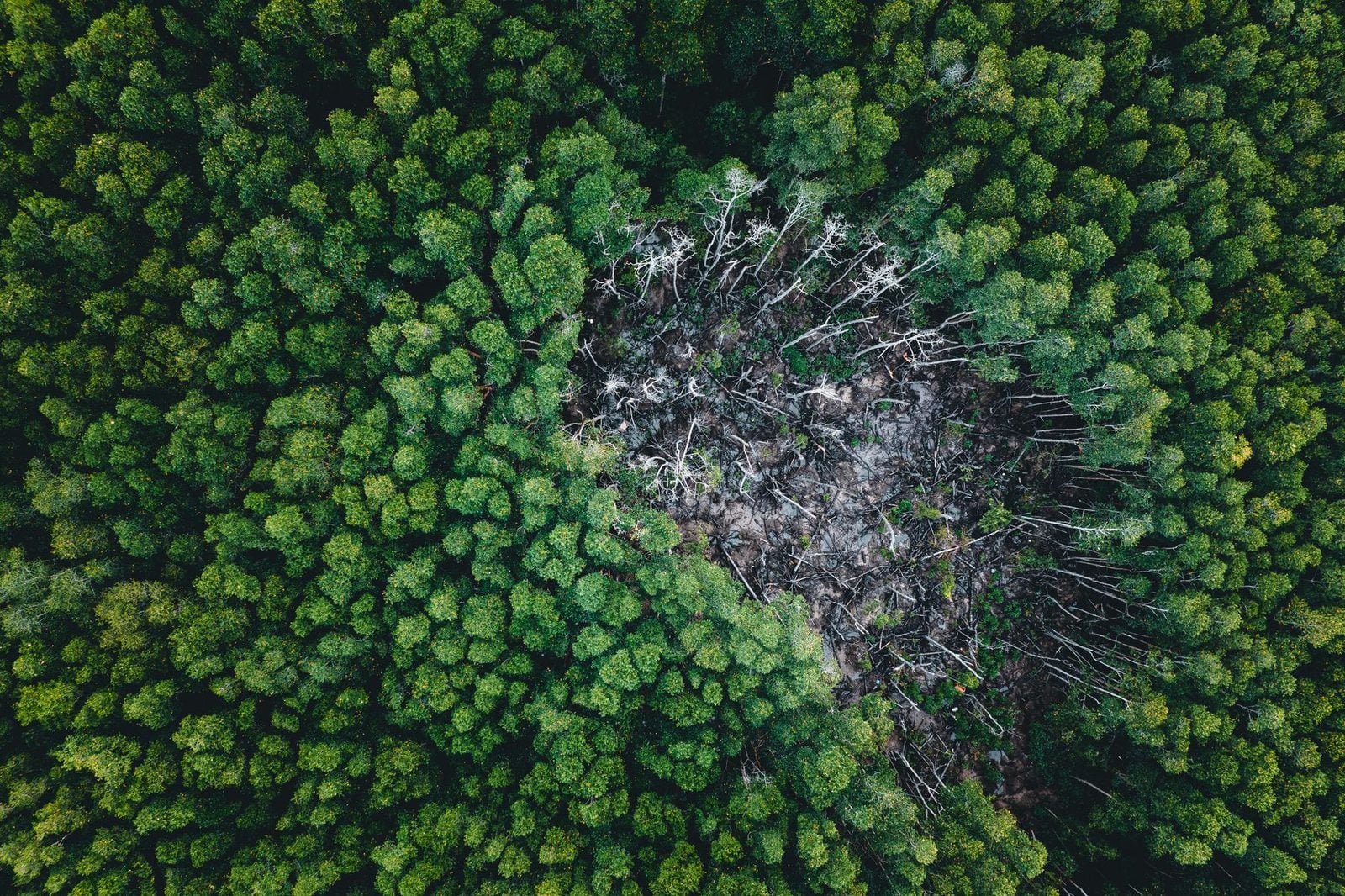
According to the latest forest report by the UN Food and Agriculture Organization (FAO), around 10.9 million hectares of forest are cleared worldwide every year. That’s less than in the 1990s, but still an area slightly larger than South Korea. According to an earlier FAO analysis, almost 90 percent of deforestation is driven by agriculture. Nearly 40 percent of global deforestation is down to livestock grazing, and in South America it’s almost three quarters.
Europe plays its part. According to a WWF study, the EU was responsible for 16 percent of trade-linked tropical deforestation in 2017, second only to China. Soy, palm oil and beef carried the most embedded deforestation.
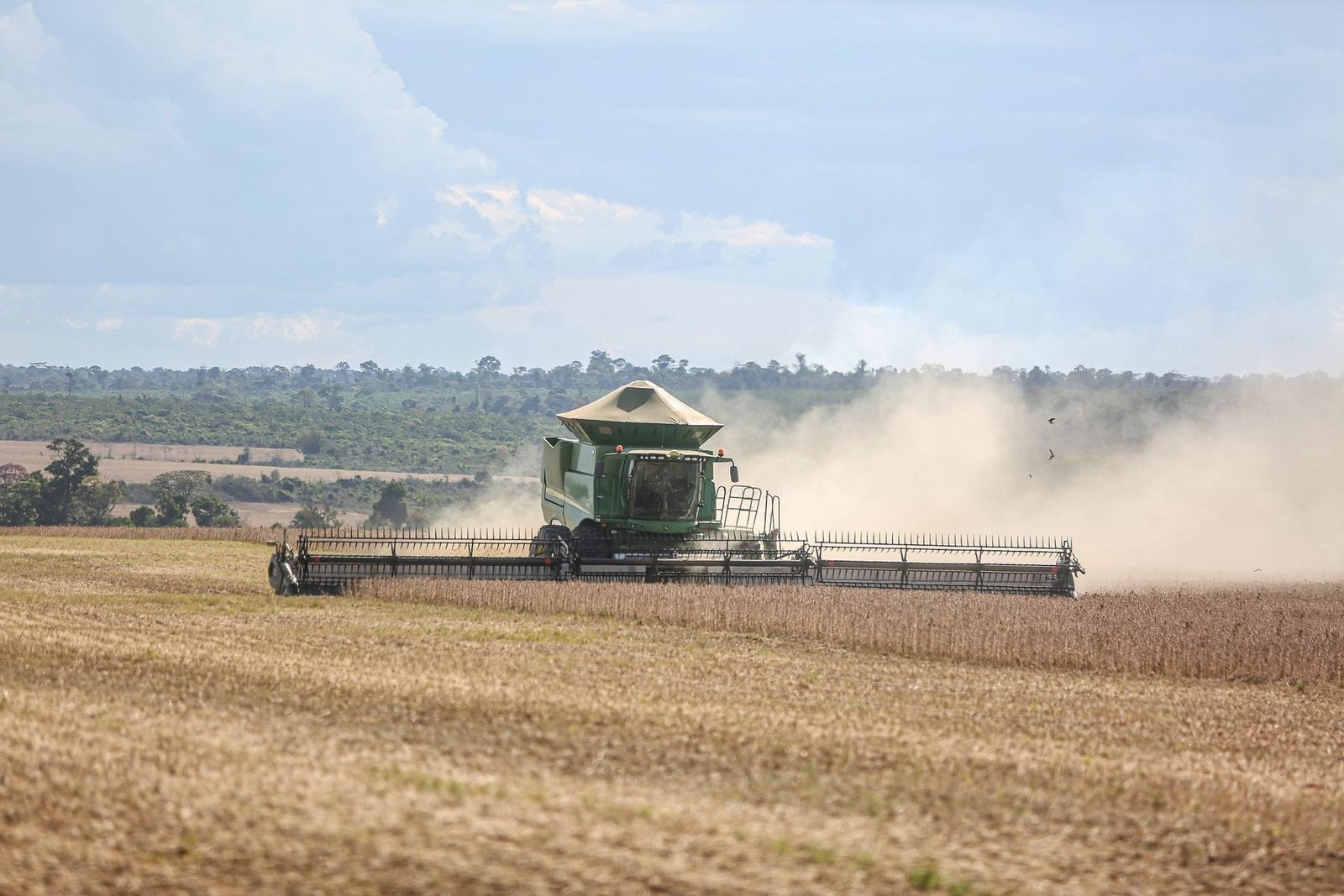
With soy, almost everything ends up in the feed trough. Around 90 percent of the soy used in the EU and the UK goes into animal feed, mainly for broiler chickens, pigs and dairy cows, according to an analysis for WWF. Worldwide, only 7 percent of the soy harvest is eaten directly as tofu, soy milk, tempeh or edamame, according to Our World in Data. In the 2023/24 marketing year, Germany alone imported 3.3 million tonnes of soybeans and 2.8 million tonnes of soybean meal, according to the BLE’s protein balance. That makes soy the most important feed from overseas.
Leather is out again.
One product from cattle farming is no longer covered. With a delegated regulation from July 2026, the European Commission removed cattle hides, skins and leather from the list. Its reasoning: European companies have too little leverage over the supply chain to obtain the necessary information. Leather is only to be reconsidered in the major review of the regulation by 2030.
“The leather industry has prevailed with its aggressive lobbying,” said Sascha Müller-Kraenner of the German NGO Deutsche Umwelthilfe (translated from German). Beef is still covered, a shoe or leather bag from the same animal is not. The Left Party raised another gap in the debate: savannas like Brazil’s Cerrado, where a lot of soy is grown, don’t count as forest and are therefore largely not covered.
An animal ethics perspective.
The regulation is meant to protect forests, but above all it concerns animal farming. Cattle graze on pasture that used to be forest, chickens and pigs in Europe eat the soy that forests in South America were cleared for. For the animals in factory farms, the law changes nothing. For the wild animals living in those forests, it could change a lot, if it is enforced properly.
Proof of origin and inspection quotas work at the end of the chain. The more direct lever is how much feed Europe needs in the first place. Eating soy yourself instead of feeding it to animals takes far less land, for example as tempeh* or tofu. Why plant protein holds up for building muscle, too, is covered in our article on plant vs. animal protein.
How we researched this
This article is based on the German government’s draft law (Bundestag printed paper 21/8278), the agriculture committee’s recommendation (21/9157) and the plenary record of the session on November 12, 2026, which is the source of all quotes from members of parliament. We checked the EU framework in Regulations (EU) 2023/1115, 2025/2650, 2025/1093 and 2026/2102 on EUR-Lex. Deforestation figures come from the FAO and a WWF study with 2017 data, soy figures from an analysis for WWF with 2020 data, from Our World in Data with 2018 data and from the BLE’s protein balance. When the Bundesrat will hold its final discussion had not been set at the time of writing. We have no business relationships with the organisations mentioned.
* Affiliate link: if you buy through this link, we earn a small commission. The price stays the same for you.
Want our reporting to show up first in Google's Top Stories? Add This Is Vegan as a preferred source on Google.