





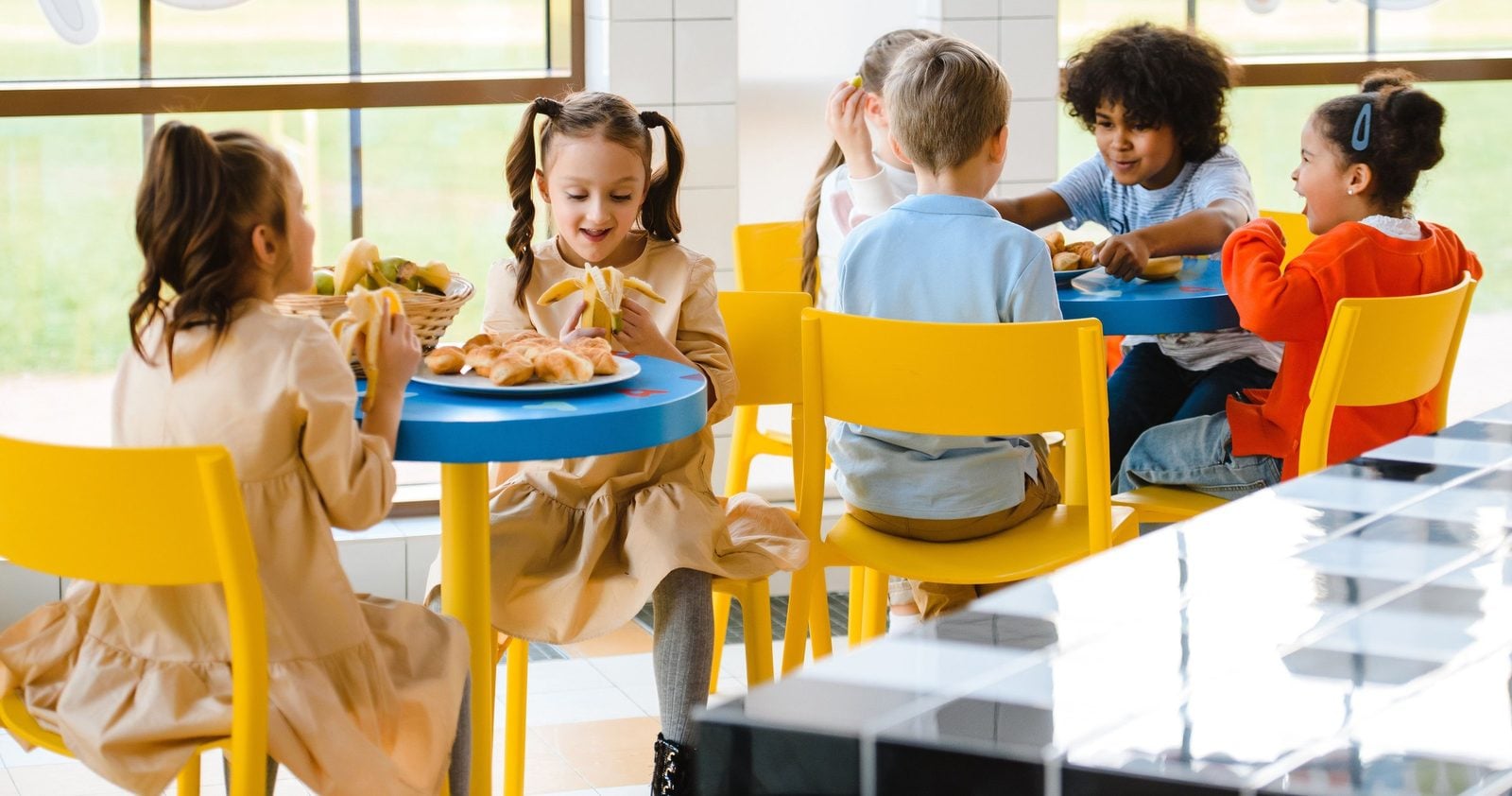
Give children the choice and one in three picks soy milk. That is the result of a pilot in five New York City schools that have offered organic soy milk next to dairy at lunch since May 2026. Students also took more milk overall, and emissions fell. Twelve more schools join this fall.
In short
- The pilot: organic soy milk on the lunch line, next to dairy, in five NYC public schools
- The choice: 35.6 percent of milk selections were soy
- The volume: at three schools with baseline data, milk selection rose 18.6 percent, about 126 more servings a day
- The climate: daily milk-related emissions there fell 17.4 percent
- What’s next: twelve additional schools this fall
Contents6 chapters
What was tested.
The city’s Office of Food & Nutrition Services and the Mayor’s Office of Food Policy launched the pilot in May 2026 at Beacon High School, Maspeth High School, Vertex Partnership Academies, P.S. 244 and P.S. 369. The soy milk was not kept in a separate fridge or handed out on request. It sat on the lunch line right next to the dairy milk, so every student could choose freely.
The pilot was run with the Plant Powered School Meals Coalition: Chilis on Wheels, the Coalition for Healthy School Food, Friends of the Earth and the Physicians Committee for Responsible Medicine (PCRM), a physicians’ group that promotes plant-based diets. PCRM also published the results.
The results.
Across all five schools, 35.6 percent of milk selections were soy. At P.S. 244, principal Bob Groff says more than half of the students chose it.
Three schools had baseline data from before the pilot. There, daily milk selection rose 18.6 percent, around 126 extra servings a day. So soy milk reached students who had not been taking any milk before. Daily milk-related greenhouse gas emissions still fell 17.4 percent, and 30.4 percent per 100 servings.
The release does not explain how emissions were calculated, and three schools over a few weeks is a small sample. The city considers the results strong enough to continue: according to FoodService Director, twelve additional schools join this fall.
A long-running shift.
The pilot fits a longer trend. New York runs the largest school system in the United States and has steadily added plant-based dishes to its menus. According to a World Resources Institute assessment cited by PCRM, the carbon footprint of school meals fell 59 percent between 2019 and 2025, or 39 percent per plate. Food-related land use dropped 71 percent and the water footprint 40 percent. We could not find the assessment itself, so these figures come from the release.
The animal ethics view.
A third of the children reached for soy milk as soon as it stood on equal footing. Serving cow’s milk with every school lunch is a habit adults have set for decades. Behind every carton is a cow who has to give birth every year to keep producing milk, and whose calf is usually taken from her shortly after birth.
A pilot in five schools changes little about that. It does show how simple change can be: no ban, no lecture, just a second carton on the line. Children who learn early that milk does not have to come from a cow will carry that with them.
What you can do.
- Ask your school. Parents’ associations can raise whether the cafeteria offers a plant-based option.
- Try it at home. An unsweetened organic soy drink is an easy start, for cereal and cocoa too.
Frequently asked questions.
How many NYC students chose soy milk?
Across the five pilot schools, 35.6 percent of milk selections were soy. At one elementary school, more than half of the students chose it.
Did students drink less milk overall?
No. At the three schools with baseline data, daily milk selection rose 18.6 percent, about 126 more servings a day.
How many schools offer soy milk now?
The pilot started in five schools in May 2026. Twelve more join in fall 2026.
Sources ●
Physicians Committee for Responsible Medicine release of 25 September 2026 (results, quotes, World Resources Institute figures), FoodService Director of 28 September 2026 (expansion). Photo: Anastasia Shuraeva / Pexels. This article contains affiliate links. If you buy through them, we receive a small commission at no extra cost to you.
Want our reporting to show up first in Google's Top Stories? Add This Is Vegan as a preferred source on Google.