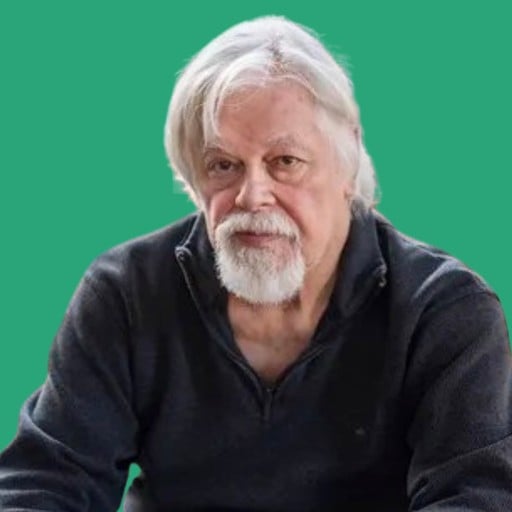
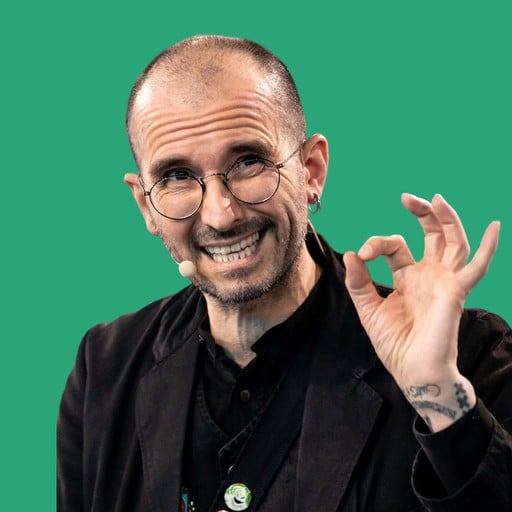



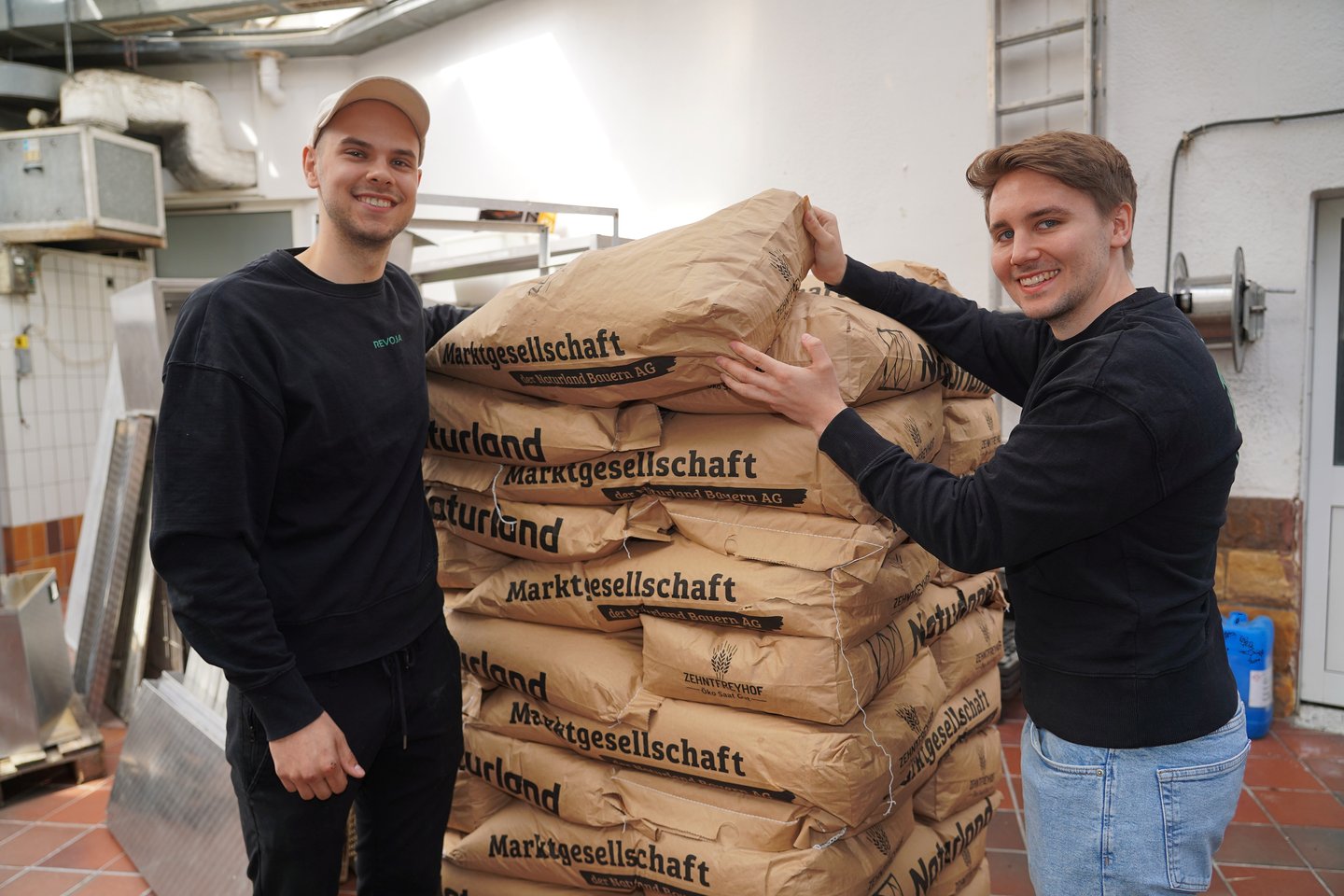
When soybeans are turned into soy drink or tofu, a damp, crumbly residue is left behind: okara. Most of it ends up in biogas plants or animal feed. REVOJA, a start-up from Bad Nauheim near Frankfurt, lets an edible fungus grow through it and turns it into chunks, a meat alternative with a fibrous texture. Production takes place in a former butcher’s shop. We asked CEO Phillip Kaapke and COO Nino Griebel 15 questions about their reactor, their cream, the competition, and why money for hardware is so hard to raise.
In short
- REVOJA ferments okara, the by-product of soy drink and tofu production, with an approved edible fungus to make a meat alternative.
- The same bean yields two product lines: a soy-based cream, whose production leaves the okara behind, and the chunks.
- The team supplies restaurants, canteens, hotels and food manufacturers first. So far, the chunks can be tried at the restaurant Margarete in Frankfurt, with the official launch planned for early 2027.
- The reactor process has been filed for a European patent, which has not been granted yet.
Contents6 chapters
How a residue became a product.
In 2023, you developed a vegan ayran for the Drink Innovation Challenge in Geisenheim and won. The pilot run produced around half a tonne of soy drink, plus a mountain of okara. When did it become clear that this residue was your real product?
Before we developed the ayran, we didn’t even realise that making soy drink and tofu creates a side stream at all. It only hit us during the pilot production: next to half a tonne of soy drink, there was suddenly a whole mountain of okara. So we read up on it and quickly found that every soy processor has this problem, only many times bigger. From then on, the direction was clear. We wanted to make something out of this residue, and shortly afterwards we were in the lab with okara for the first time.
Your backgrounds are in beverage technology and nutritional science. Who decides what, and what do you argue about most?
The split is pretty clear for us: Phillip is the mind behind technology and production, from the reactor to the finished product. Nino decides on everything financial and the day-to-day operations. Luckily we work together really well, because each of us knows the other’s strengths and can rely on them. When things do clash, it’s usually when Nino lends a hand in production. When it comes to practical skills, he can’t hold a candle to Phillip.
For anyone who has never held okara: what does it look, smell and taste like? And why does a raw material with protein and fibre almost always end up in biogas plants or animal feed?
Fresh okara looks like moist desiccated coconut: pale, soft and slightly crumbly. It smells faintly of soy and tastes fairly neutral to slightly beany when raw. And it contains a lot of protein and fibre. The reason it still mostly ends up in biogas plants or animal feed is its high water content: okara spoils within a day or two, and drying it is expensive. There simply hasn’t been a use as food that pays off.
The fungus and the reactor.
For now, you only process okara from your own soy drink production. If you start taking residues from large soy processors, how does a raw material that turns after two days get into your reactor in time?
That’s exactly the point: driving okara over long distances makes little sense. That’s why, at the moment, we only process our own okara, fresh from production. For the first external partners, okara can be chilled and transported over short distances. Our long-term plan, though, is for the reactor to be where the side stream occurs, directly at the producer. We can’t offer that yet, but we’re working towards it. In the end, the technology should come to the raw material, not the other way round.
Explain your process for people who know tempeh. Which fungus does the work, what happens in the reactor, and how is the result different from tempeh?
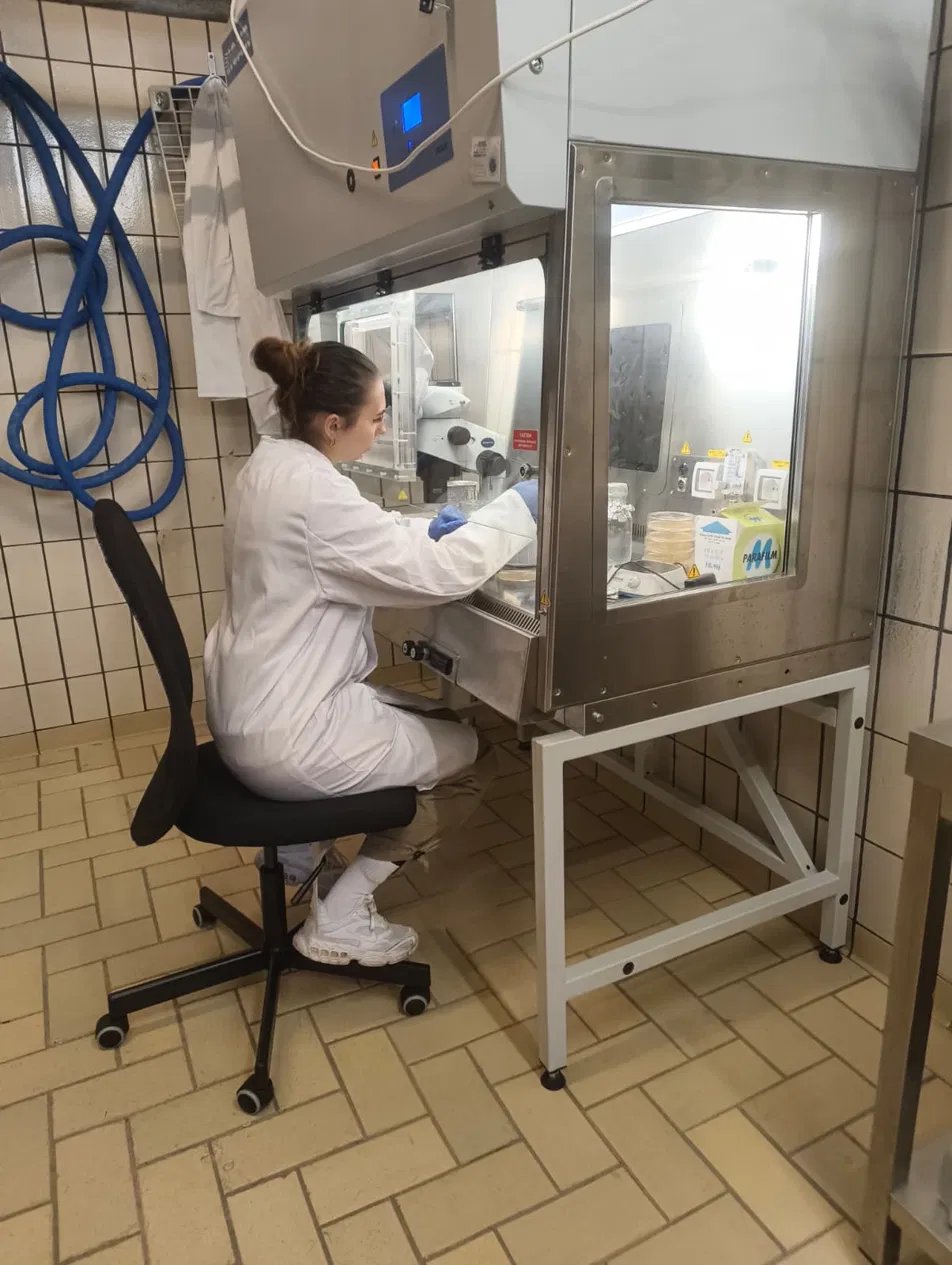
We use an approved edible fungus. In the reactor, its mycelium grows through the okara, the loose mass becomes firm and develops a fibrous structure and a natural umami flavour. We share the principle with tempeh, nothing more: tempeh is made from whole beans, while we ferment a raw material that classic processes can’t do much with. We developed our own process for that, and the result is a product with its own texture and its own flavour.
You talk about five times the output on the same area in half the time. What exactly are you comparing with? And where does the European patent stand?
We compare with what is still standard in solid-state fermentation today: the substrate lies in thin layers on trays, racks or in bags and ferments there. The layer can’t get any thicker, because the fungus generates heat as it grows that otherwise can no longer escape. So if you want to produce more, above all you need more space. Our reactor solves exactly this problem, which is why, according to our pilot trials, we achieve about five times the output on the same area in half the time. We have filed our process for a European patent. It hasn’t been granted yet, and the application will be published in December.
Cream and chunks.
Your cream is meant to replace cream cheese, sour cream and mascarpone and stay stable in the oven. What is it made of, and does it contain okara? And what do kitchens actually use it for?
The cream itself contains no okara. It’s more like its origin: making the cream produces the okara that we then process further. The ingredient list is deliberately short, essentially soy, shea butter, starch and salt. Kitchens use it in all sorts of ways: as a spread, for cooking in sauces and for baking, for cakes or quiche, for example, and it stays stable in the oven too. Our favourite example comes from an ice cream parlour that made a vegan cheesecake ice cream with it.
You tested the chunks with more than 250 people. What came out of it, what did you change in bite and flavour afterwards, and where can people eat them today?
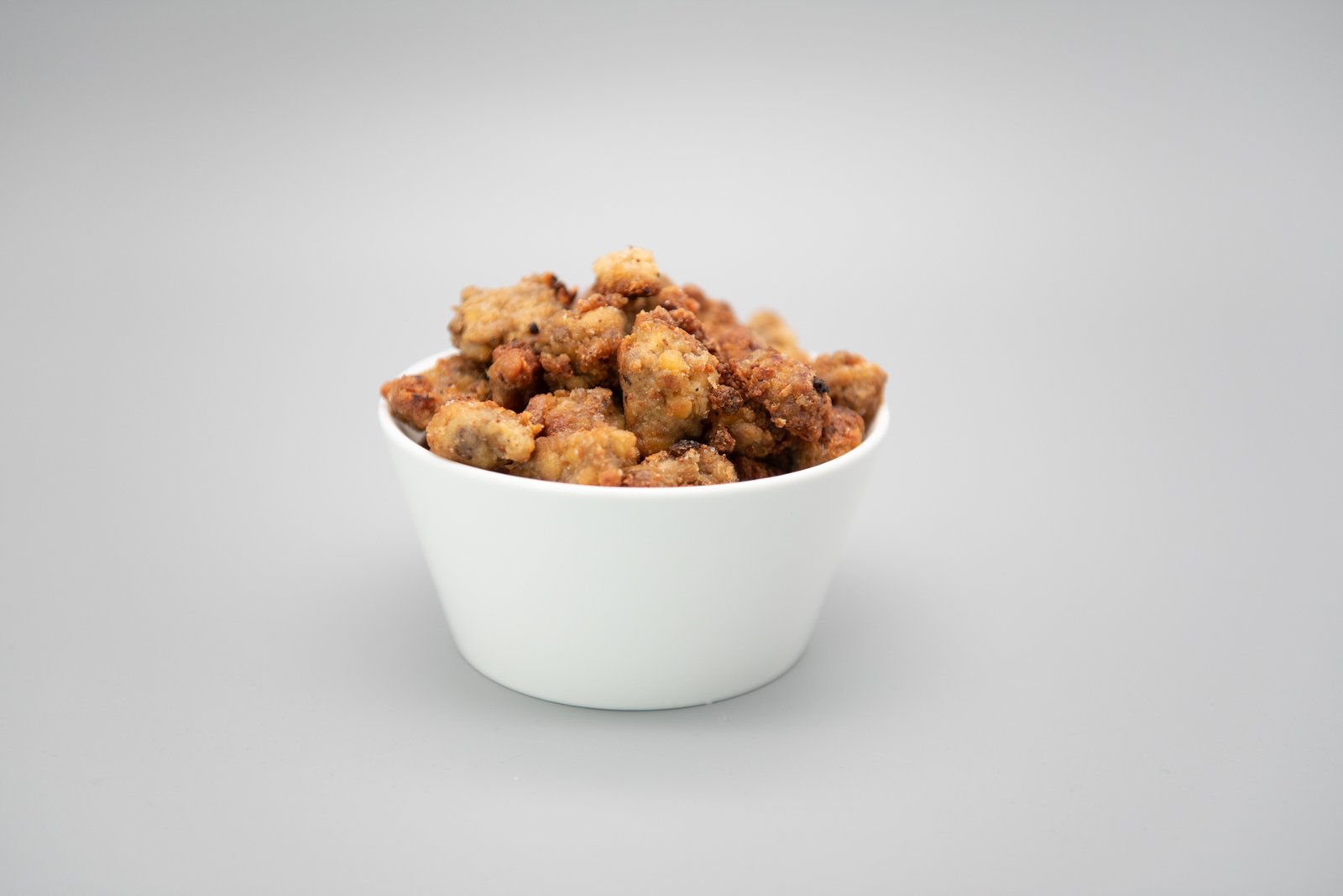
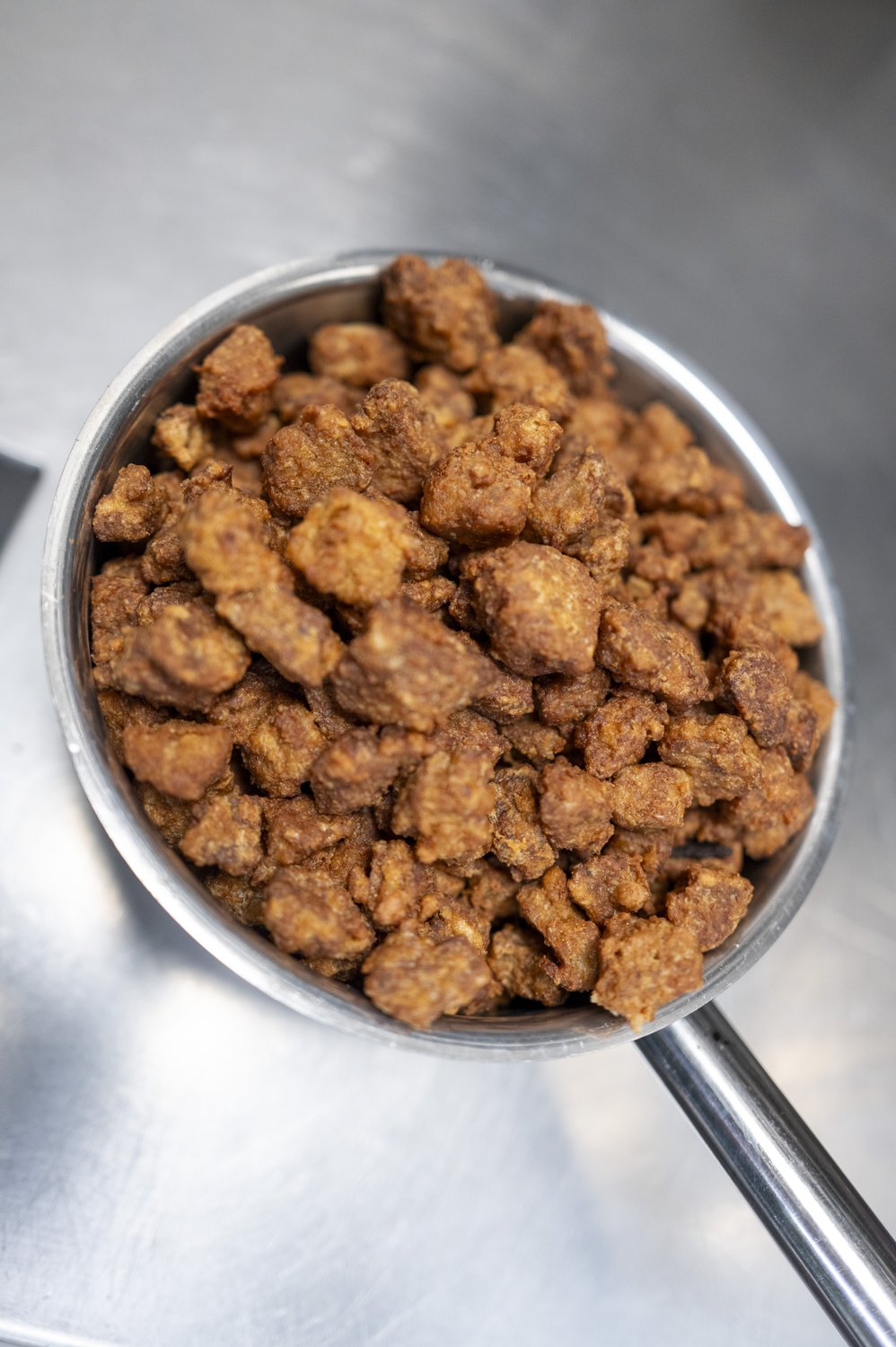
At trade fairs and food festivals, the chunks went down really well. One thing we learned quickly: because they naturally contain hardly any fat of their own, you should fry them in plenty of fat, that’s when they’re best. We used the feedback and kept working a lot on bite and flavour, especially the spice blend. Today you can try the chunks at our first pilot customer, the Margarete in Frankfurt. The official launch is planned for early 2027.
When it comes to fermentation, our readers always ask: is everything at REVOJA really vegan, including starter cultures, growth media and processing aids?
Yes, at REVOJA everything is deliberately vegan, including starter cultures, growth media and processing aids. Animal-derived ingredients have no place at any stage of our process. It’s also personal for us: Nino has been vegan for more than ten years, so compromising anywhere was never up for discussion.
The butcher’s shop, the soy and the supermarket.
You moved into a former butcher’s shop. Coincidence or statement? And where exactly is it?
We’ve been in the old butcher’s shop since August, in Bad Nauheim. That’s where our production is, and the other locations you read about in reports are from earlier phases. The cliché “vegans move into the butcher’s” fits wonderfully, of course, but it wasn’t planned. For one thing, it was simply a question of budget. For another, this was where we as a start-up got the chance to build something at all. That’s not a given, because our landlord is taking a certain risk too.
Your organic soybeans come from a farm near Kassel. How hard is it to get food-grade soy in Germany, and what do you have to offer farmers so they grow more of it?
Not that easy, because food-grade soy is in more demand than ever: tofu is booming, and in summer the shelves were partly empty. At the same time, more and more soy is grown in Germany, and the area has almost tripled since 2016. That’s partly down to climate change, strange as it sounds: soy copes better with heat and drought than many local crops. Above all, we have to offer farmers one thing: planning security. With guaranteed purchase volumes, growing it pays off, and that’s exactly how we work with our farm near Kassel.
You supply restaurants, canteens, hotels and food manufacturers. Why not go straight to supermarkets? And when will REVOJA be on the shelves?
The supermarket is a tough place for a young company. To be visible on the shelf, you need a lot of money for marketing, and at the same time there’s an enormous price war. In B2B, on the other hand, what counts above all is quality and reliability, and kitchen professionals give us direct, honest feedback. That’s why we want to prove ourselves there first. The supermarket is definitely planned, though, and when we’re ready, we want to go in with products that have already proven themselves in many kitchens.
Competition, money and what comes after okara.
Infinite Roots from Hamburg, MATR Foods from Copenhagen and LUYA from Bern also work with fungi and fermentation. What can you do that the others can’t? And where are they ahead of you?
We share the conviction with all three that fungal fermentation deserves a firm place in our diet. Our difference lies in the cycle: we make our soy products ourselves and ferment the okara that’s left over straight away. That way, the same bean gives us two product lines, the cream and the chunks. When it comes to finished products, though, the others are well ahead of us. They’ve been on the market longer, some are already in retail and have had more time to refine their products. That’s exactly where we want to get to.
Your grant ran out in spring, and you were looking for investors. Where does your funding stand today? And why is it so much harder to raise money for a fermentation plant than for an app?
We’re on a solid footing: we are funded by, among others, the German Federal Environmental Foundation (DBU) and the state of Hesse, and we’re already generating our own revenue. That gives us the freedom to choose investors carefully rather than take the first cheque that comes along. Talks are under way, and next year we want to close a funding round that will let us build a larger reactor, among other things. Hardware being financed differently from an app is in the nature of things: a plant costs money before it earns its first euro, and it can’t be scaled overnight. In return, you build something you can touch and that isn’t easy to copy. Investors who understand that are exactly the ones we’re looking for.
By 2030, food manufacturers in the EU must produce ten percent less waste than the average of 2021 to 2023. Are you already noticing this in talks with industry? And which residue will go into your reactor after okara?
Yes, we notice it clearly. Side streams have moved noticeably up the agenda in the industry, and we’re in talks with several food producers who have very different plant-based residues. Next year, we want to start joint product development with them and find solutions for their side streams. So okara is only the beginning for us. Our goal is for our plant to be able to ferment all kinds of plant-based side streams in the future.
An animal ethics perspective.
Today, okara often ends up as animal feed, eaten by animals who are later slaughtered. When the same raw material goes straight onto plates, that detour disappears. Whether it helps animals, though, is decided in the kitchen: a meat alternative makes a difference when it actually replaces meat in canteens and restaurants, not when it’s just an extra option on the menu. That’s precisely where REVOJA is starting, in food service.
That production sits in a former butcher’s shop of all places is a coincidence, but still a nice image. How the market for meat alternatives is developing right now is shown by the market shares of the big brands in Germany. If you’re wondering how processed products like these really are, read our look at whether vegan meat alternatives are ultra-processed. And our sweet and sour tempeh shows what a fungus does with whole beans. You can also buy ready-made tempeh* online.
How this interview came about
We conducted this interview in writing in November 2026, in German. Phillip Kaapke and Nino Griebel answered our questions together, and the answers have been lightly edited and translated. Our questions were based on a pitch deck REVOJA sent us. We only publish what the team mentions in its answers. Figures such as the fivefold output and the test with more than 250 people come from the company and have not been independently verified. The win at the 2023 Drink Innovation Challenge is confirmed by Geisenheim University, and the near tripling of Germany’s soy area since 2016 by the Federal Statistical Office. Photos are by REVOJA. We have no business relationships with REVOJA.
* Affiliate link: if you buy through this link, we earn a small commission. The price stays the same for you.
FAQ - What readers ask
Your backgrounds are in beverage technology and nutritional science. Who decides what, and what do you argue about most?
For anyone who has never held okara: what does it look, smell and taste like? And why does a raw material with protein and fibre almost always end up in biogas plants or animal feed?
Explain your process for people who know tempeh. Which fungus does the work, what happens in the reactor, and how is the result different from tempeh?
You talk about five times the output on the same area in half the time. What exactly are you comparing with? And where does the European patent stand?
Your cream is meant to replace cream cheese, sour cream and mascarpone and stay stable in the oven. What is it made of, and does it contain okara? And what do kitchens actually use it for?
You tested the chunks with more than 250 people. What came out of it, what did you change in bite and flavour afterwards, and where can people eat them today?
Want our reporting to show up first in Google's Top Stories? Add This Is Vegan as a preferred source on Google.