







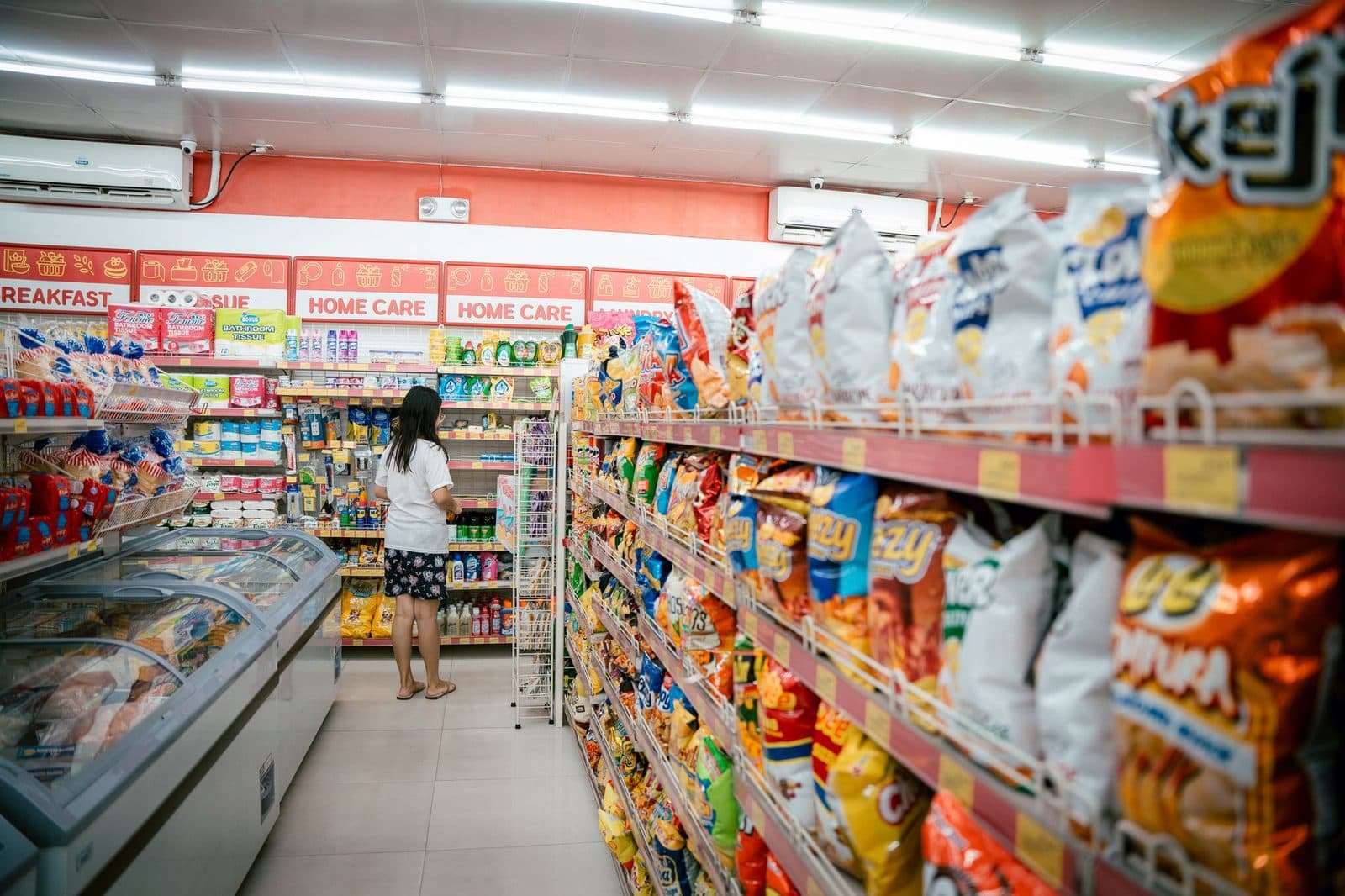
Yes, most vegan meat alternatives fall into the highest processing tier of the NOVA system. That is a description, not an accusation anyone needs to argue away. The interesting question is what follows from it, and there the evidence is messier than either side of the debate would like.
Contents7 chapters
What NOVA actually measures
The NOVA classification sorts food into four groups by degree of industrial processing, explicitly not by nutritional value. Group 4, the ultra-processed foods, covers anything containing ingredients you would not find in a home kitchen: isolates, extracts, emulsifiers, flavourings, stabilisers. The system comes from Carlos Monteiro’s group at the University of São Paulo and is set out in Public Health Nutrition.
By that definition, vegan burger patties, sausages and most cheese alternatives land in group 4. So do ham, hot dogs, breakfast cereals, packaged sliced bread and most jarred spreads.
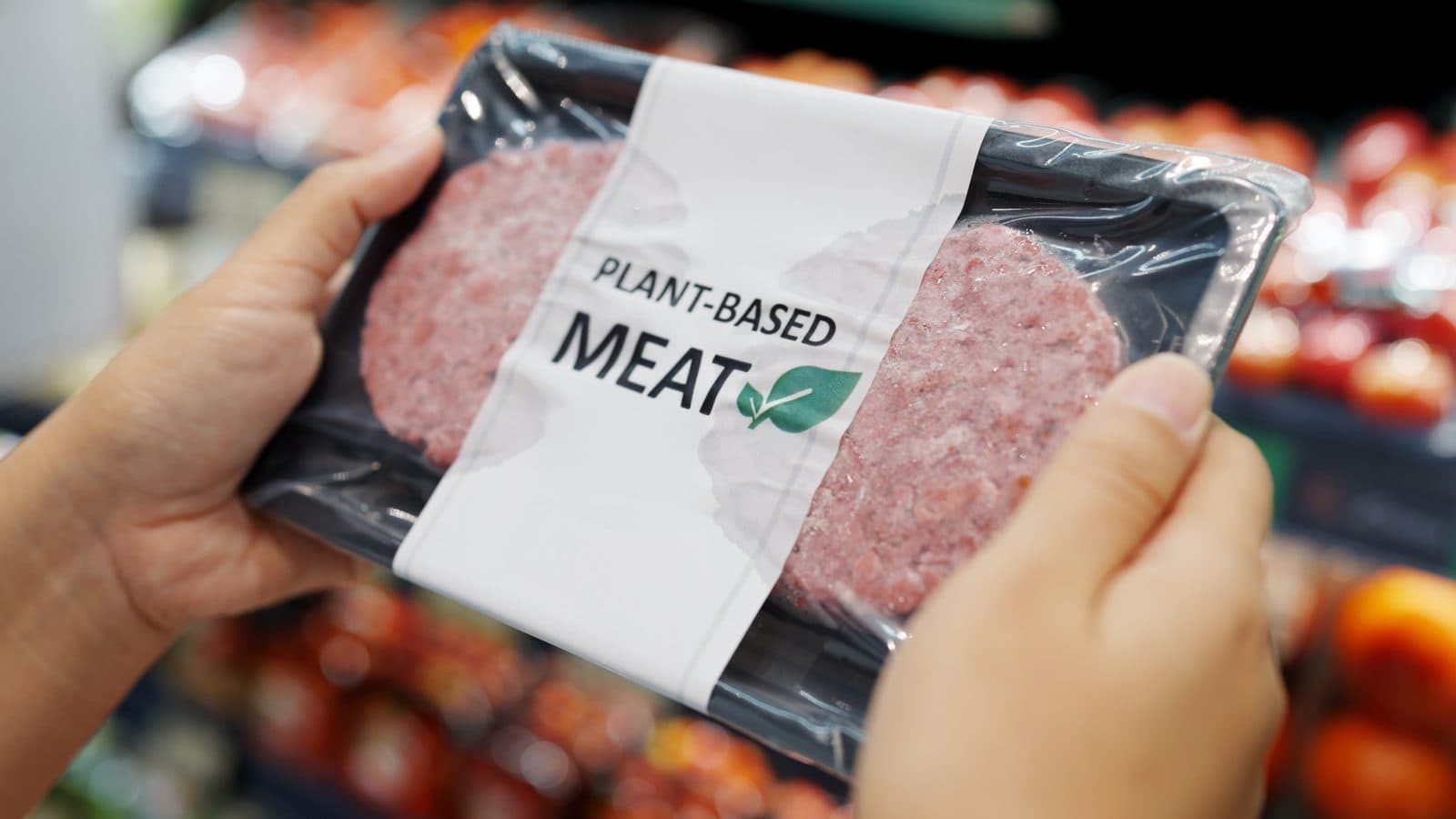
That is the part usually missing from the argument. NOVA describes half the food industry, not just our corner of it.
The trial that isolated processing
This is where a study published in Nature Medicine on 4 August 2025 comes in, run at University College London and University College London Hospital.
The design is the clever bit. Fifty-five adults with overweight or obesity, who already got at least half their calories from ultra-processed food, were given two meal plans: one built from minimally processed foods, one from ultra-processed foods. Both followed the UK Eatwell Guide and were matched on calories, fat, sugar, fibre and protein. Only the degree of processing changed.
One detail gets reported wrong constantly: this was not two groups pitted against each other. Every participant ate both versions, eight weeks each, with a four-week washout in between, and the order was randomised. A crossover design, where each person serves as their own comparison.
The result: on the minimally processed diet participants lost an average of 2.06 percent of body weight, on the ultra-processed diet 1.05 percent. Roughly twice as much, though in absolute terms a gap of a little over one percentage point. Projected across a year, the authors estimate that would work out to about 13 percent in men and 9 percent in women, against 4 to 5 percent on the other plan. Participants also found cravings easier to manage on the minimally processed food.
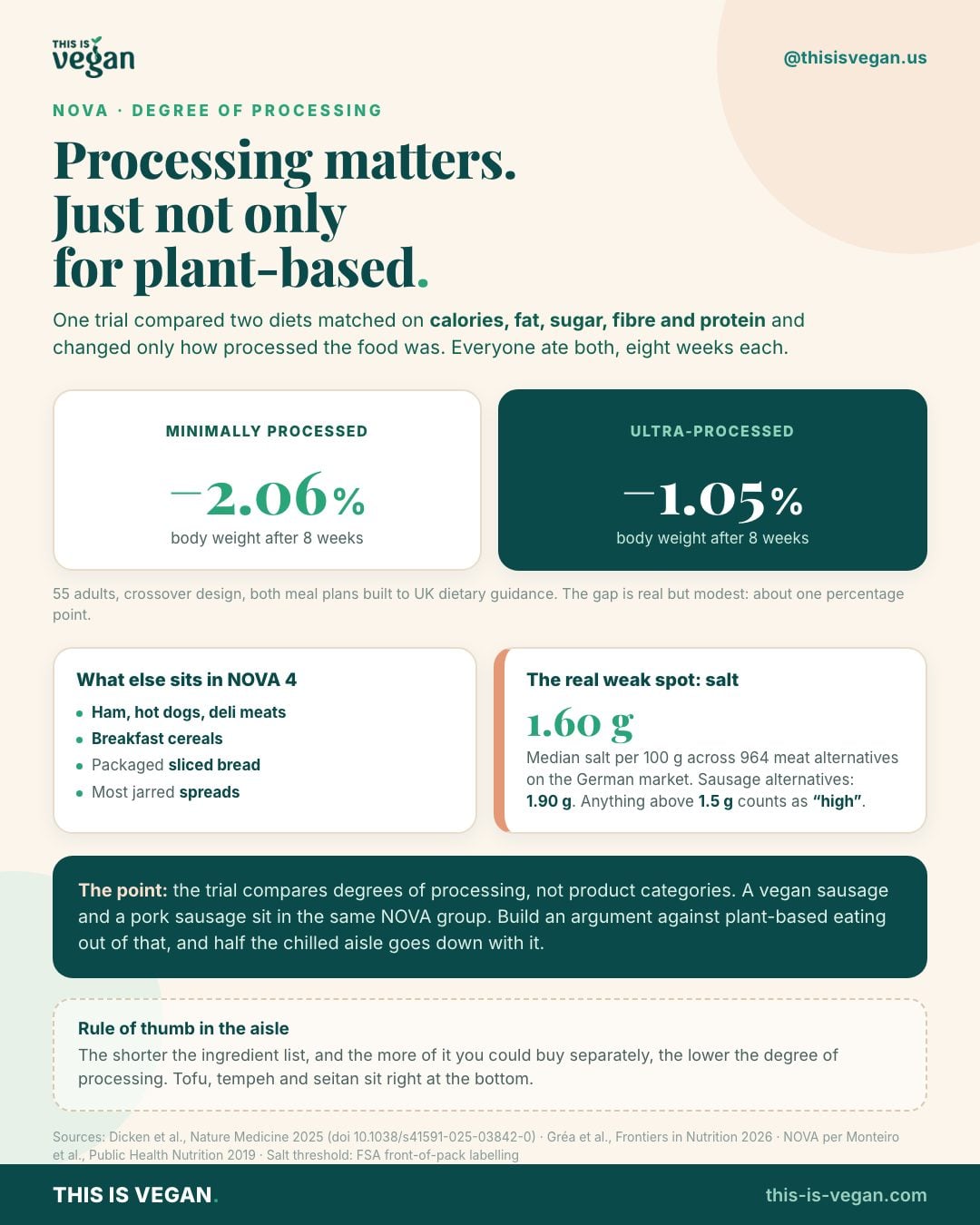
Nobody counted calories. People could eat as much as they wanted. With matched nutrition, processing still made a difference. That is a finding worth taking seriously rather than talking around.
What has to be said alongside it, because otherwise this reads too smoothly: 55 people is a small sample, most of them women. Ten participants gained weight on each plan. And the minimally processed diet was the harder one to stick with, even though the food was delivered to the door. What works in a trial does not automatically work on a Tuesday evening.
What the argument still does not give you
None of this shows that vegan alternatives are worse than the products they replace. The trial compares degrees of processing, not product categories.
Put a vegan sausage next to a pork sausage and you are comparing two items from the same NOVA group. The question is no longer “processed or not”, it is what is inside. And there the cards move. An analysis of 424 plant-based alternatives against 1,026 meat and sausage products on the German market found substantially less saturated fat in the alternatives: sausage substitutes averaged 2.0 grams per 100 grams against 9.5 in pork sausages. Cholesterol is absent from plant products by definition.
Where it genuinely gets tight: salt
The weak spot lies elsewhere. A survey of 964 meat alternatives on the German market, one of the larger datasets of its kind, found a median of 1.60 grams of salt per 100 grams, rising to 1.90 grams for sausage substitutes. For comparison: on the UK front-of-pack traffic light scheme, anything above 1.5 grams per 100 grams is coded red as high. Roughly half the category sits in the red. Those are the numbers our product tests keep getting stuck on.
And the bit where we have to correct ourselves
You often hear that alternatives are only a bit part in a plant-based diet anyway. That claim does not hold up.
In the French NutriNet-Santé cohort, vegans got 39.5 percent of their energy from ultra-processed food, against 33.0 percent for meat eaters. An analysis of nearly 200,000 UK Biobank participants found vegetarians eating 1.3 percentage points more ultra-processed food than regular red meat eaters; for vegans the difference was not statistically meaningful.
The same analysis shows the other half of the picture, though: vegans also ate considerably more minimally processed food, 3.2 percentage points more than regular red meat eaters. The plate is fuller at both ends.
So eating plant-based does not automatically mean eating less processed. That is decided by what you pick up, not by the label on the pack. If you want the wider view, our vegan food pyramid lays out where the base of the diet should sit.
How to tell the difference on the shelf
Three habits that hold up in a real shop.
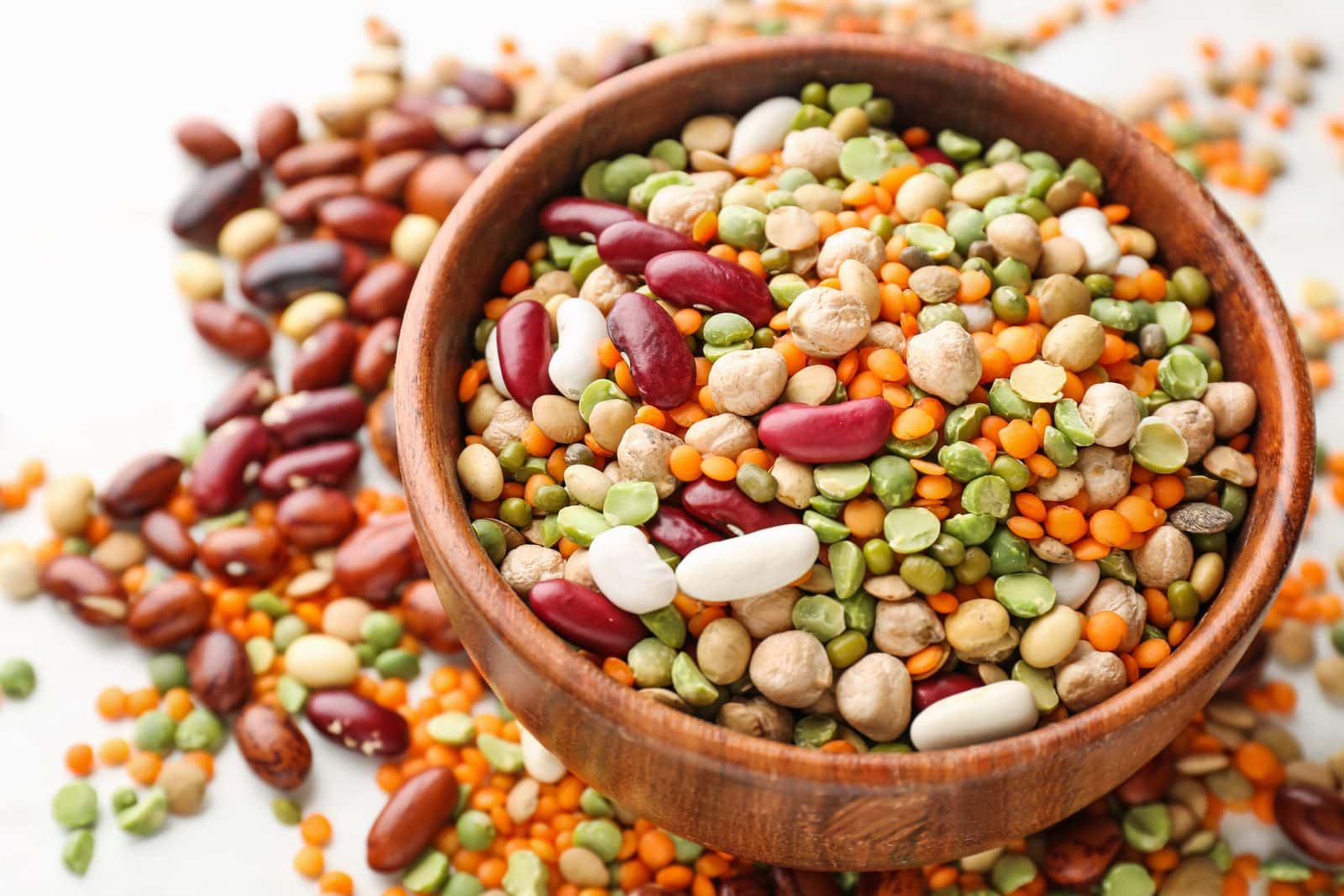
Ingredient list before nutrition table. The shorter the list, and the more of it you could buy as separate items, the lower the degree of processing. Tofu, tempeh and seitan made from wheat flour and water sit right at the bottom.
Check the salt. Sodium is the most common failure point in this category. Anything above 1.5 grams of salt per 100 grams is a lot, and more than every second product is above it.
Ask about the role, not the category. An alternative once or twice a week alongside pulses, grains and vegetables is a different thing from a diet built out of them. On cost, which is the other objection that comes up, we have crunched the price question for meat alternatives separately.
And if you are buying alternatives, buy the decent ones. Our honest tests cover vegan cheese and the full range of plant milks.
What sticks
The ultra-processed argument is not a knockout blow against plant-based eating, but it is not nothing either. Anyone who hears it can answer with two things that are both true: processing is a real issue, and it applies to the conventional sausage in exactly the same way. Build an argument against plant-based eating out of it and you have to condemn half the chilled aisle along with it.
What follows for your own shopping is unglamorous: pulses, grains and tofu carry the diet, the breaded thing in the packet is the exception. Not a new insight. Just the one the evidence supports.