





It is one of the best pieces of animal-welfare news this summer: the world’s first industrial octopus farm will not be built. On 23 July 2026, the Spanish seafood group Nueva Pescanova formally pulled its application for the controversial facility at the Port of Las Palmas in Gran Canaria. That decision closes the book on a project that scientists, animal-welfare groups and a broad slice of the public had fought against for years.
Contents4 chapters
What was planned in Gran Canaria
The scale of the plan was staggering. Around one million octopuses a year were to be raised at the site, roughly 3,000 tonnes, more than a tenth of Spain’s entire annual output. Operations could have begun as early as 2027. The animals would have been killed in an ice-water bath at minus three degrees Celsius, a method that welfare experts describe as a slow and distressing death.
Why octopus farming draws such fierce criticism
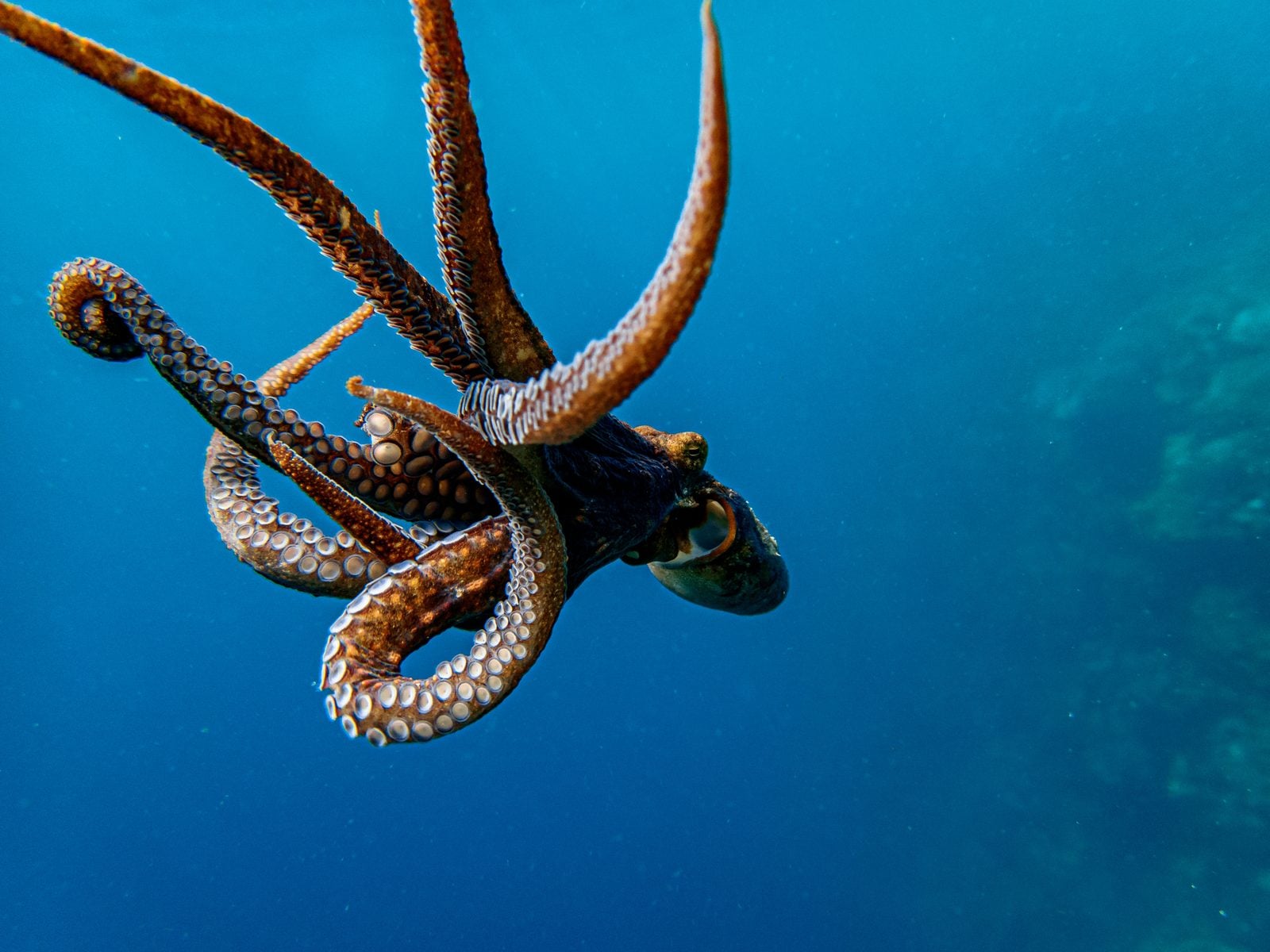
Octopuses are not simple sea creatures. They are highly intelligent, curious and strongly solitary animals, and that is precisely what makes intensive farming so troubling. In bare, crowded tanks there is no space to retreat and nothing to occupy a nervous system this complex. Add the high mortality seen in rearing and an ecological contradiction: as carnivores, the octopuses would have had to be fed wild-caught fish, piling more pressure on already strained oceans. For these animals, no slaughter method recognised as humane even exists.
The scientific consensus that octopuses are sentient is well established. They rank among the most intelligent invertebrates on the planet, solve problems, recognise individual people and behave in ways that point to genuine experience. That is a big part of why the idea of farming them by the million struck so many people as a line that should not be crossed.
Why the project really collapsed
This is where a closer look pays off, because the story has two sides. Nueva Pescanova frames its withdrawal in purely commercial and regulatory terms. The company says the Canary Islands’ environmental assessment body changed the conditions, timetable and scope of the project so substantially that the original plan was no longer viable. Its official statement says nothing about animal welfare.
Animal advocates read it differently and are celebrating a hard-won campaign victory. Keri Tietge, Food Systems Project Manager at Eurogroup for Animals, credits years of combined effort from the network, researchers and public pressure, saying the outcome stopped a “cruel new industry” from taking root in Europe. Both readings can be true at once: without that sustained opposition, the requirements would probably never have tightened to the point where the numbers stopped adding up for the company.
A signal well beyond Spain
The blocked facility is more than a local decision. It sets a precedent before the industry could gain a foothold at all. In the United States, several states have already banned octopus farming outright, and animal-welfare groups are now pushing for an EU-wide ban so the next company cannot simply move on to the next port.
And if you have thought of octopus as a delicacy, there is a genuinely satisfying way to bring the taste of the sea to the plate without the suffering. Our roundup of the top five vegan fish alternatives is a good place to start, and if you have ever wondered about seafood imitations more broadly, we also looked at whether imitation crab is vegan.
If you value independent reporting on wins like this one, you can support This Is Vegan here.
Source: Eurogroup for Animals.
Want our reporting to show up first in Google's Top Stories? Add This Is Vegan as a preferred source on Google.