







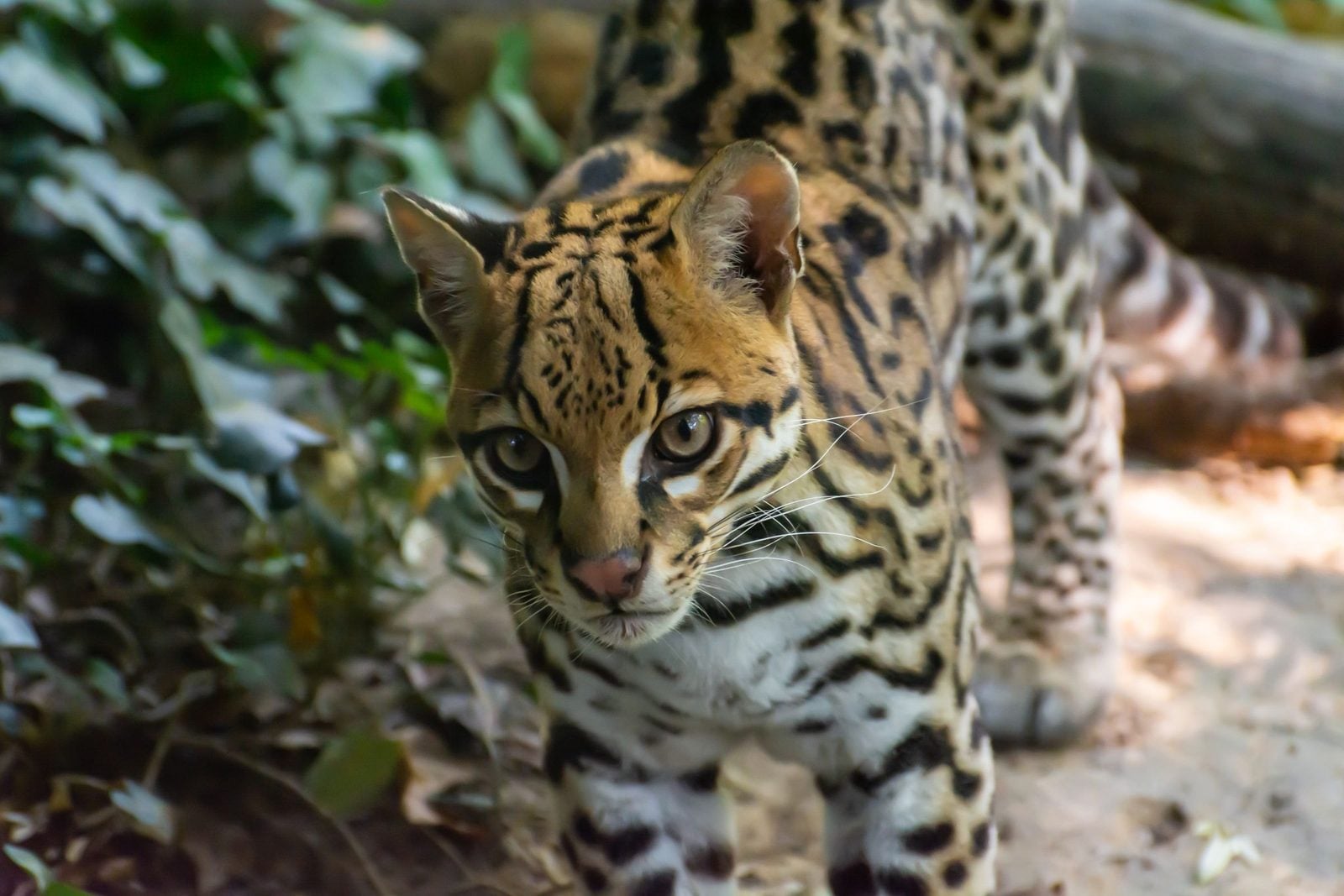
Two tigers, several lions, jaguars, ocelots and large numbers of parrots: in an INTERPOL-coordinated operation across nine countries in Latin America and the Caribbean, investigators recovered more than 1,000 live animals from traffickers. 233 people were arrested. The operation also shows how closely wildlife trafficking, deforestation and illegal gold mining are linked, and that the trail leads to Europe and Asia.
Key facts
- The operation: “Madre Tierra VIII”, 1 June to 31 July 2026, nine countries from Mexico to Colombia
- The result: 233 arrests, 312 suspects identified, 313 seizures, more than 330 cases
- The animals: more than 1,000 live animals, including big cats, parrots, macaws, reptiles and rare insects
- The forest: 60,000 hectares of illegally cleared land identified
Contents4 chapters
Tigers on chains, parrots in boxes.
Most of the big cats were found in Mexico: two Bengal tigers, one of them a rare white tiger, along with lions, ocelots and jaguars. They were discovered along routes that criminal networks otherwise use to move drugs and other contraband. For these groups, wild animals are one commodity among many.
In Nicaragua, police recovered a large number of protected birds, mainly parrots and green and red macaws. In Guatemala, parrots were hidden in boxes. Costa Rican authorities took toucans and iguanas out of the trade, and smuggled beetles turned up at a Mexican airport. According to INTERPOL, reptiles, rare insects and exotic birds made up most of the recoveries.
Officers also seized 165 kilograms of dried shark fins worth an estimated 280,000 US dollars. Many sharks died for that amount. In finning, the fins are cut off, often while the animal is still alive, and the body is thrown back into the sea.
A forest the size of 73,000 football pitches.
The operation did not only target animal traffickers. Authorities identified 60,000 hectares of illegally cleared forest in total. The largest single case is in Colombia. The country had asked INTERPOL for help back in 2025 because eleven foreign companies are suspected of clearing more than 52,000 hectares of protected forest in the Amazon basin, roughly 73,000 football pitches.
During the new operation, links emerged to a further 161 companies and 65 individuals on several continents. Investigators describe permit fraud, shell companies and foreign investment used as cover. INTERPOL issued several international notices, and raids in Colombia led to 16 arrests. These are suspicions so far, not convictions.
In Costa Rica, authorities seized around 4.6 tonnes of cyanide and eleven containers of mercury. Both are used in illegal gold mining and poison rivers, soil and everything living in them.
Following the money.
What is new is the approach. Instead of only catching the people who fell trees or trap animals, investigators trace payments, companies and properties. “Following the money,” says Krandall Gullock, head of INTERPOL’s Regional Bureau for Central America, shifts the focus to “the companies that finance, manage and profit from the trade”.
INTERPOL says the operation exposed trafficking corridors linking Latin America to destination markets in Europe and Asia. Europe is one of the largest markets for exotic pets. Parrots, reptiles, tarantulas and beetles are traded at fairs and online. Much of that is legal, which is exactly what makes it easy for smugglers: a wild-caught bird with the right papers passes as captive-bred.
The operation ran under INTERPOL’s Project GAIA, supported by Germany’s environment ministry, with additional funding from Norway.
Animal ethics perspective.
More than 1,000 rescued animals is good news. But they are only the ones that were found. For every parrot that reaches a buyer alive, many die during capture and transport, crammed into boxes, tubes or suitcases. And for the rescued animals, the story is not over. A tiger raised in captivity cannot be released. It will spend the rest of its life in a sanctuary, if things go well.
Trafficking exists because people want to own a wild animal. As long as a macaw in the living room counts as a nice hobby and a tiger in the garden as a status symbol, someone will deliver. If you care about animals, do not buy wild animals, not even legal ones, and skip the holiday photo with a tiger cub or a sloth. Our report on the end of South Korea’s dog meat industry shows that societies can change how they treat animals within a few years.
Sources ●
INTERPOL press release, 7 October 2026. Photo: Davide Negro / Pexels. The photo is a stock image and does not show any of the seized animals. This article is not sponsored.
Want our reporting to show up first in Google's Top Stories? Add This Is Vegan as a preferred source on Google.