







As of 17 September 2026
In short: On 16 September 2026, the Higher Regional Court of Schleswig-Holstein in Germany ruled (case 6 U 49/25) that a vegan soy-based liqueur may keep its name „Likör ohne Ei“, German for “liqueur without egg”. The maker may no longer use the German word for egg liqueur, „Eierlikör“, in its advertising. The ruling is not final: an appeal to Germany’s Federal Court of Justice has been allowed.
Imagine putting what your drink does not contain on the label, and ending up in court for it. That is what happened to a small spirits company in northern Germany. On Wednesday, the appeal court in Schleswig delivered its verdict, and the vegan liqueur won the part that matters most. The name stays. One word, though, has to go from the marketing.
Contents7 chapters
Who is fighting whom.
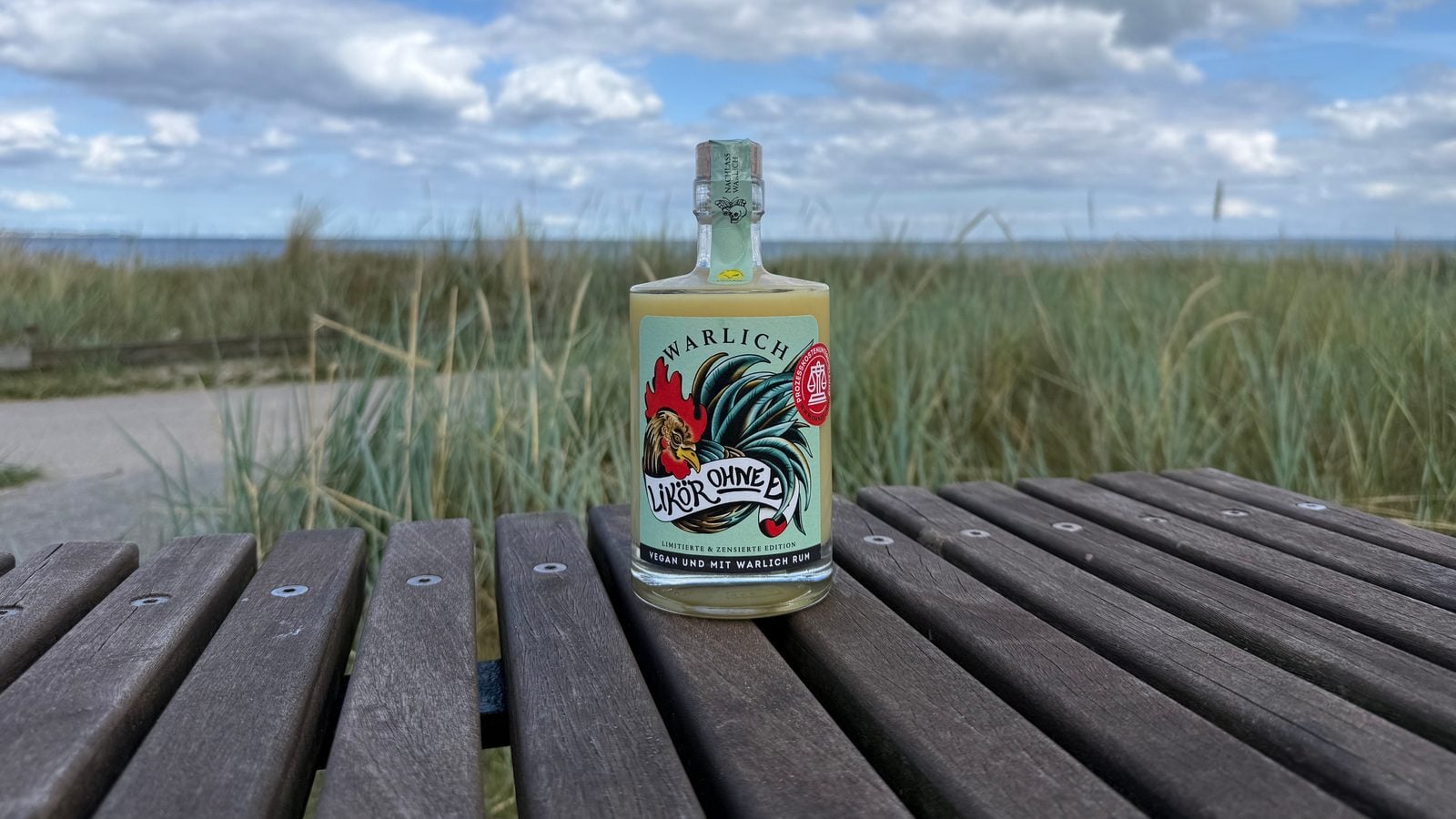
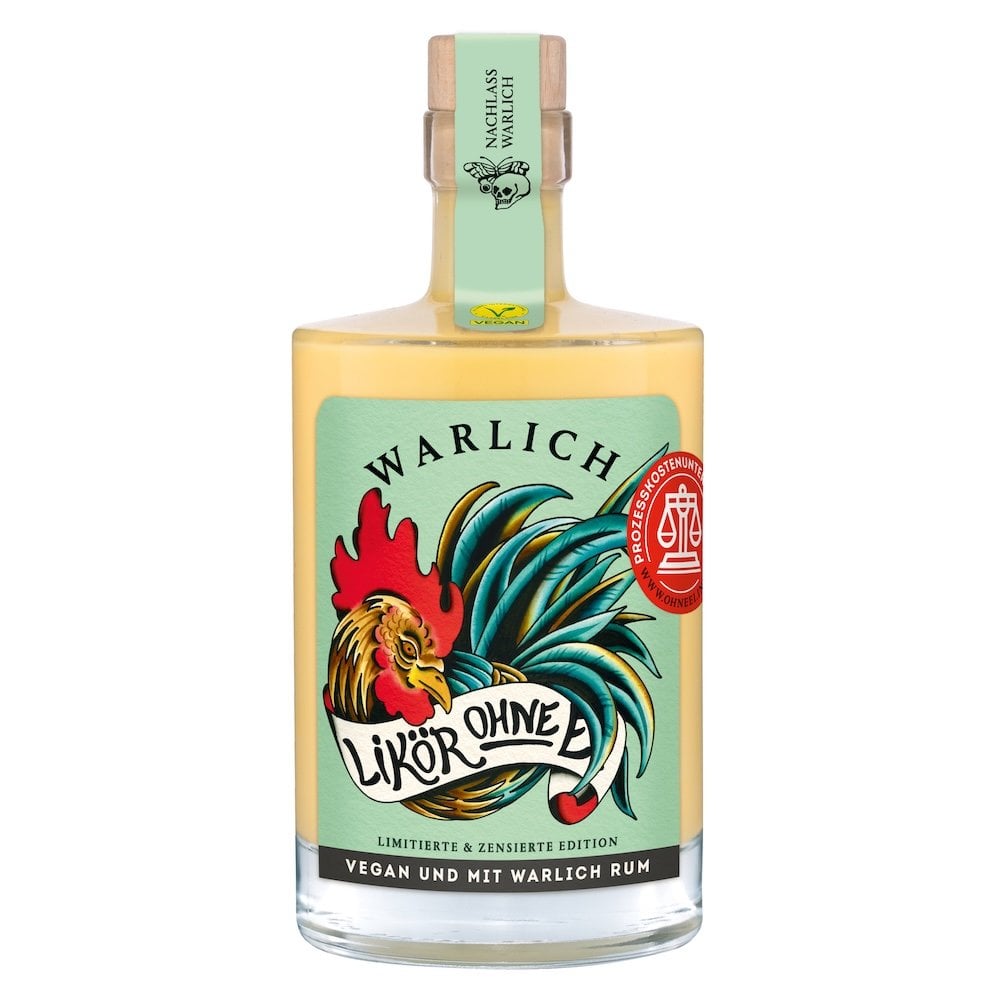
The liqueur is made by Nachlass Warlich GmbH from Henstedt-Ulzburg near Hamburg, a company best known for its Warlich rum. According to the maker, „Likör ohne Ei“ is a soy-based liqueur with Jamaican rum, 17 percent alcohol, coloured yellow with natural colourings. The same company also sells a conventional egg liqueur in its shop.
The lawsuit was brought by the Schutzverband der Spirituosen-Industrie e. V., a German trade association that protects the interests of the spirits industry. According to the court’s press release, the association argues that EU rules reserve the term egg liqueur for products that actually contain eggs, and that even referring to eggs is off limits. The manufacturer says the association has been pursuing the case since 2024.
Round one went to Warlich. On 28 October 2025, the Regional Court of Kiel dismissed the claim (case 15 O 28/24). It saw the name as a reference that sets the product apart from egg liqueur, and it even allowed the word „Eierlikör“ in advertising. The association appealed, and the case was heard in Schleswig on 26 August 2026.
What the court decided.
The 6th Civil Senate partly overturned the Kiel ruling. „Likör ohne Ei“ neither uses the protected term nor evokes the protected category in an unlawful way, the court said. According to the German news agency dpa, presiding judge Dirk Bahrenfuss put it plainly when announcing the verdict: the court considers the name permissible. The colourful rooster on the label may also stay, dpa reports.
The reasoning is the interesting part. In the court’s view, the association with egg liqueur only arises from the clear bottle and what is inside it: something yellow and creamy. Had the company sold a clear liquid under the same name, nobody would think of egg liqueur. EU spirits law protects against evocation through terms, words, indications, brand names, images or signs. According to the Senate, an association created by the look of the drink itself is not covered.
On advertising, Schleswig was stricter than Kiel. Category names such as egg liqueur may not be used when a drink does not meet the category’s requirements. That rules out a claim by the maker that the product tastes like egg liqueur. But the court also banned the phrase “alternative to egg liqueur”, reasoning that people call something an alternative when they consider it equivalent to the original, which gives the phrase a promotional purpose.
140 grams of egg yolk per litre.
Why does one word cause so much trouble? Look at EU Regulation 2019/787 on spirit drinks. It defines egg liqueur, or advocaat, as its own category (No. 39 in Annex I): a liqueur made with quality egg yolk, egg white and sugar or honey, with at least 140 grams of pure egg yolk per litre, at least 150 grams of sugar and at least 14 percent alcohol. The next category, “liqueur with egg”, requires at least 70 grams of egg yolk.
So the animal product is written into the legal definition. Nobody disputes that a drink without eggs cannot be sold as egg liqueur. The fight was about how close a name may get to the category when it says outright that the egg is missing. The EU regulation applies across all member states, which is why a German case like this matters well beyond Germany.
What happens next.
Nothing is final yet. The court allowed an appeal on points of law to Germany’s Federal Court of Justice in Karlsruhe, because the interpretation of the spirits regulation raises fundamental questions that could matter for many cases and have not been settled by the highest courts.
And after that? According to German public broadcaster NDR, the association’s lawyer had announced before the proceedings that he was prepared to take the case all the way to the Court of Justice of the European Union. That is a statement by the claimant’s side, not a procedural step. A party cannot bring such a case to the EU court directly. A national court would have to refer questions to it, and a court of last instance like the Federal Court of Justice is generally required to do so when EU law is unclear.
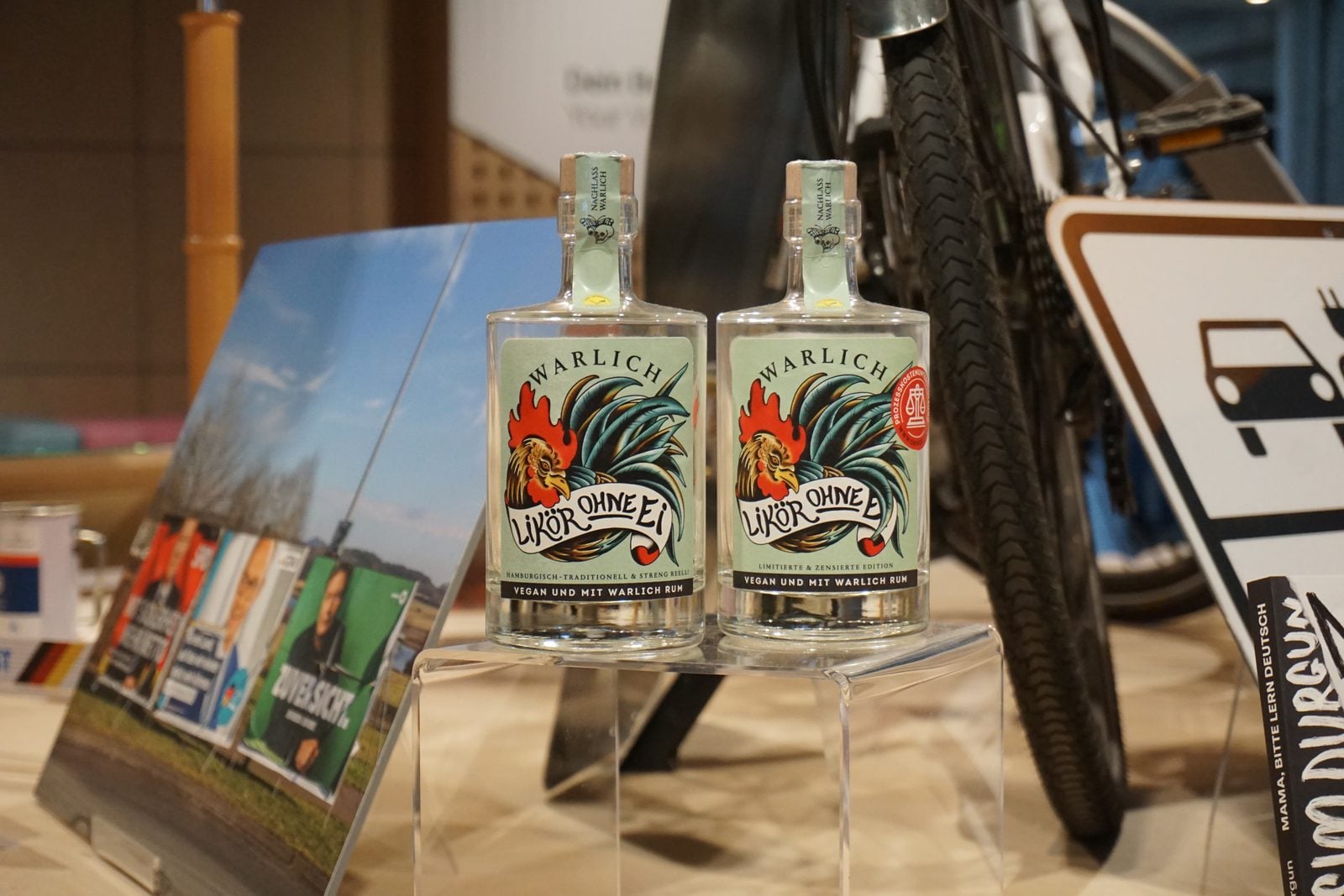
Warlich managing director Ole Wittmann was relieved after the verdict and called it a consumer-friendly decision, dpa reports. We had not seen a statement from the association after the ruling at the time of writing. The bottle has already made it into a museum: the House of the History of the Federal Republic of Germany in Bonn added the liqueur to its collection in March 2026, showing both the original bottle and the “limited & censored edition”, on which the “I” in “Ei” is covered.
The hens behind the word.
A court fight over three words on a label sounds like satire. It also has a side that appears in no legal brief: the hens without whom the protected category would not exist.
Assuming just under 20 grams per yolk, a litre of egg liqueur under EU rules contains at least seven to eight yolks. In Germany alone, farms with at least 3,000 places kept an average of 45.2 million laying hens in 2025, each laying 304 eggs on average, 13.7 billion eggs in total. More than half, 57.6 percent, came from indoor barn systems (Destatis, Germany’s federal statistics office). The wild ancestor of the laying hen, the red junglefowl, lays around twenty eggs a year. After twelve to eighteen months, when output drops, the hens are sent to slaughter, even though chickens can live eight years and more. Until 2022, around 45 million male chicks of laying breeds were killed in Germany every year right after hatching. Today their sex is mostly determined inside the egg.
Under Article 13 of the Treaty on the Functioning of the European Union, animals are sentient beings, and hens are no exception. A product that does without them, and says so on the bottle, should have the wind at its back. Instead it has to defend itself in court while the category with a minimum amount of egg yolk enjoys legal protection. That can be justified in legal terms. From the animals’ point of view, it is still a strange set of priorities. If you want to go deeper, start with our piece on speciesism. And if you want to support independent reporting like this: here is how.
A pattern of naming fights.
This liqueur is in good company. In Switzerland, Danone had to rename its Alpro oat drink because not even “this is not milk” was allowed. In Brussels, the fight over veggie burgers and vegan sausages is still on the table. Schleswig sends a different signal: a name that clearly says what is missing may stay. Whether that holds will most likely be decided in Karlsruhe.
FAQ.
Can „Likör ohne Ei“ keep its name?
Yes, according to the ruling of the Higher Regional Court of Schleswig-Holstein of 16 September 2026. The ruling is not final, an appeal to the Federal Court of Justice has been allowed.
What did the court ban?
Using the word egg liqueur („Eierlikör“) in advertising for the product. According to the court, that covers claims that it tastes like egg liqueur as well as calling it an alternative to egg liqueur.
Who sued?
The German trade association Schutzverband der Spirituosen-Industrie e. V. sued Nachlass Warlich GmbH from Henstedt-Ulzburg. The Regional Court of Kiel had dismissed the claim in October 2025.
Why can a vegan product not be called egg liqueur in the EU?
EU Regulation 2019/787 defines egg liqueur as a category with at least 140 grams of egg yolk per litre. Without eggs, the name may not be used, and allusions to it are protected as well.
Sources and what we checked
Press release 7/2026 of the Higher Regional Court of Schleswig-Holstein, 16 September 2026 (case 6 U 49/25), read in full; the written judgment was not available to us. Case number and date of the Kiel ruling according to LTO. Statements by the presiding judge, the rooster logo and Ole Wittmann’s reaction according to dpa. The announcement about the EU Court of Justice according to NDR; it is a statement by the claimant’s side. Category definitions from Annex I, No. 39 and 40, of Regulation (EU) 2019/787, read on EUR-Lex. Product details, the start of the dispute in 2024 and the museum acquisition according to Nachlass Warlich GmbH; NDR also reports the museum acquisition. Hen figures: Destatis press release No. 086 of 13 March 2026. The number of yolks per litre is our own estimate. Quotes from German sources are paraphrased in English. Photos are press images from the manufacturer. We have no business relationship with Nachlass Warlich GmbH, and this article contains no affiliate links.
Want our reporting to show up first in Google's Top Stories? Add This Is Vegan as a preferred source on Google.