







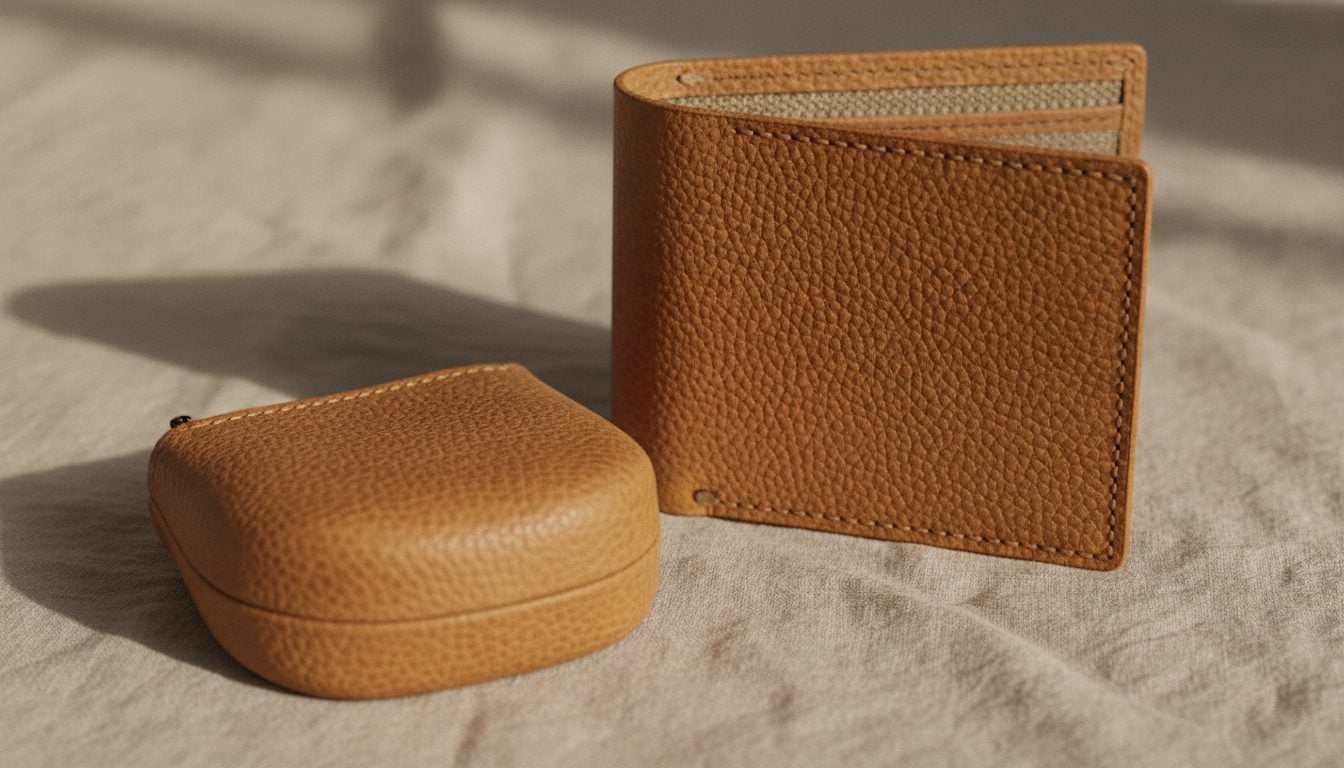
Picture the peel you toss after eating a melon. In one South Korean county, that peel now ends up in your jacket pocket as a card holder instead of in the bin.
Chilgok County, in North Gyeongsang Province, has turned the by-products of the Korean melon into a vegan leather. Not a lab curiosity, but a finished product: bags, wallets, business card holders, pen cases. Certified, on sale, and shipped to real customers through a crowdfunding run.
That sounds like genuinely good news, and it is. But “vegan leather” is a phrase that hides a lot of marketing, so it pays to look twice. How much melon is actually in there? How durable is it? And what should you check before you buy a vegan leather bag anywhere in the world?
Contents6 chapters
The short answer
South Korea’s Chilgok County recycles discarded Korean melons into vegan leather: the flesh goes to animal feed, while the dried and powdered peel is bonded with a plant-based textile into a material that earned vegan certification in January 2026. Right now it is roughly 10 percent melon, with the rest being backing textile and binder. The county wants to lift the melon share to 22 percent.
From river waste to wallet
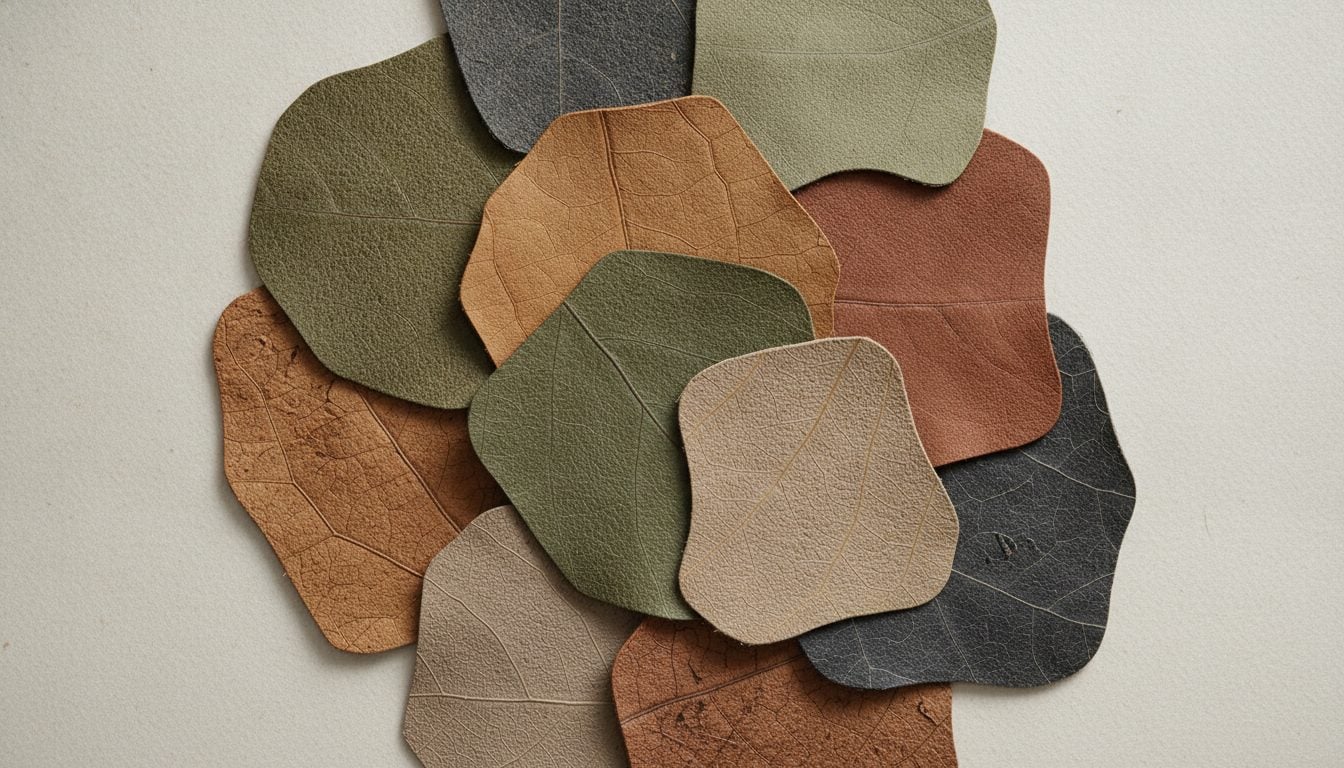
It started with a problem. During the 2024 rainy season, Chilgok had to sort out melons that could no longer be sold. Some of them drifted down the Nakdong River and became an environmental headache. The county’s Agricultural Technology Center went looking for a use for fruit that would otherwise be pure waste.
The first attempt flopped. Drying whole melons and pressing them into leather did not work, because the fruit holds too much water and sugar to build strength. So the team flipped the idea. The flesh now goes into animal feed. Only the peel is dried, ground into powder and combined with a plant-based textile to form a leather-like material.
Joint research with a plant-materials specialist began in October 2024, and the first leather fabric was ready by December 2024. For the products, the county partnered with eco-fashion label HLK, with manufacturing handled by the Chamyedam workshop. The goods sell through a local cooperative store, and a crowdfunding campaign ran through mid-July. The launch was announced on 12 July 2026.
The county governor framed it neatly: farm produce with reduced market value can become a new industry when ideas meet technology. For a region that sits on mountains of reject fruit every year, that is more than a feel-good headline.
Why the 10 percent figure matters
Here is the honest part. The material is called “melon leather,” but it is not mostly melon. The share started at 4 percent, climbed to 7, and now sits around 10 percent. The county’s target is an international benchmark of 22 percent.
That is not a flaw Chilgok should hide. Quite the opposite: naming the number openly is exactly the transparency the industry usually lacks. Because nearly every plant-based leather works the same way. A portion of plant residue delivers the story and some of the look, while a backing textile and a binder deliver durability and water resistance. That binder is, in the vast majority of cases, polyurethane, which is a plastic.
Remember the one question that decides everything: what is the bio-based content? A material that is 90 percent plastic is a different thing from one that is 70 percent plant matter. “Vegan” only means no animal in it. It does not automatically mean biodegradable, plastic-free or climate-neutral.
Melon, pineapple, cactus: the fruit-leather family
Chilgok joins a trend that has been building for years. A quick, honest map of where the best-known plant leathers stand:
| Material | Feedstock | Origin | The catch |
|---|---|---|---|
| Piñatex | Pineapple leaf fibre (harvest residue) | Philippines | Contains PLA and a coating, not plastic-free |
| Desserto | Nopal cactus | Mexico | Plant share varies by grade |
| Vegea | Grape marc from winemaking | Italy | Needs a polyurethane share for strength |
| Apple leather | Pomace from the juice industry | Northern Italy and others | Plastic backing layer is common |
| Mushroom leather | Mycelium | US / Europe | Still costly, hard to scale |
| Melon leather | Dried melon peel | South Korea | Currently around 10 percent fruit |
The pattern is the same everywhere. The clever idea lives in the feedstock that would otherwise be thrown away. The durability often comes from the plastic. Mushroom leathers such as Reishi, or the now-discontinued Mylo, were pitched as the plastic-free hope, but they wrestle with price and volume. None of this is greenwashing by default. It just means “made from fruit” and “no plastic in it” are two completely different claims.
If you want to see how brands put sustainability into practice beyond materials, our look at how Tomorrowland approaches vegan food and sustainability shows the same tension between good intentions and honest detail.
What this means when you buy
Vegan leather is good for animals, and that needs no marketing. For climate and environment, the detail decides. These points help you separate real substance from a nice story:
- Ask for the bio-content. A serious brand will give you the percentage. If all you get is “made from cactus” or “made from pineapple” with no number, you are probably buying a lot of plastic wrapped in good storytelling.
- PU beats PVC. If there has to be plastic, polyurethane is better than PVC. Better still: water-based or bio-based PU. PVC is the worst option.
- Judge durability honestly. Plastic-coated leather usually lasts less than genuine leather and can crack or peel over time. The most sustainable product is often the one you wear for ten years, not the one you replace after two seasons.
- Vegan is not the same as biodegradable. A vegan label only confirms there is no animal in it. It says nothing about microplastics or disposal.
- Check repairability. Can the item be fixed? Are there care instructions? Brands built for longevity hand you that information.
The takeaway: Chilgok’s melon-based leather is a strong example of regional waste becoming a product with real demand. That very honesty about the fruit share is what makes it credible. Carry the same critical eye into any vegan leather on the shelf, and you will make a good call.
Frequently asked questions
Is melon leather made entirely from melon?
No. The Chilgok material is currently around 10 percent dried melon peel. The rest is a plant-based backing textile and a binder. The county is working to raise the melon share to 22 percent.
Is vegan leather automatically more sustainable than animal leather?
Not automatically. For animals it is the clearly better choice. Ecologically it depends on the plastic share, durability and disposal. A long-lasting plant leather with high bio-content beats a cheap plastic version that falls apart fast.
How do I spot good vegan leather?
By transparency. Good brands state the bio-content as a percentage, name the binder they use (ideally water- or bio-based PU rather than PVC) and provide care and repair guidance. If those details are missing, stay skeptical.
Can I buy Korean melon leather outside South Korea?
So far sales have been regional in South Korea plus a crowdfunding campaign. As of July 2026 there is no international distribution. Comparable fruit leathers made from apple, grape or cactus, however, are already available in European and US shops.