







Some studies prove what many already suspect. This is one of them, and it comes with a number: MEPs with private financial interests in the agricultural and food sector voted roughly three times more often against environmental protection measures than for them. Published in the journal Food Policy, peer-reviewed.
Diesen Artikel gibt es auch auf Deutsch.
What the study did
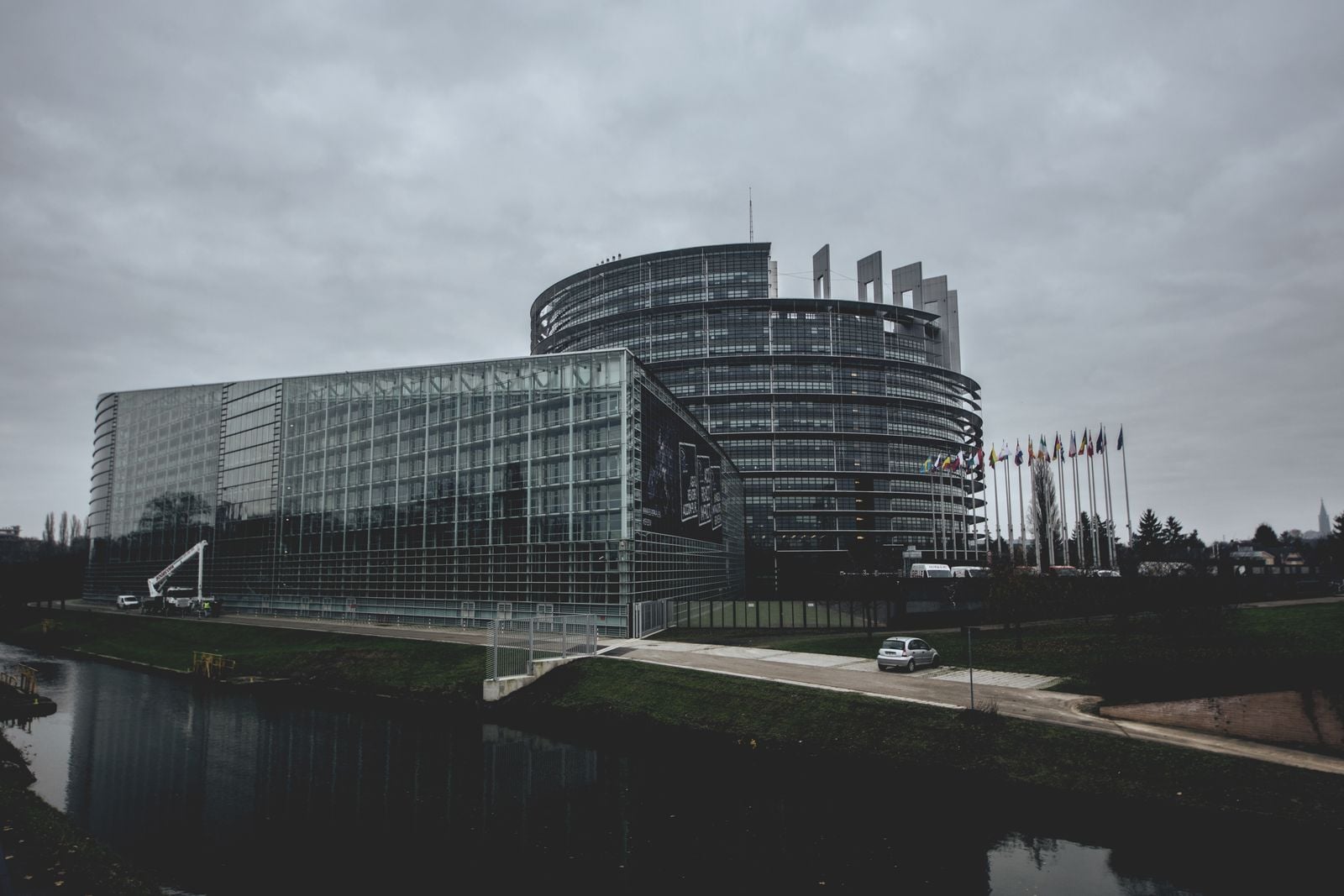
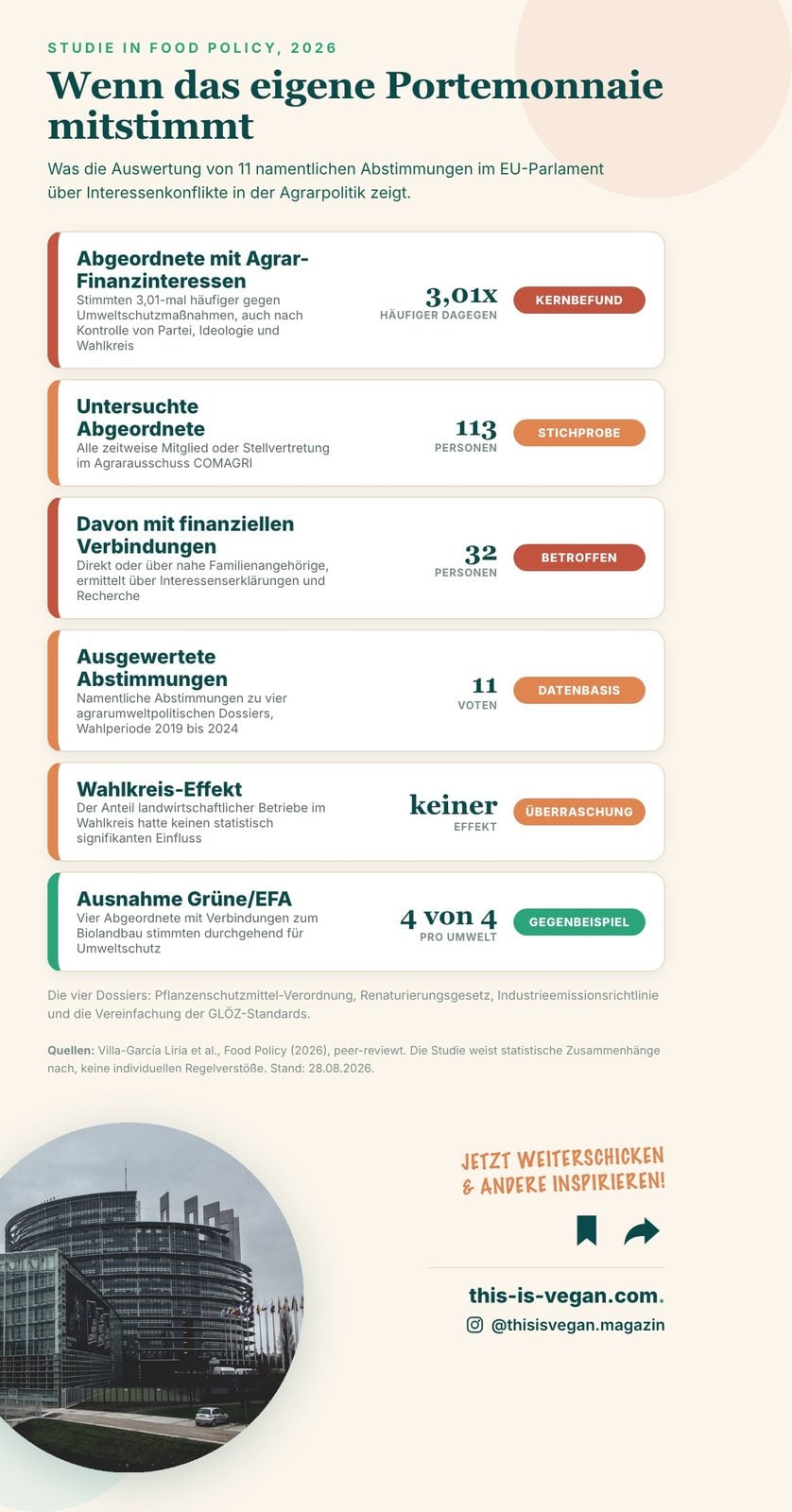
A team led by Joaquín Villa-García Liria examined 113 MEPs who served at some point on the agriculture committee COMAGRI during the 2019 to 2024 term, analysing their behaviour in 11 roll-call votes on four environmental policy files.
The result: those with a financial stake in the sector, personally or through close family members, voted 3.01 times more often in line with agricultural interests and against environmental protection, even after controlling for party, ideology and constituency.
Contents6 chapters
Which laws were at stake
The four files analysed are among the most significant agri-environmental projects of the past term:
- the Sustainable Use of Plant Protection Products Regulation
- the Nature Restoration Law
- the Industrial Emissions Directive
- a Commission proposal to simplify the GAEC standards, the environmental conditions attached to farm subsidies
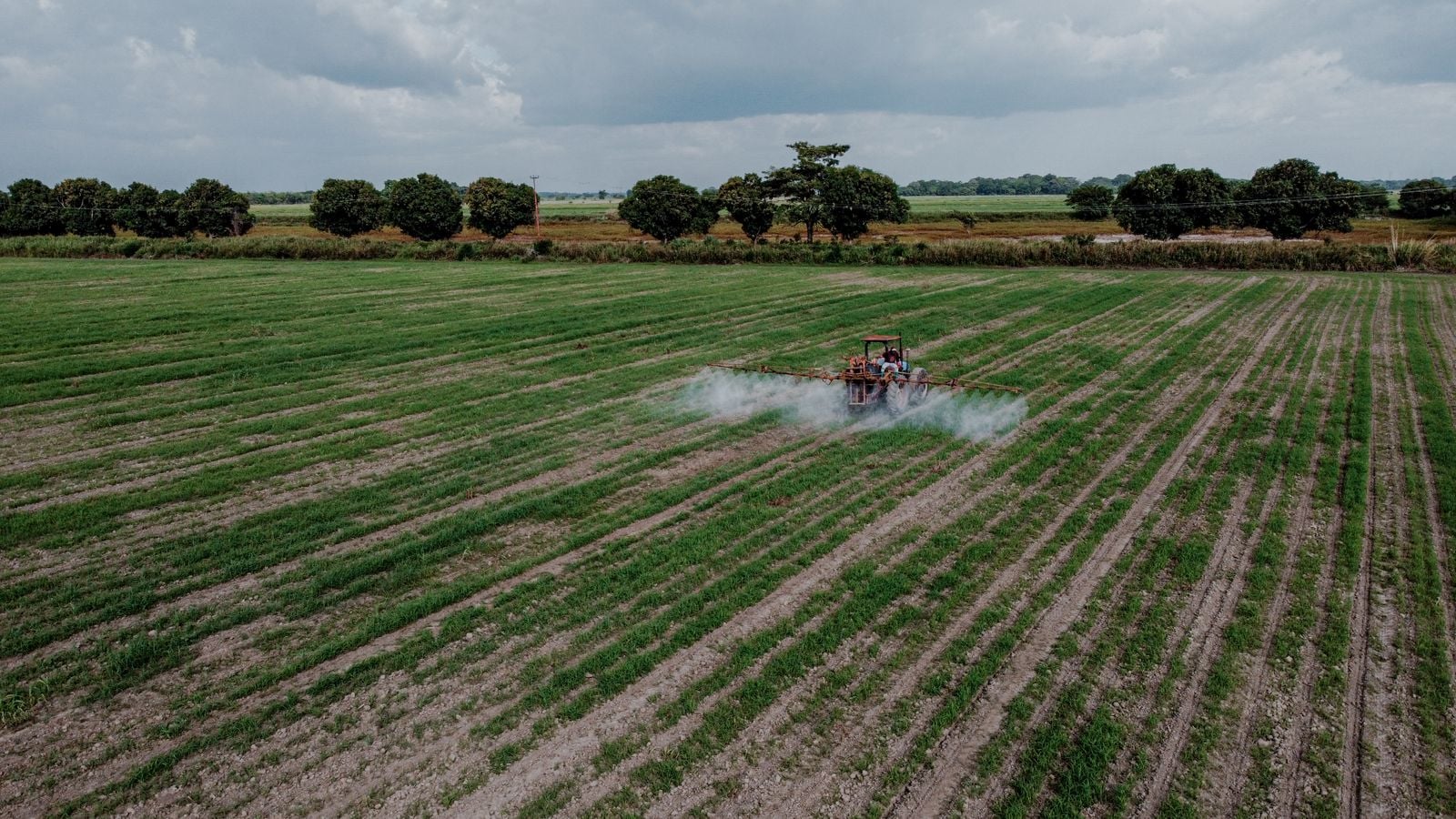
Anyone following the past few years will recognise the pattern: the pesticide regulation was withdrawn, the Nature Restoration Law passed only narrowly and watered down, and the Industrial Emissions Directive in its final version excluded cattle farms from new controls and reduced the number of pig and poultry farms covered.
What counts as a financial interest
The 32 MEPs concerned were identified through official declarations of interest, a side-income database and additional research. What is meant is concrete: owning a farm, holding shares in a meat or dairy company, or a paid position on the board of an agriculture or food corporation. Holdings of close family members were included too.
Important context, which the authors stress themselves: this is not about proven rule violations. Everything recorded was formally declared or publicly traceable. That is precisely the point.
“Even without formal breaches, strong and lasting ties to sectoral interests endanger the legitimacy of legislative processes and contribute to weakening urgently needed policy reforms in the face of pressing climate and environmental challenges in the agri-food system.”
from the study in Food Policy (translated from the German summary)
The most surprising finding: constituency does not matter
One might assume MEPs from rural regions vote farm-friendly because their voters expect it. That could not be shown. The share of agricultural holdings in a constituency had no statistically significant effect on voting behaviour. That is a notable contrast to research on the US Congress, where rural districts are considered a strong driver of agricultural protectionism.
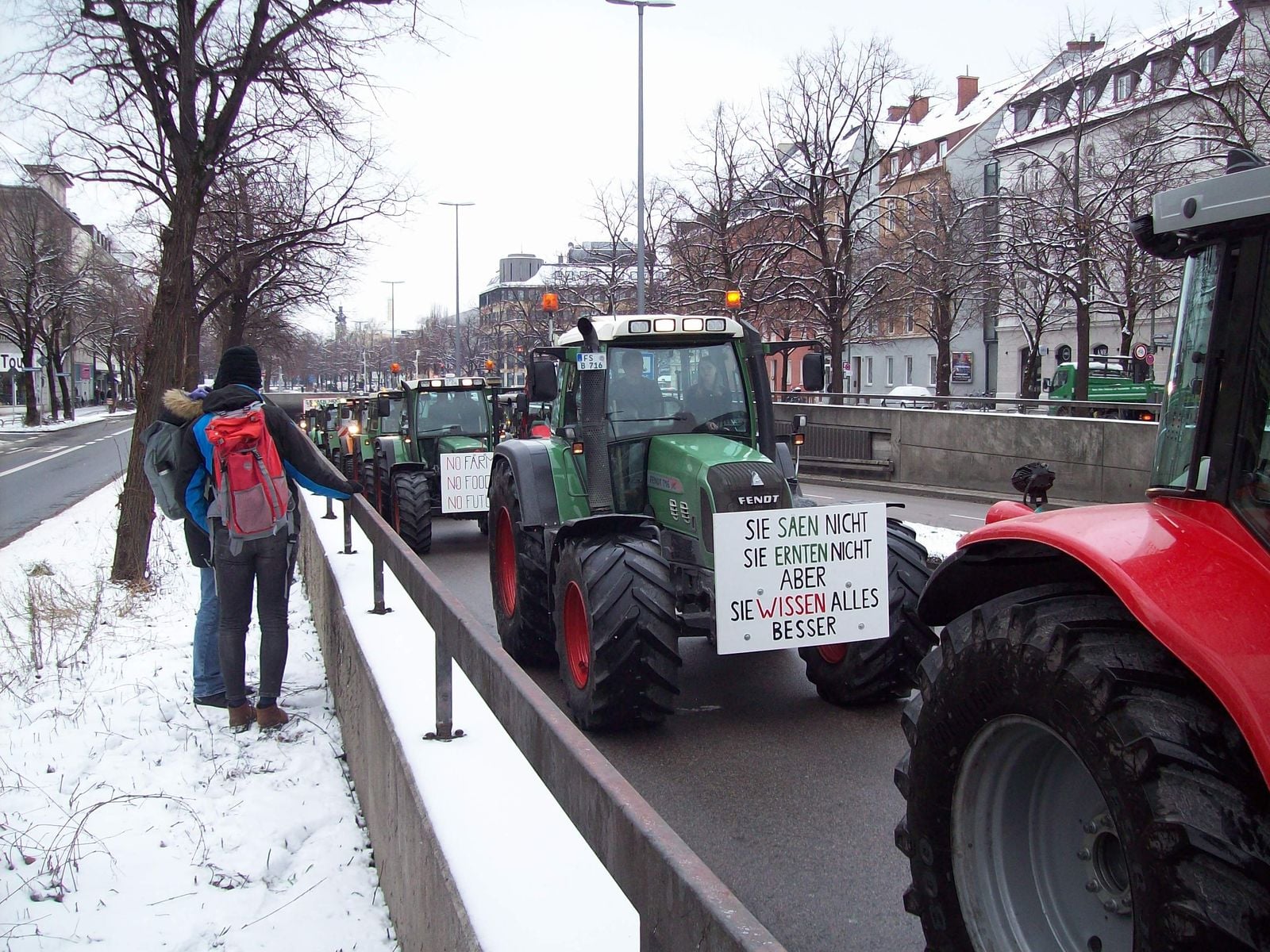
What did matter: ideology. MEPs whose national party platforms were environmentally oriented were more likely to vote for the reforms. And committee control: where COMAGRI held the lead, votes turned markedly more hostile to environmental measures. That effect concentrated on the GAEC proposal, the only one of the four files run by the agriculture committee, fast-tracked in early 2024 amid Europe-wide farmer protests and shortly before the European elections.
The exception that changes the picture
One detail makes this study far more interesting than a straightforward scandal story. The pattern appeared across nearly all political groups, with one exception: within Greens/EFA, four MEPs had financial ties to organic farming. They voted consistently for environmental protection measures.
For the authors this is evidence that agricultural and ecological interests are not inevitably opposed. The dividing line between them is, as they write, “possibly largely a political perception”. Put differently: what matters is not whether someone earns a living from farming, but which kind of farming.
What an MEP says about it
For us this finding is not an abstract political science result. In one of the coming episodes of our podcast, MEP Sebastian Everding says exactly what the study now puts into numbers: that in Brussels, people vote on agri-environmental law who personally benefit from the outcome. There is a difference between describing that as an impression from parliamentary life and having it peer-reviewed in black and white. Together they make a clear picture. Release dates are on our podcast page (in German).
What should follow
The authors call for stricter transparency and conflict-of-interest rules in EU agricultural policy. That sounds technical but would be effective: anyone voting on rules for a sector they profit from should at minimum have to disclose it, and where in doubt, abstain. In many national parliaments and across the private sector, that is long since standard.
For us as a magazine the finding matters because it answers a common question: why does so little move in EU agricultural policy when the scientific evidence is clear? Part of the answer is now in a peer-reviewed journal. Another part shows in the ongoing debate over naming bans for plant-based products, where the same majorities are at work, and in the unequal treatment of plant-based alternatives in taxation.
Transparency and sources
The basis is the peer-reviewed study by Villa-García Liria et al., published in Food Policy: read the study at ScienceDirect. Lead author Joaquín Villa-García Liria researches within the PLAN’EAT project in Wageningen. Summary and quotes via the reporting of vegconomist (in German), additional detail on the Industrial Emissions Directive via Sentient Media. As of 28 August 2026.
Important: the study demonstrates statistical correlations, not individual rule violations. The holdings recorded were declared or publicly accessible. We do not name individual MEPs, because the study makes its claims at group level.
Images: stock (parliament, tractors, field, barn), This Is Vegan (infographic, German language). No money changed hands for this article.
Want our reporting to show up first in Google's Top Stories? Add This Is Vegan as a preferred source on Google.