







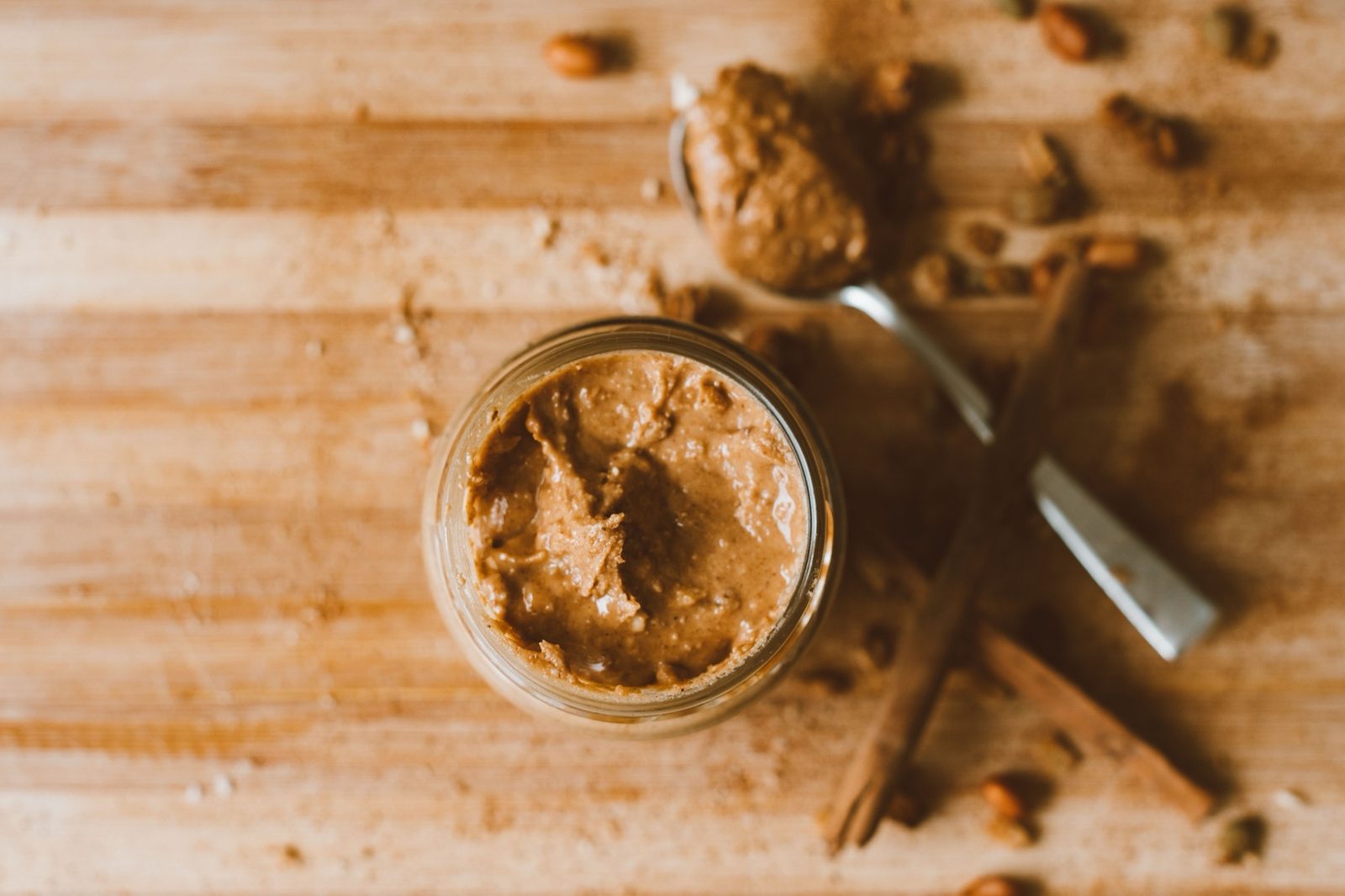
Yes, peanut butter is almost always vegan. A standard jar holds roasted peanuts, usually salt, and in many brands some vegetable oil and sugar. All of that grows in a field. The exceptions are flavoured or “functional” spreads: honey, milk powder, whey, and in the US, fish oil. A two-second look at the label settles it.
Contents9 chapters
What’s in peanut butter
The base recipe barely counts as a recipe. Peanuts are roasted and ground until their oil comes out and turns them into paste. Pip & Nut’s peanut butter lists Argentinian high-oleic peanuts (99.5%) and sea salt. That’s the whole thing.
Mainstream brands often add a few more things:
- Sugar, standard in big US brands like Jif and Skippy
- Vegetable oil or hydrogenated fat to stop the oil separating (often palm oil)
- Emulsifiers such as mono- and diglycerides (E471), also against separation
- Salt
There is no dairy butter in peanut butter. The name comes from the spreadable texture.
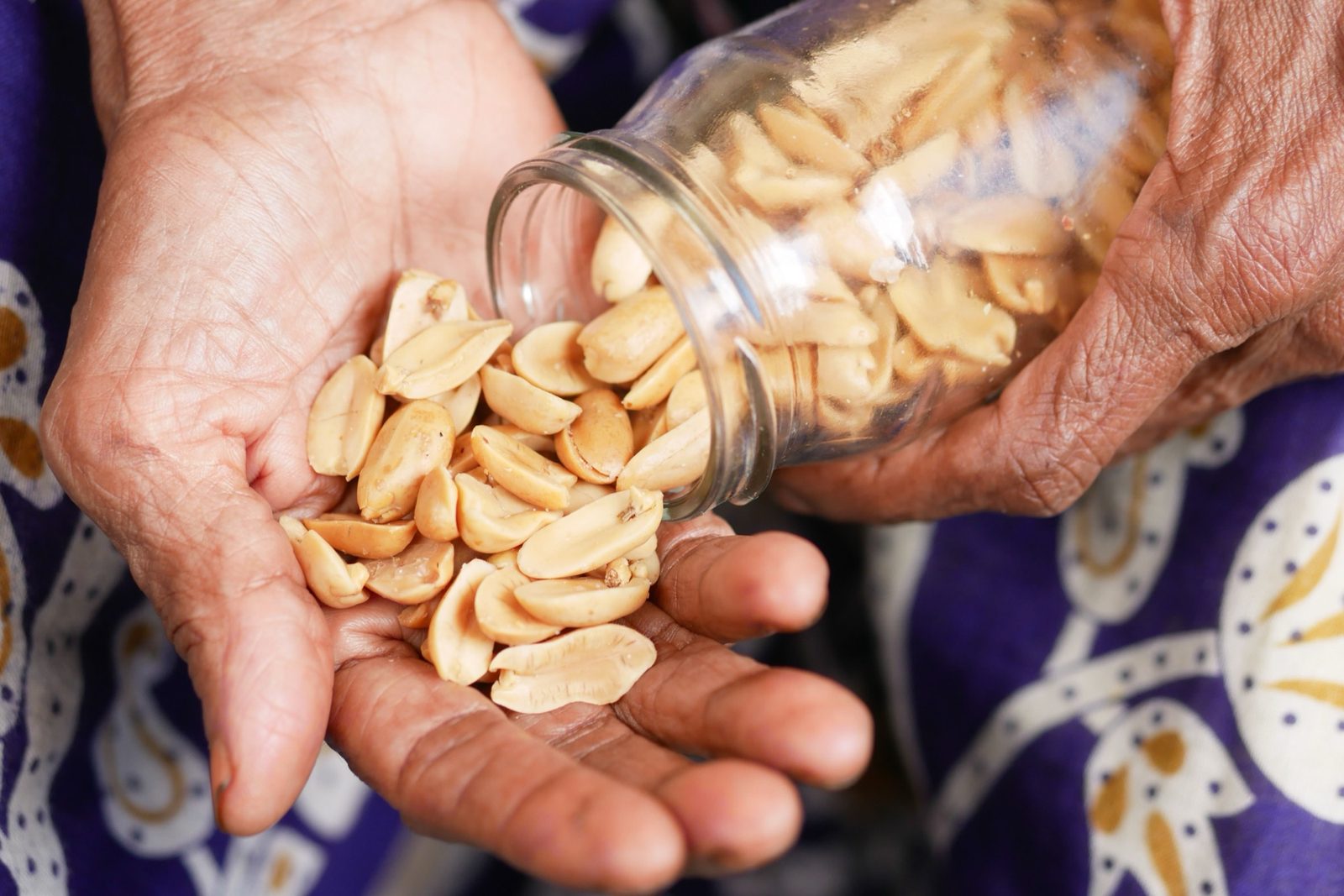
Roasted peanuts, the base of every peanut butter. Stock photo: Towfiqu barbhuiya (Pexels)
The exceptions: honey, dairy, fish oil
Honey is the most common one. Jif sells a Natural Creamy Peanut Butter Spread and Honey, and Skippy has a Natural Creamy Peanut Butter Spread with Honey. Because of products like these, Jif states in its FAQ that its range is “not considered vegan at this time”. Anything labelled “honey roasted” belongs in the same bin.
Milk powder, whey and butterfat show up in mixed products rather than plain peanut butter: chocolate peanut spreads, caramel versions and protein spreads. Pip & Nut’s FAQ, for example, notes that its milk chocolate peanut butter cups contain dairy while its nut butters don’t.
Fish oil is a US story. Jif used to sell a creamy peanut butter with omega-3 DHA and EPA. According to the archived product page on jif.com, it contained anchovy and sardine oil plus tilapia gelatin. It no longer appears in Jif’s current range, though some grocery sites still list it.
The grey areas: E471, sugar, palm oil
Mono- and diglycerides (E471) can be made from plant or animal fats, and labels rarely say which. Sun-Pat says its E471 comes from RSPO-certified palm oil. Jif lists mono and diglycerides in its Creamy Peanut Butter without naming a source. Our explainer Are mono and diglycerides vegan? goes into the details.
Sugar and bone char. Some US refineries filter cane sugar through bone char made from cattle bones. The sugar itself contains no bone, but many vegans avoid it anyway. Beet sugar is never processed this way, according to the Vegetarian Resource Group. In Europe, where most sugar comes from beets, the VRG found no bone char use in cane refining either. So the question mainly applies to sweetened US brands, which usually don’t say where their sugar comes from.
Palm oil is a plant fat and doesn’t make a peanut butter non-vegan. It raises a different ethical question, which we get to below.
Label checklist
- Only peanuts, salt, vegetable oil, sugar: vegan.
- Honey or “honey roasted”: not vegan.
- Milk powder, skimmed milk powder, whey, butterfat, lactose: not vegan.
- Fish oil, anchovy, sardine, gelatin, “omega-3” from fish: not vegan.
- E471 or mono and diglycerides with no source: grey area. A vegan label or a quick email to the brand clears it up.
- Certified vegan logo on the jar: done.
Brand check (as of 27 September 2026)
We went by the ingredient lists on the manufacturers’ websites. We didn’t taste anything. This is about ingredients only.
| Product | Vegan? | Ingredients (manufacturer) | Source |
|---|---|---|---|
| Pip & Nut Peanut Butter (UK) | Yes | High-oleic peanuts (99.5%), sea salt | pipandnut.com |
| Whole Earth Original Smooth (UK) | Yes, “suitable for vegetarians & vegans” | Roasted peanuts (96%), sustainable palm oil, sea salt | wholeearthfoods.com |
| Sun-Pat Smooth (UK) | Yes, “suitable for vegetarians and vegans” | Peanuts (94%), E471, cane sugar, peanut oil, sea salt | sunpat.co.uk |
| Skippy Creamy (US) | No animal ingredients listed; sugar source not stated | Roasted peanuts, sugar, hydrogenated vegetable oil, salt | peanutbutter.com |
| Jif Creamy (US) | Grey area: E471 and sugar source not stated | Roasted peanuts, sugar, molasses, hydrogenated oils, mono and diglycerides, salt | jif.com |
| Jif Natural Spread and Honey (US) | No | Contains honey | jif.com |
| Skippy Natural with Honey (US) | No | Contains honey | peanutbutter.com |
Recipes change. The label on the jar in your hand always wins.
In Germany, where this magazine is based, the organic single-ingredient versions dominate the shelves. Rapunzel’s Erdnussmus fein, for instance, is nothing but organic peanuts.
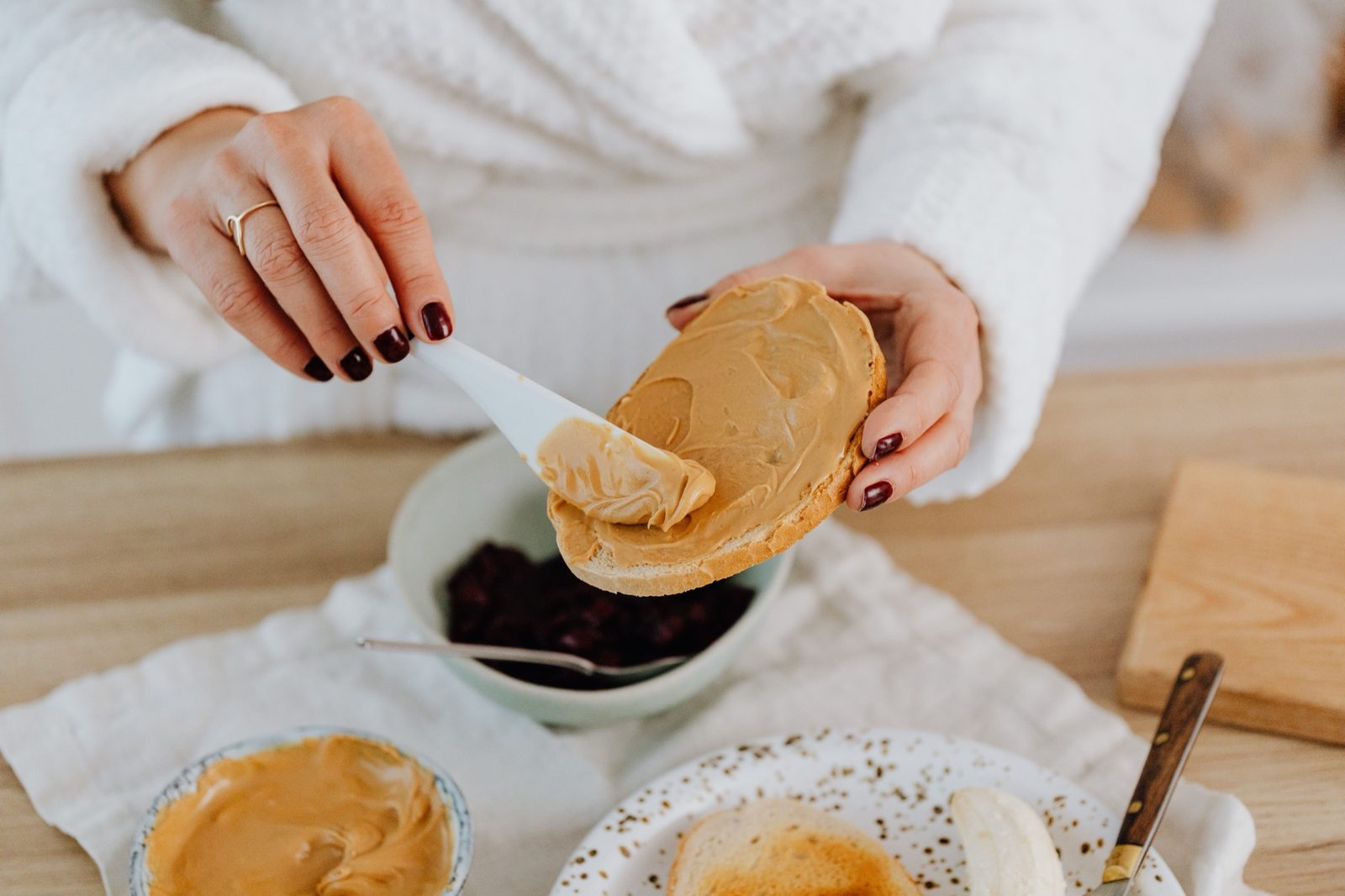
Peanut butter on toast. Stock photo: Kaboompics.com (Pexels)
How much protein?
USDA FoodData Central (entry 174266) lists smooth peanut butter with salt at 22.2 g protein, 51.4 g fat and 598 kcal per 100 g. Plain nut-only versions come in a little higher on their labels: 26.3 g for Whole Earth Original Smooth, 27 g for Pip & Nut. A tablespoon (roughly 15 to 20 g) gives you about 3 to 5 g of protein.
The animal ethics side: bees, cows, fish and the rainforest
Every exception on the list above has an animal behind it.
Honey is the bees’ food store for lean times. The Vegan Society lists it among the things vegans avoid, and points out that conventional beekeepers often replace harvested honey with sugar syrup that lacks honey’s micronutrients. Insect feelings are no fringe idea anymore: the New York Declaration on Animal Consciousness (2024), signed by hundreds of researchers, calls conscious experience in insects a realistic possibility that it would be irresponsible to ignore. More in Is honey vegan?
Whey and milk powder come from cows who only give milk because they have a calf every year. Fish oil comes from anchovies and sardines caught by the ton. A good peanut butter needs neither.
Palm oil is different. No animal goes into the jar, but the plantations cost habitat. According to a 2018 IUCN report, around 10,000 of the estimated 75,000 to 100,000 critically endangered Bornean orangutans live in areas allocated to oil palm. The same report warns against a blanket boycott, because oil palm yields up to nine times more oil per hectare than other oil crops. For peanut butter there’s an easy way out: a nut-only jar needs no added fat at all.
If you want to go further, our beginner’s guide to going vegan is a good place to start.
FAQ
Is all peanut butter vegan?
Almost all. Classic peanut butter is peanuts, salt and sometimes oil and sugar. Versions with honey, milk powder, whey or fish oil are not vegan.
Is Jif peanut butter vegan?
Jif Creamy lists no obvious animal ingredients, but it contains mono and diglycerides and sugar without naming their source. Jif itself says its products are not considered vegan, partly because of its honey spread.
Is peanut butter with palm oil vegan?
Yes. Palm oil comes from a plant. If you want to avoid it for environmental reasons, pick a jar that is just peanuts and salt.
Why is it called butter?
Because ground peanuts turn creamy and spreadable like butter. No dairy is involved.
Looking for other products? Our Is it vegan? hub collects quick checks, from Biscoff cookies to Toblerone.
Sources
- Pip & Nut, peanut butter and FAQ: pipandnut.com, pipandnut.com/pages/faqs
- Whole Earth, Original Smooth Peanut Butter: wholeearthfoods.com
- Sun-Pat, Smooth and FAQ on E471: sunpat.co.uk, sunpat.co.uk/faqs
- Skippy, Creamy and Natural with Honey: peanutbutter.com, peanutbutter.com
- Jif, Creamy, Natural Spread and Honey, FAQ: jif.com, jif.com, jif.com/frequently-asked-questions
- Jif Omega-3, archived product page (2021): web.archive.org
- Rapunzel, Erdnussmus fein: shop.rapunzel.de
- Vegetarian Resource Group, bone char and sugar: vrg.org (2007), vrg.org (2023, Europe)
- USDA FoodData Central, entry 174266: fdc.nal.usda.gov
- IUCN, Palm oil and biodiversity (2018): iucn.org
- The Vegan Society, definition and honey: vegansociety.com, vegansociety.com
- New York Declaration on Animal Consciousness (2024): sites.google.com/nyu.edu/nydeclaration
How we researched this
All ingredient lists come from the manufacturers’ own websites, checked on 27 September 2026. The fish-oil Jif product is no longer listed on jif.com, so its ingredients come from the archived manufacturer page from 2021. Nutrition figures come from the USDA database and the brands’ labels. We did not taste any of the products and rate them on ingredients alone. Brands whose ingredients we could not confirm on a manufacturer page were left out. This article contains no affiliate links. Open question: the source of E471 and sugar in US brands can only be settled by the manufacturers.