







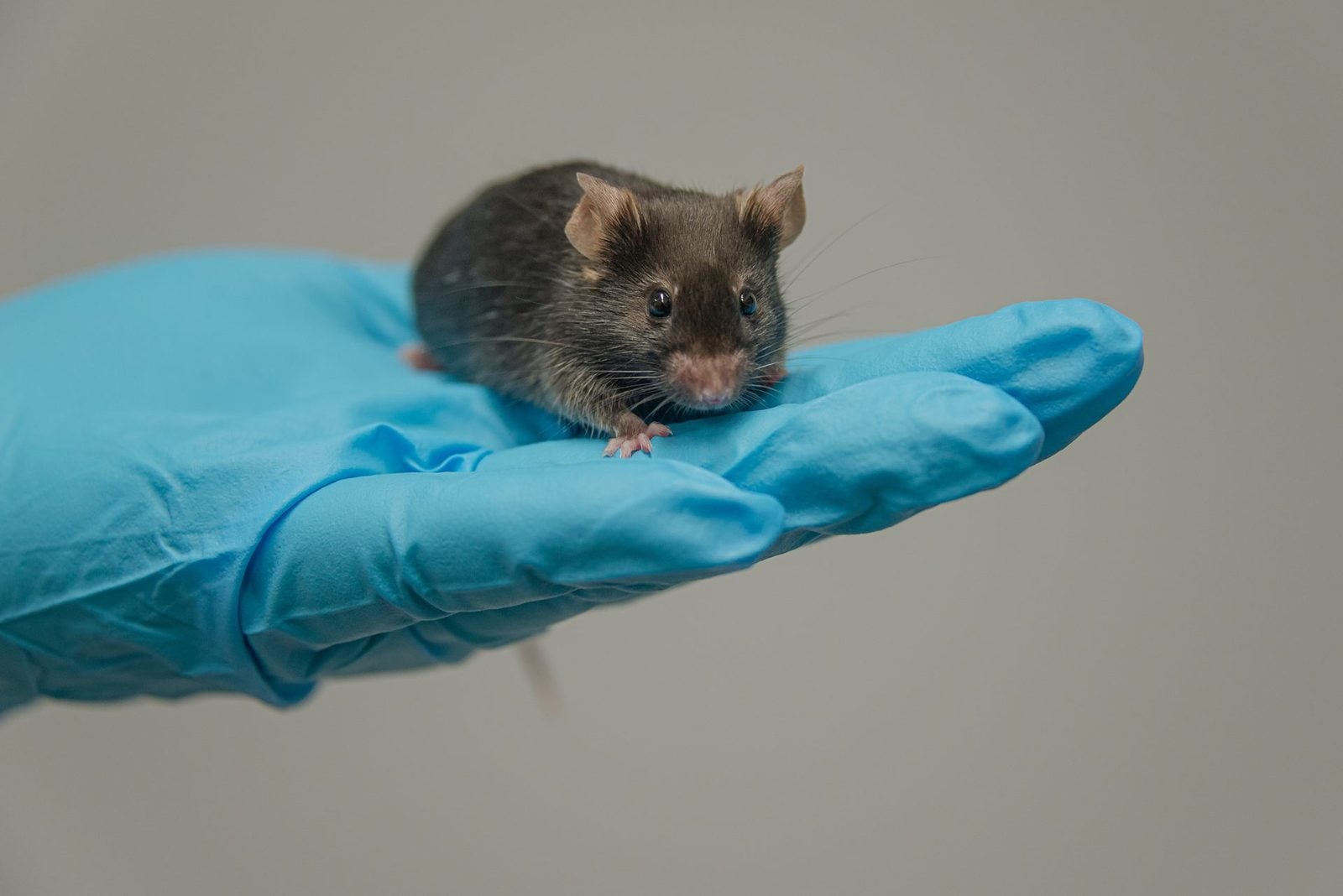
Switzerland used fewer animals in experiments in 2025 than in any year since it started counting: 507,863. The Federal Food Safety and Veterinary Office (FSVO, known in German as BLV) published the figure on 15 September 2026, and most headlines stopped there. The report contains a second number that fits no celebratory headline. 29,413 animals were used in severity grade 3, the category for the most distressing procedures. That is 7.4 percent more than in 2024 and the highest level since 1999.
Fewer animals, more severe suffering. Both are true at the same time.
Contents5 chapters
The numbers.
All figures come from the FSVO’s 2025 animal experiment statistics report (in German):
- 507,863 animals used, down 14,773 from 522,636 in 2024, a drop of 2.8 percent.
- By species: mice around 66 percent, birds including poultry 13 percent, rats and fish around 8 percent each.
- Purpose: around 73 percent were used to research human diseases, with cancer and neurological and psychiatric disorders together accounting for roughly a third of all animal use.
- By severity: 179,445 animals in grade 0, 157,309 in grade 1, 141,696 in grade 2, 29,413 in grade 3.
- Genetically modified animals: about 34 percent of all animals, and about 43 percent of those in grade 3.
Switzerland grades experiments on a four-step scale. Grade 0 means no burden, such as behavioural observation. Grade 3 covers procedures that cause animals severe pain, prolonged suffering or serious impairment.
Where the severe cases come from.
The overall decline is mostly about mice: about 13,000 fewer than the year before. Fish went the other way, up 19 percent. In grade 3, however, mice drove the increase, with around 1,660 more animals. Mice now make up 91 percent of the most severe category.
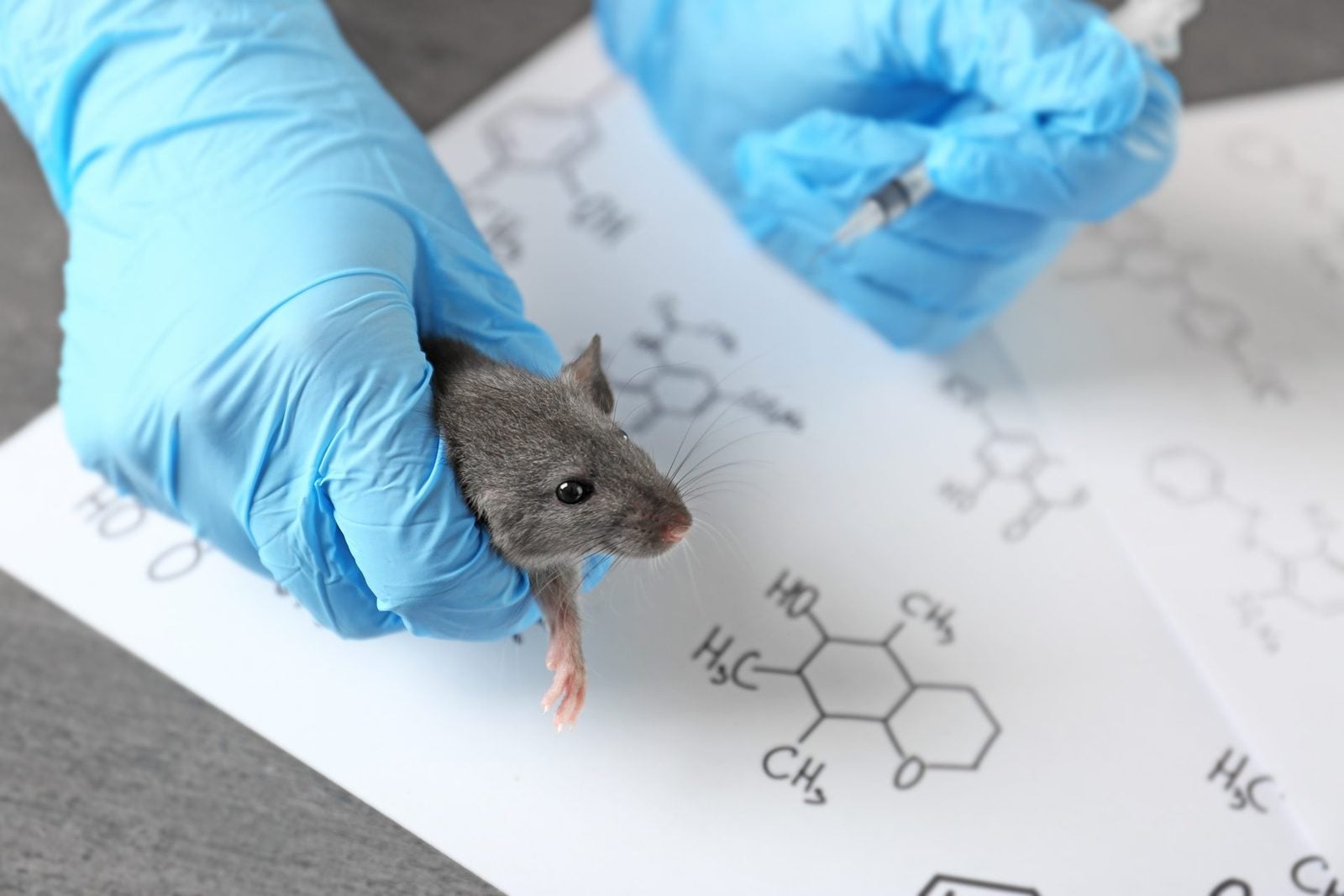
Stock image. In severity grade 3, Switzerland used 2,033 more animals in 2025 than a year earlier. Photo: Adobe Stock
Cancer research stands out. Overall, it used about 12,000 fewer animals than in 2024. In grade 3, it used 1,816 more, reaching 8,543 animals, a record. Fewer animals in total, but harsher experiments, in the same field. The FSVO links the long-term rise in severe experiments since 2013 to the growing use of genetically modified animals bred as disease models, for cancer or Parkinson’s for example. Their number in grades 2 and 3 has more than doubled since 2013.
Two caveats belong here, both from the report itself. The combined total of grades 2 and 3 actually fell by 8,457 animals, because the drop in grade 2 outweighed the rise in grade 3. And since August 2018, revised FSVO guidance has led to procedures being classified in higher severity grades more often. Part of the increase may reflect stricter classification. The office does not say how much.
How much the record low is worth.
According to the report, animal numbers fell steeply from 1983 to 2000 and have moved between roughly 520,000 and 760,000 a year ever since. 2025 sits just below that range. The FSVO itself warns that a single large project can swing annual figures and that the data cannot predict a trend.
The statistics also count only animals actually used in experiments. Swiss facilities bred around 843,000 animals in 2025 and imported about 187,000. Animals that are never used can be kept for breeding, rehomed, or killed. How many are killed is not published yet. From the 2026 reporting year, facilities must declare that number for the first time.
For comparison: Germany’s latest figures, for 2024, list 1,327,931 animals used in experiments, 626,538 killed for scientific purposes such as organ harvesting, and 1,109,100 bred but killed without being used, according to the German Centre for the Protection of Laboratory Animals (Bf3R). The two systems classify severity differently, so direct comparisons are limited.
Another ban on the ballot.
Swiss law only allows animal experiments when no suitable alternative exists and the expected benefit outweighs the harm, and researchers must apply the 3R principle: replace, reduce, refine. The government points to the Swiss 3R Competence Centre, founded in 2018, and the National Research Programme NRP 79 “Advancing 3R”, funded with 20 million Swiss francs.
Swiss voters have been here before. In February 2022, 79.1 percent rejected a ban on animal and human experiments, and not a single canton voted yes. A new popular initiative, “Yes to a future without animal testing”, was submitted in November 2024. It would immediately ban grade 3 experiments as well as animal use in basic research and education, with all remaining experiments to end within seven years. The Federal Council recommends rejecting it without a counter-proposal, arguing that research would move abroad to countries with weaker standards. Parliament is still deliberating, and no voting date has been set.
The Swiss Animal Protection organisation STS has long called for an end to severely distressing experiments and for human-relevant research without animals.
The animals behind the table.
A statistic counts uses. It says nothing about what a day in severity grade 3 feels like. 29,413 means 29,413 individual mice, rats, fish and other animals, each of whom went through severe pain, fear or prolonged suffering, most of them bred for exactly that purpose.
Their capacity to feel is not a matter of opinion. The New York Declaration on Animal Consciousness (2024) states that there is strong scientific support for conscious experience in mammals and birds, and at least a realistic possibility in all vertebrates. Switzerland even wrote “the dignity of living beings” into its federal constitution. The law still permits these experiments whenever an authority rates the expected benefit higher than the suffering. The animals have no seat at that table.
Our position does not depend on how well results from mice translate to humans. Even an experiment that works does not turn a sentient being into a tool. How slow the exit can be, even where animal-free tests exist, shows in the fight over Botox testing on mice and in a German court halting a parabiosis experiment. If independent reporting on animals matters to you, you can support our work here.
How we reported this
All Swiss figures come from the FSVO’s report on 2025 animal experiment statistics (PDF, 15 September 2026) and its press release, not from wire copy. Percentage changes were recalculated from the absolute numbers. German figures are from the Bf3R (2024 data, published December 2025). The 2022 referendum result is the official result; details of the new initiative come from the Federal Council. Animal protection groups, research institutions and industry are all parties to this debate. Still open: how much of the grade 3 increase is due to stricter classification since 2018.
Want our reporting to show up first in Google's Top Stories? Add This Is Vegan as a preferred source on Google.