







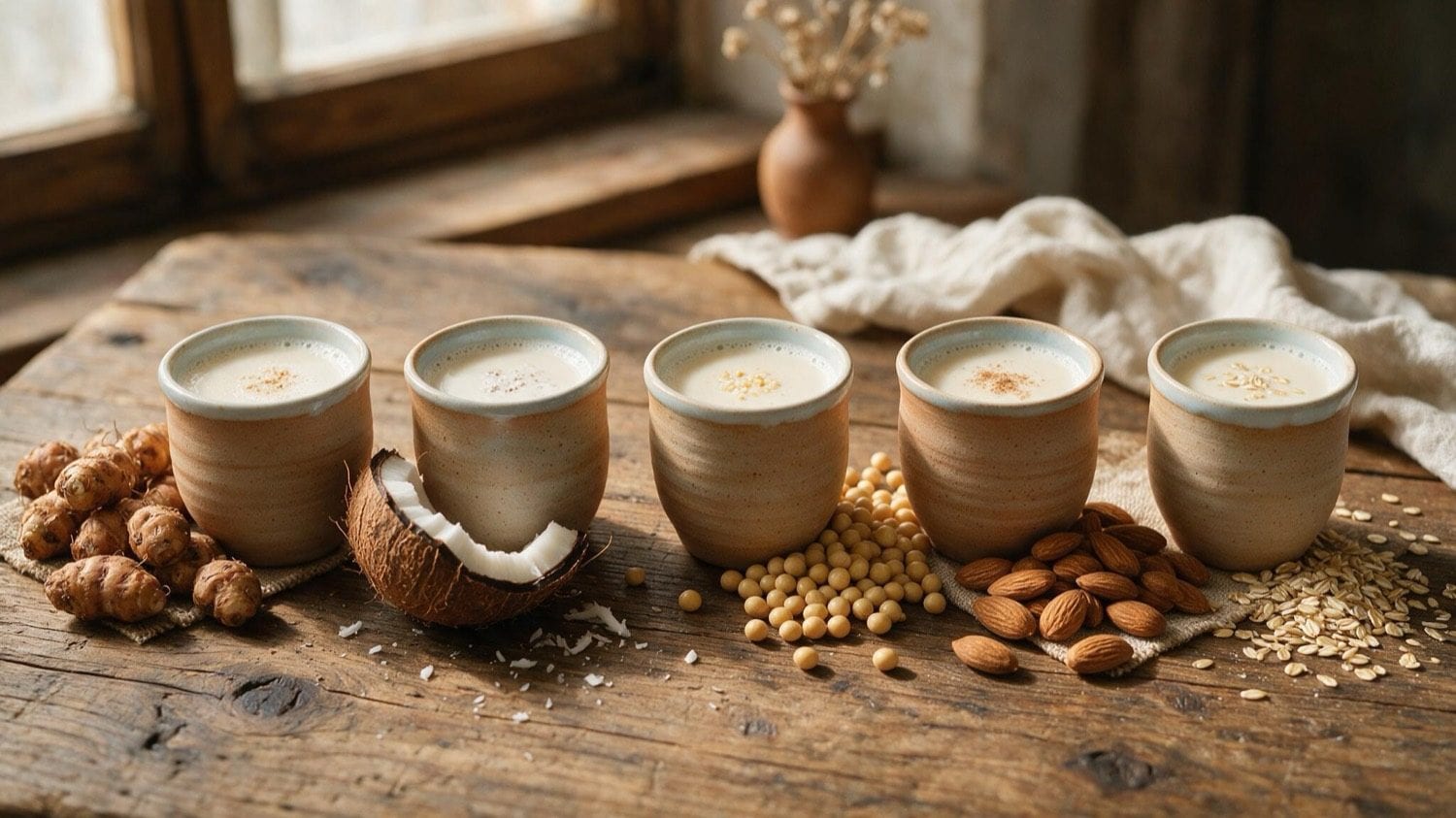
Oat milk feels like an invention of the last decade. It is merely the newest chapter of a story that begins some eleven thousand years ago on the Amazon. Today, 22 August, the world celebrates exactly that: World Plant Milk Day.
Diesen Artikel gibt es auch auf Deutsch.
What is World Plant Milk Day?
The global awareness day for plant-based milk, held every year on 22 August since 2017. It was founded by designer and campaigner Robbie Lockie, co-founder of Plant Based News. The non-profit campaign carries one simple invitation: swap the cow’s milk in your daily routine for a plant-based one and see what a single glass changes.
This Is Vegan is the exclusive media partner of World Plant Milk Day for the German-speaking region. Robbie Lockie also just joined us for a conversation, you can find the interview here. The campaign’s actions, the 7-day challenge and the full journey through plant milk history live at worldplantmilkday.com.
Contents6 chapters
Eleven thousand years old, and everyone calls it a trend
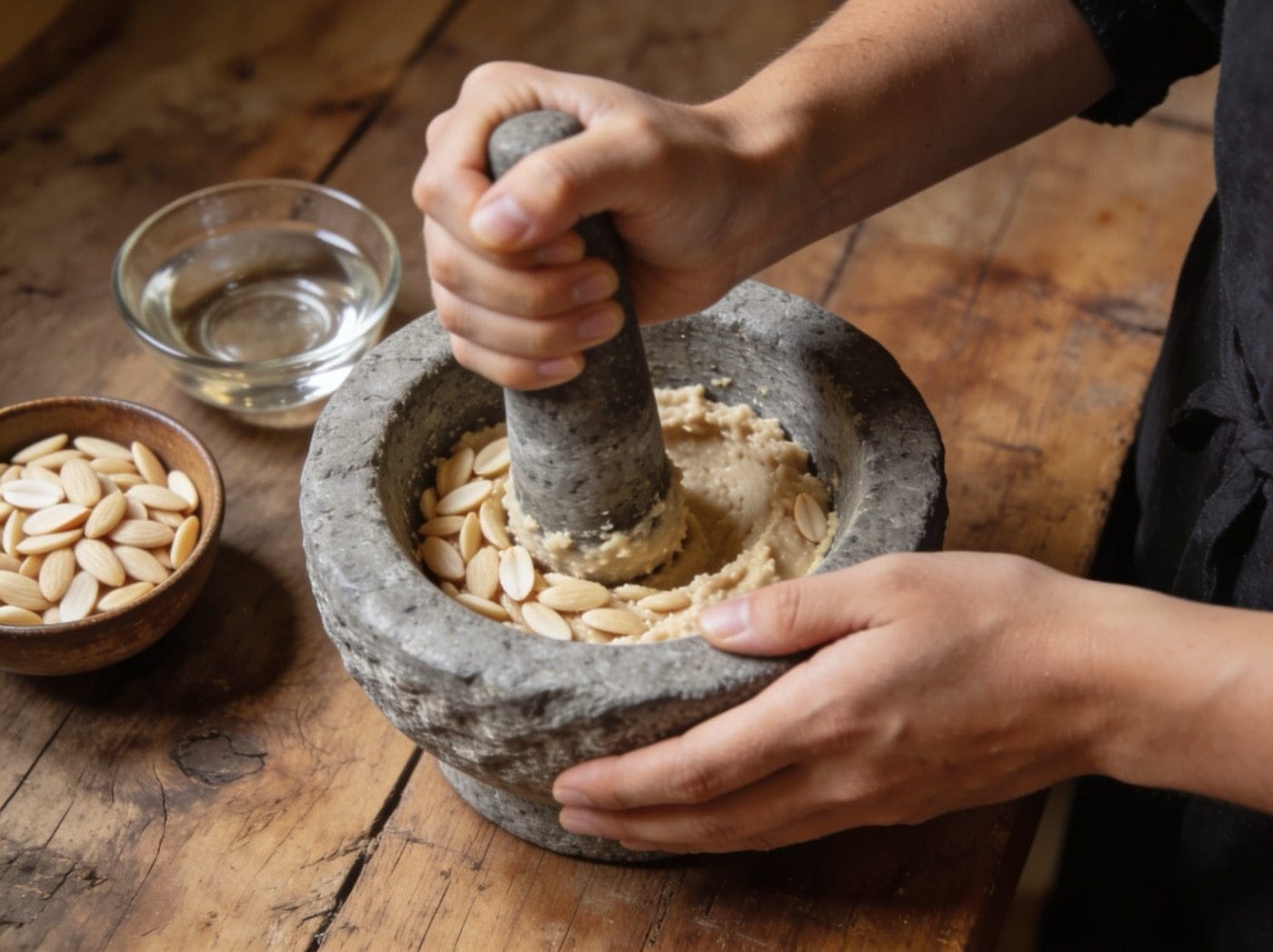
Anyone filing plant milk under hipster phenomena is arguing against eleven millennia of human history. The timeline the campaign assembled this year reads like a journey around the world:
- Around 9000 BCE, the Amazon: peoples of Brazil grind Brazil nuts with water into leite de castanha, a creamy forest milk.
- Around 5600 BCE, Peru: the peanut is domesticated; it still flows there today as leche de maní.
- Around 3000 BCE, the Pacific: Austronesian seafarers carry coconut milk across the ocean, the oldest continuously documented plant milk.
- Around 2400 BCE, Egypt: milky drinks made from tiger nuts appear along the Nile. Spain’s horchata de chufa is their direct descendant.
- Around 1000 BCE, China: farmers boil and strain rice into rice milk. A millennium later, stone reliefs of the Han dynasty document soy milk production.
- 10th to 13th century, Baghdad: physicians of the Abbasid Caliphate prescribe almond milk as medicine. Soon after, monks in France and England stir it up during Lent, when dairy was forbidden.
- 16th century, India: the Mughal kitchens refine badam doodh, almond milk with saffron and cardamom.
- 1990s, Sweden: food scientist Rickard Öste invents oat milk at Lund University. The rest now sits in every supermarket fridge.
The campaign condenses it into one line, “a tradition, not a trend”, and the historical record backs it up: across much of the world, plant milk was never the alternative. It came first.
“Plant milk isn’t a modern fad. From Egyptian tiger-nut to Han-dynasty soy, humans have pressed ‘milk’ from plants for at least 5,000 years.”
World Plant Milk Day, Heritage project
The campaign now prints it on a shirt: “Plant Milk. Older Than The Pyramids.” The line survives scrutiny, Austronesian coconut milk was crossing the Pacific before the first stone was laid at Giza.

The numbers: a case study from Germany
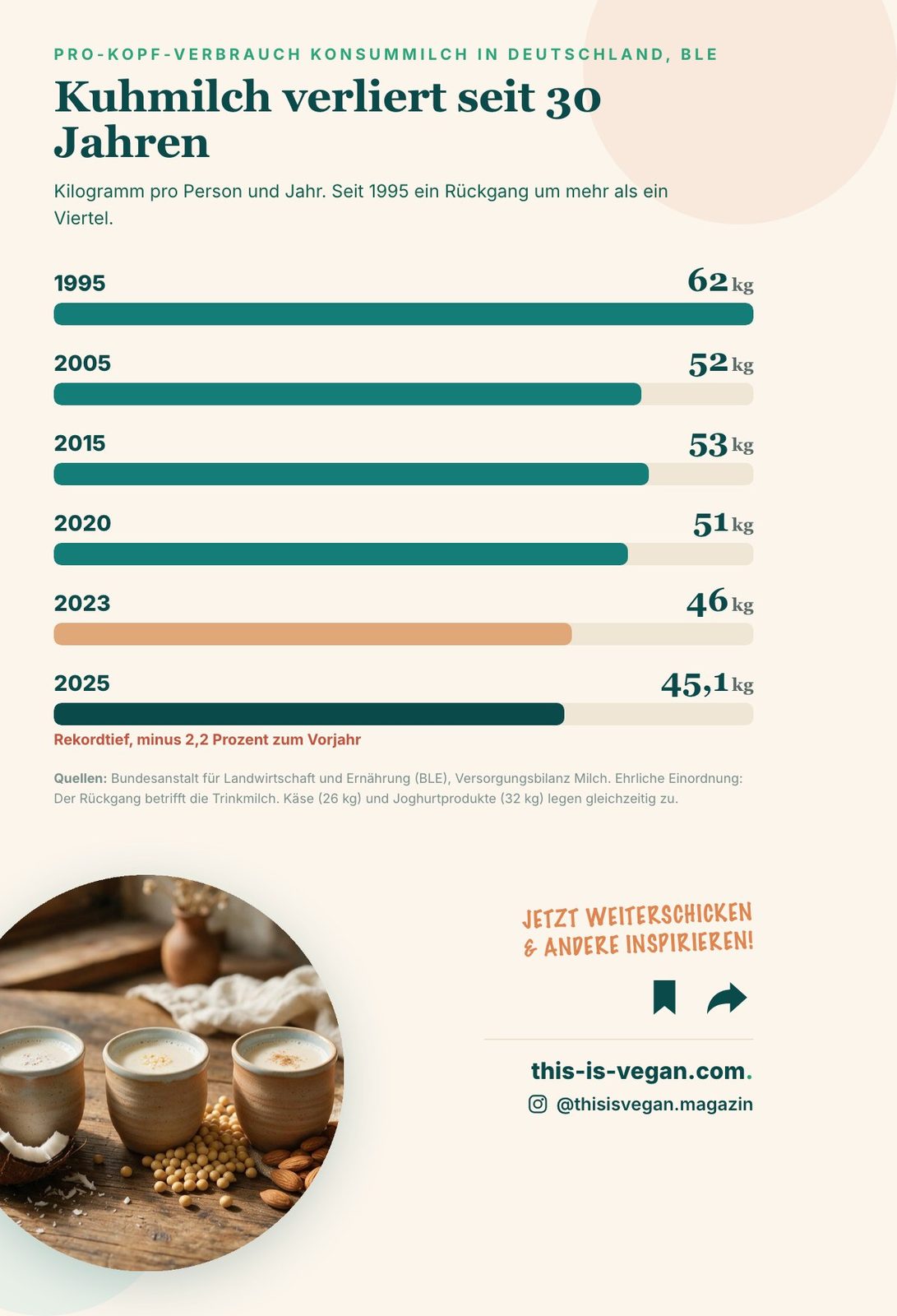
Germany, one of Europe’s biggest dairy markets, shows how the balance is shifting. In 1995, the average person there drank a calculated 62 kilograms of milk per year. By 2025 it was down to 45.1 kilograms, a record low and a drop of more than a quarter in three decades.
The honest caveat belongs next to the number: the decline concerns drinking milk. Cheese and yoghurt consumption rose over the same period, so the dairy industry is not vanishing, it is shifting. The trend at the milk glass itself is unambiguous.
Meanwhile, plant milk keeps growing
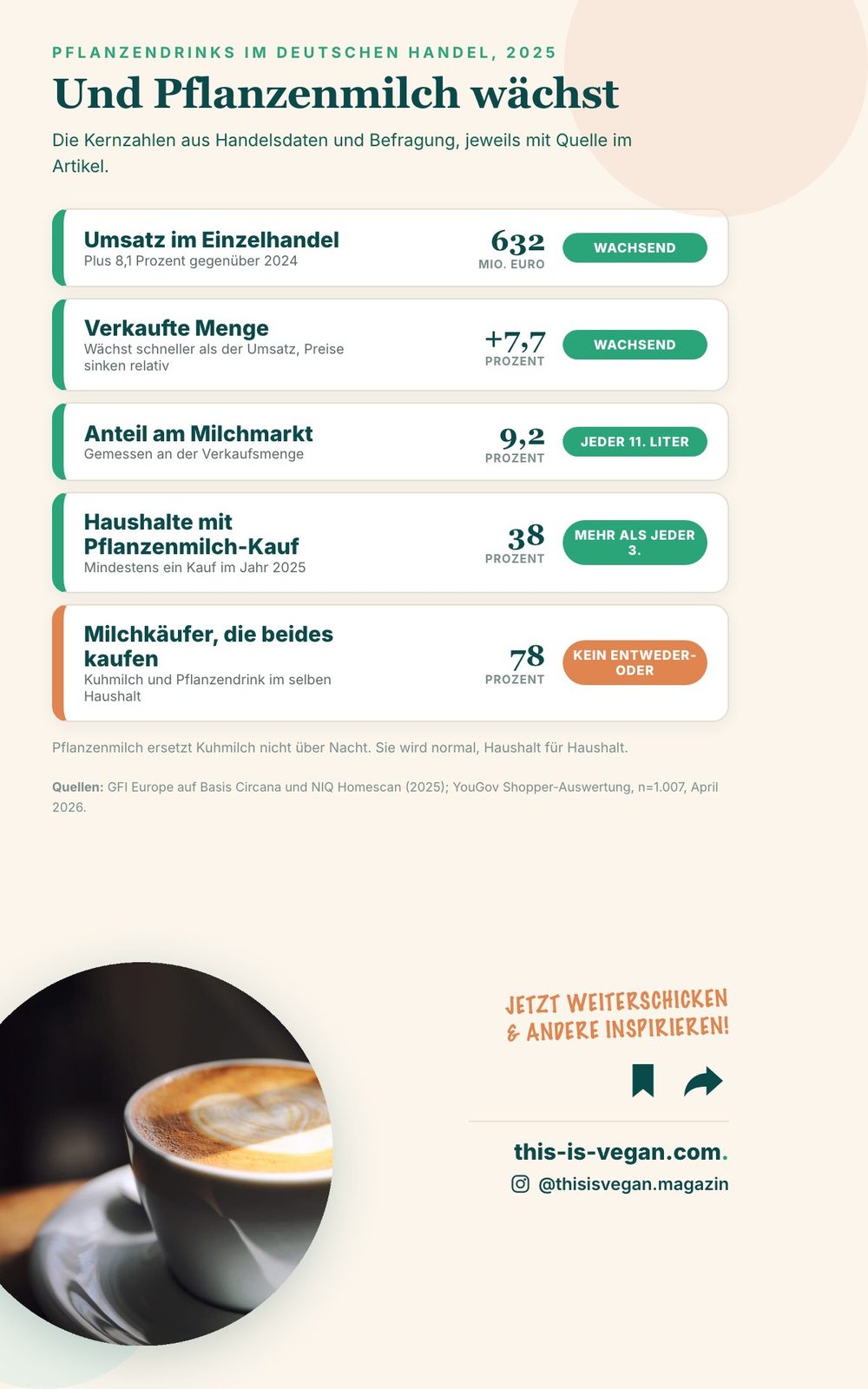
On the other side of the fridge aisle, the curve points up. Plant drinks generated 632 million euros in German retail in 2025, up 8.1 percent, with volume growing even faster, which means plant milk is getting relatively cheaper. Measured by volume, almost one litre in eleven of milk sold in Germany is now plant-based, and 38 percent of households bought plant milk at least once in 2025.
Perhaps the most telling figure comes from this summer’s YouGov shopper analysis: 78 percent of milk buyers purchase both, cow’s milk and plant drinks. The shift is not running as a culture war. It is running through perfectly ordinary shopping trolleys.
Ad · Worth a try
The easiest entry point is coffee. Oatly Barista foams like whole milk and does not curdle, which is why most cafés use it. For muesli and baking, Alpro Oat with calcium is the dependable all-rounder, fortified with calcium and B vitamins. Links lead to Amazon Germany.
Affiliate links: if you buy through them we earn a small commission at no extra cost to you.
Which plant milk for what?

Oat for coffee, soy for protein, pea for a neutral taste, almond for desserts: our detailed plant milk guide (in German, translation tools handle it well) covers which drink actually works for which job, nutrition values included.
Two honest notes belong in every recommendation. First: anyone fully replacing cow’s milk should reach for calcium-fortified varieties or cover calcium elsewhere, our calcium guide explains how. Second: under EU rules, organic plant drinks may not be fortified, so organic buyers need other sources. Both are solvable, you just need to know.
Or make it yourself, like five thousand years ago
The world’s oldest recipe is also its simplest: nuts or nut butter, water, blend, done. A tablespoon of almond or cashew butter in 250 millilitres of water turns into fresh milk in thirty seconds, without additives and far cheaper than any carton.
Ad · For the DIY crowd
For today’s version of the mortar method: KoRo stocks almond, cashew and hazelnut butter in bulk sizes, the base for homemade plant milk. Code PLANTBASED gets you 5 percent off. Ships across Europe.
Affiliate link: if you buy through it we earn a small commission at no extra cost to you.
Joining in today
The campaign invites everyone to a 7-day challenge: swap the cow’s milk in your routine for a plant-based one for one week, nothing more. Sign-up and all materials are at worldplantmilkday.com. The campaign’s three arguments are the ones we cover all year: most adults worldwide are lactose intolerant, behind every litre of dairy stand a mother and her calf, and plant milk causes roughly three times fewer emissions on a tenth of the land.

The cap is from the label VESH, and the print says it all: “Speciesism“, struck through. It fits the week. On 29 August, seven days after today, comes the World Day for the End of Speciesism, and we will be taking part in that too.
Transparency and sources
This Is Vegan is the exclusive media partner of World Plant Milk Day for the German-speaking region. The historical timeline comes from the campaign’s Heritage project, and the images in this article are used with their permission. No money changed hands for this article; the partnership is non-commercial.
German milk consumption figures come from the Federal Office for Agriculture and Food (BLE): 62 kg per person in 1995, 45.1 kg in 2025, with cheese and yoghurt rising over the same period. Plant drink figures (632 million euros, up 8.1 percent, 9.2 percent volume share, 38 percent household reach) come from GFI Europe based on Circana and NIQ Homescan data for 2025. The 78 percent dual-buyer figure comes from a YouGov shopper analysis of 1,007 respondents, fieldwork April 2026. The infographics in this article are in German.
This article contains labelled affiliate links. Health-related statements do not replace dietary advice.
Want our reporting to show up first in Google's Top Stories? Add This Is Vegan as a preferred source on Google.